


 English
 中文简体
中文简体
 Español
 عربى
عربى
 Français
 Português
Custom Hockey Tape
Hockey Tape
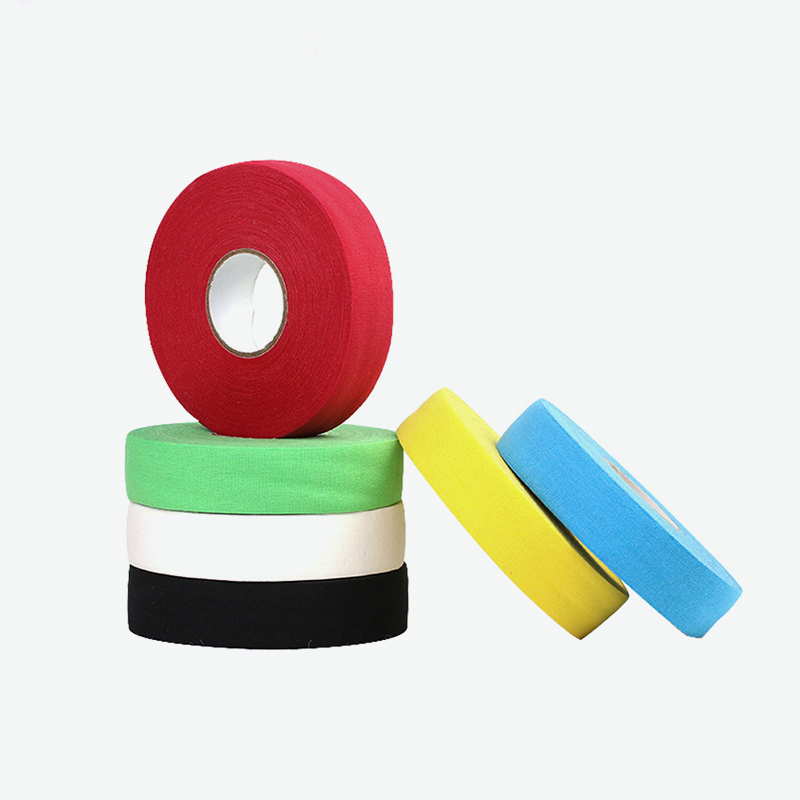
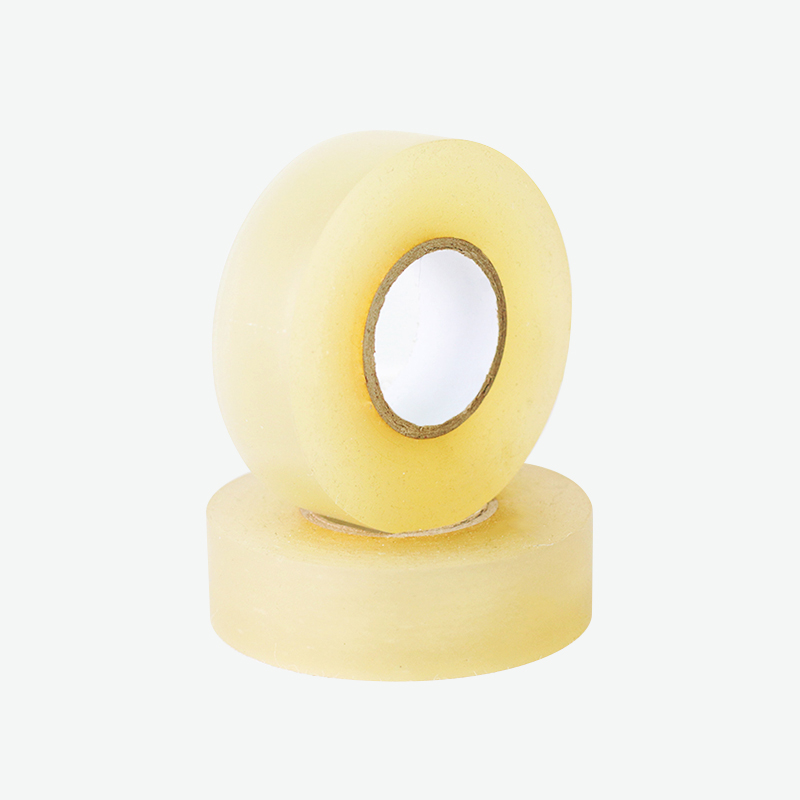
Hockey tape is a functional tape specifically designed for hockey, primarily used to enhance player performance and protect equipment. Made from high-quality materials, it's wear-resistant, non-slip, and has good adhesion.
Applications:
- Improved Grip: Wrapped around the hitting area of the stick, it increases friction between the stick and the puck, helping players better control the direction and force of the puck.
- Stick Protection: Protects the stick from friction and impact with the ice, extending its lifespan.
- Other Uses: Used to secure protective gear and tighten skate laces, ensuring protection and comfort during play.
Advantages:
- Non-slip and wear-resistant: Ensures the stick doesn't slip easily during intense play.
- Strong adhesion: Resists detachment and maintains good adhesion even in humid conditions.
- Durability: The tough material withstands the impact of repeated shots without breaking.
- Comfort: The soft material provides a comfortable feel without causing pressure on the player's hands.
About Us
Wenzhou Zhusi Medical Supplies Co., Ltd.
Wenzhou Zhusi Medical is a custom hockey tape manufacturer for logo, color and width options. We specialize in fabric cloth hockey stick tape, providing professional care solutions for clients in the fields of sports, medical care, personal care, animal health, tattoos, and beauty. Through technology and innovation, we strive to enable everyone in the world to enjoy a healthy and fulfilling life.
Our Mission:
We strive to achieve both material and spiritual well-being for all employees, spread love and health, and promote the accessibility of healthcare products to everyday families.
Our Vision:
To become a renowned company recognized by customers, respected by society, and ensuring employee well-being.
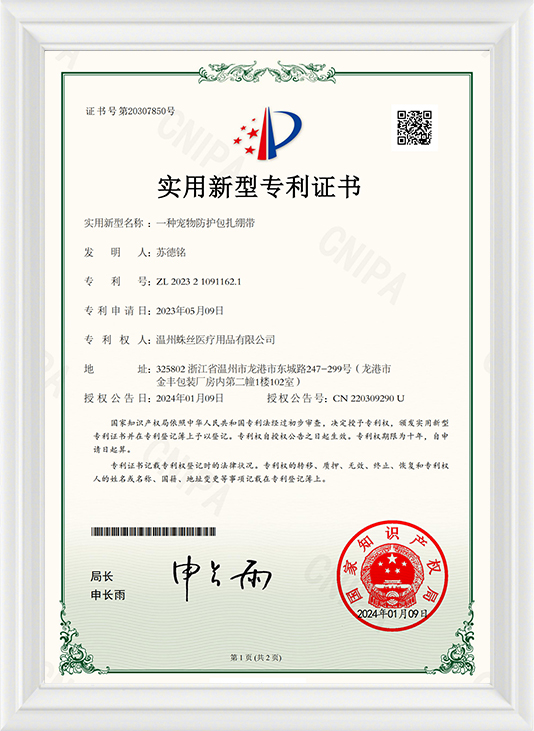
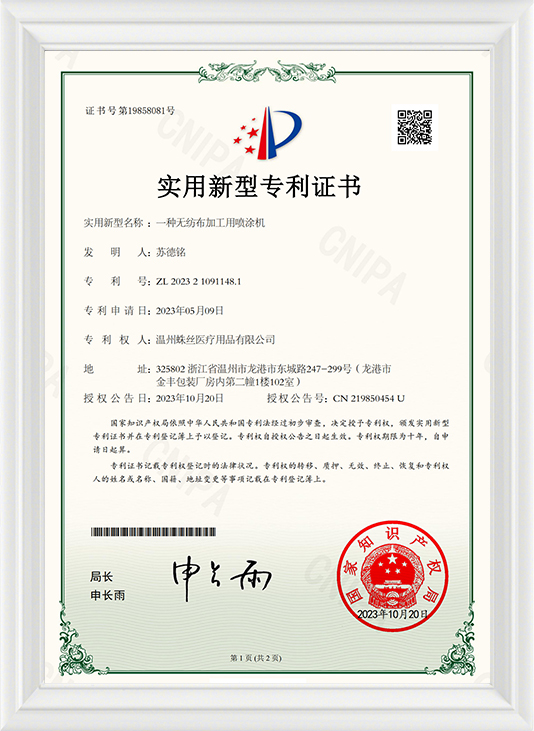
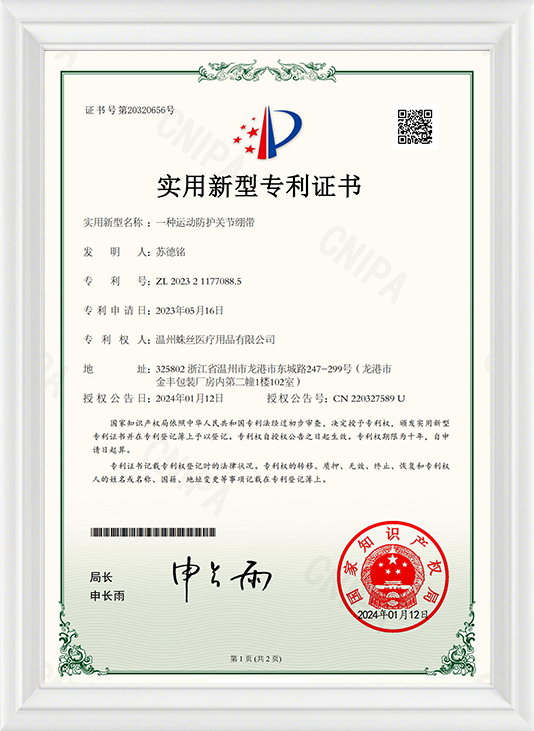
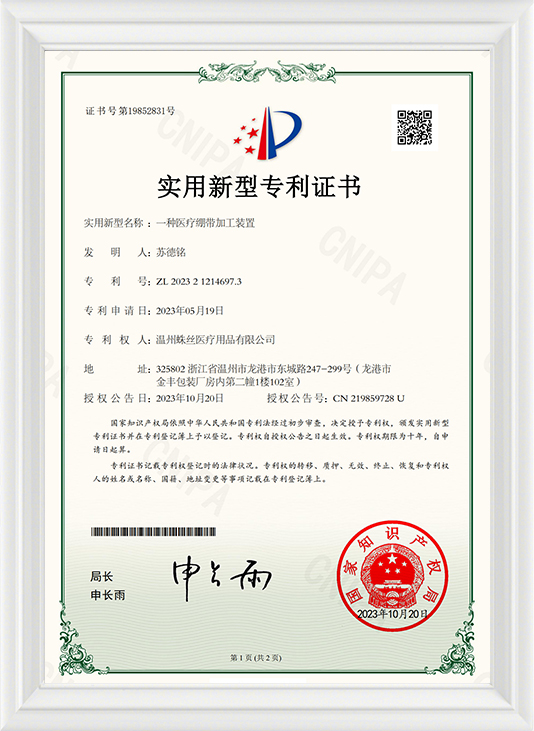
Certificate Of Honor
News
-
Sports taping is often treated as a simple wrapping task, but the material placed closest to the skin can influence how the outer tape feels...
READ MORE -
A bandage placed around a joint has to deal with constant changes in the shape of the skin. When an ankle bends, a wrist turns, or a knee fl...
READ MORE -
A cohesive bandage can look simple to use. It stretches, wraps around an area, and holds against itself without needing ordinary adhesive on...
READ MORE -
A bandage may look simple, but its performance depends on how it behaves after it has been wrapped around the body. It needs to remain in po...
READ MORE
Message Feedback
Hockey Tape: Types, Materials, Uses and Selection Guide
Hockey tape is a category of adhesive products used on hockey sticks and protective equipment. The familiar cloth roll used on a stick blade is only one version. Players may also use soft grip tape on the upper shaft or transparent stretch film to hold shin guards and socks in position.
These products are not interchangeable. Cloth hockey stick tape normally uses a woven fabric backing with a pressure-sensitive adhesive. Clear shin pad tape is usually an elastic plastic film, while grip tape may use a softer textile or self-adhering construction.
What Is Hockey Tape?
Hockey tape is an adhesive or self-adhering wrapping material developed for hockey sticks, protective equipment or related gear. It is commonly supplied in rolls, although pre-cut strips and customized formats are also possible.
Depending on its construction, hockey tape may be used to:
- Wrap a hockey stick blade
- Cover the top portion of a stick shaft
- Build a defined knob at the end of the handle
- Add a consistent textile surface to a grip area
- Hold hockey socks or shin guards in position
- Secure selected straps or equipment components
- Mark sticks and identify team equipment
- Make temporary off-ice gear adjustments
The term hockey tape does not identify one standardized material. A useful product description should specify whether the tape is intended for the blade, handle, protective equipment or another surface.
Relevant details include:
- Backing material
- Adhesive type
- Tape width and roll length
- Total thickness
- Tensile strength
- Hand-tear performance
- Unwind force
- Color
- Water and cold-temperature behavior
- Individual or bulk packaging
Main Types of Hockey Tape
Hockey tapes are commonly classified by their backing material and intended use.
| Tape Type | Typical Construction | Main Use | Notable Characteristic |
| Cloth hockey stick tape | Woven cotton or cotton-blend fabric with adhesive | Stick blades and handles | Textile surface with controlled hand tearing |
| Grip tape | Soft textile, gauze-like or self-adhering material | Upper stick shaft | Softer and more conformable grip surface |
| Clear shin pad tape | Transparent polyethylene or similar stretch film | Hockey socks and shin guards | Elastic, smooth and moisture-resistant |
| Colored hockey tape | Cloth, film or grip construction | Sticks, equipment and team identification | Available in team, retail or custom colors |
| Printed hockey tape | Cloth or synthetic backing with printed graphics | Branding and visual customization | Supports logos, patterns or repeated designs |
| Pre-cut hockey tape | Prepared strips made from cloth or film | Repairs or specific wrapping steps | Consistent dimensions and quick handling |
Products sold under the same name may use different materials. For example, hockey sock tape often refers to clear stretch film rather than woven cloth tape.
What Is Fabric Cloth Hockey Stick Tape?
Fabric Cloth Hockey Stick Tape is a woven, pressure-sensitive tape primarily used on hockey stick blades and handle areas. Cotton is common, although rayon, polyester and blended fibers may also be used.
The backing provides the tape’s mechanical structure. Its weave influences:
- Tensile strength
- Surface texture
- Flexibility
- Hand tearing
- Edge fraying
- Adhesive penetration
- Conformity around curved areas
- Total tape thickness
A denser fabric can produce a firmer and more uniform tape. A more open weave may be easier to conform but can allow adhesive to penetrate farther into the backing.
The fabric may also receive surface treatments to change color, improve coating consistency or control moisture response. A product described as “cloth hockey tape” should not automatically be assumed to contain 100% cotton.
Cloth Hockey Tape vs Clear Hockey Tape
Cloth stick tape and clear equipment tape serve different purposes.
| Feature | Cloth Hockey Tape | Clear Hockey Tape |
| Backing | Woven cotton, rayon or blended fabric | PE or another stretchable plastic film |
| Surface | Matte and textile-like | Smooth and transparent |
| Stretch | Usually low | Usually elastic |
| Hand tearing | Common on suitable constructions | Depends on film and edge design |
| Primary application | Stick blade and handle | Securing hockey socks and shin pads |
| Water response | Fabric can absorb some moisture | Film generally resists external moisture |
| Conformity | Wraps through overlapping cloth layers | Conforms through film stretch |
| Common colors | Black, white and custom colors | Clear, colored or tinted |
Clear hockey tape should not usually replace cloth tape on a blade. Its smooth film surface, elasticity and wear behavior differ from those of woven stick tape.
Similarly, rigid cloth tape may not be suitable for wrapping around a leg or protective pad if the application requires elastic movement. The intended use should be stated clearly on the label and product page.
Cloth Hockey Tape vs Grip Tape
Cloth hockey tape can be used on the upper shaft, but dedicated grip tape usually has a softer and more conformable construction.
| Feature | Cloth Stick Tape | Hockey Grip Tape |
| Structure | Adhesive woven cloth | Soft fabric, gauze-like wrap or cohesive material |
| Feel | Firm and textured | Softer and more padded |
| Adhesion | Pressure-sensitive adhesive contacts the stick | May adhere to the stick or primarily to itself |
| Typical position | Blade or handle | Upper shaft and end knob |
| Moisture behavior | Depends on fabric and adhesive | Depends on fiber and coating |
| Removal | May leave residue depending on formulation and use | Varies by product construction |
Some players use standard cloth tape for both the blade and handle. Others prefer separate products to create a different grip feel or reduce adhesive contact with gloves.
These preferences are subjective. Product descriptions should focus on measurable construction details rather than promising improved control or performance.
Materials and Composition
A hockey tape normally contains a backing and an adhesive. Printed or specialized products may also include inks, primers, coatings or release materials.
Cotton backing
Cotton is commonly selected for cloth stick tape because woven cotton can combine strength, flexibility and hand-tear capability.
Important cotton-backing variables include:
- Yarn count
- Weave density
- Fabric weight
- Thickness
- Machine-direction strength
- Cross-direction tear
- Moisture absorption
- Surface finish
Cotton content does not automatically establish durability or quality. A loosely woven cotton tape may fray or deform, while a carefully engineered blended fabric may provide more consistent converting performance.
Rayon and blended fabrics
Rayon may be blended with cotton to change softness, coating uniformity or tear behavior. Polyester fibers can be added to increase dimensional stability and resistance to moisture-related changes.
Blended construction may affect:
- Strength
- Hand tearing
- Flexibility
- Adhesive anchorage
- Surface texture
- Printing quality
- Batch consistency
Fiber composition should be confirmed through the technical specification rather than inferred from appearance.
Polyethylene film
Clear shin pad tape commonly uses polyethylene or a comparable stretch film. The film should extend smoothly without breaking prematurely or narrowing excessively.
Important film specifications include:
- Film thickness
- Tensile strength
- Elongation
- Elastic recovery
- Transparency
- Puncture resistance
- Edge quality
- Adhesive compatibility
- Low-temperature behavior
- Adhesive layer
Pressure-sensitive adhesive allows hockey tape to bond after application pressure is applied. Common formulations may use natural rubber, synthetic rubber or acrylic chemistry.
The adhesive affects:
- Initial tack
- Holding strength
- Unwind force
- Resistance to edge lifting
- Cold-temperature performance
- Adhesive transfer
- Residue after removal
- Storage stability
The strongest possible adhesive is not always the most suitable. Very aggressive adhesion may make repositioning or removal difficult, while low adhesion may cause the wrap to loosen.
Adhesive Requirements for Hockey Tape
Hockey tape is used in an environment that can involve cold air, ice contact, moisture, friction and repeated handling. The adhesive system should be evaluated under realistic conditions rather than only at room temperature.
Initial tack
Initial tack describes how quickly the tape forms contact with the stick or equipment. Adequate tack helps hold the starting and finishing edges during wrapping.
Holding power
Holding power influences whether overlapping layers remain in position during use. It depends on adhesive chemistry, coating weight and contact pressure.
Unwind force
Unwind force is the resistance felt when tape is pulled from the roll.
- Very low unwind force can make the roll feel loose.
- Excessive unwind force may distort the backing or slow application.
- Uneven unwind can create jerking, wrinkles or poor overlap.
- A consistent unwind is often more useful than an unusually tight roll.
Cold-temperature behavior
Adhesive performance can change at low temperatures. A tape that handles well in a warm warehouse may become firmer or less tacky in a cold rink environment.
Cold-condition evaluation may include:
- Ease of unwinding
- Adhesion to the intended surface
- Flexibility
- Edge lifting
- Fabric cracking or stiffness
- Removal after use
- Residue
Adhesive residue depends on formulation, stick surface, wear time, temperature, moisture and removal method. Claims such as “residue-free” should be supported by defined testing conditions.
Black vs White Hockey Tape
Black and white are the most familiar hockey tape colors, but color choice is largely based on personal preference, team practice, visibility and appearance.
The backing color does not by itself determine:
- Adhesion
- Strength
- Water resistance
- Puck control
- Durability
- Ease of removal
Those properties depend on the fabric and adhesive construction.
Color consistency is still important for manufacturing and private-label programs. Buyers may need to specify:
- Target color reference
- Acceptable shade tolerance
- Core color
- Printing color
- Resistance to color transfer
- Batch-to-batch consistency
Dark-colored tape may also require evaluation for rub-off or color transfer onto gloves and equipment.
Common Hockey Tape Widths and Roll Lengths
Tape size should match the stick area, preferred wrapping pattern and packaging format.
| Width Range | Common Application | Selection Consideration |
| 1–1.5 cm | Detailed areas or narrow grip features | Precise placement with more wrapping steps |
| 1.9–2.5 cm | Standard blade and handle wrapping | Common balance of coverage and control |
| 3–4 cm | Wider blade coverage or equipment applications | Fewer turns but less flexibility around tight curves |
| 5 cm and wider | Equipment, special wrapping or conversion | May be too wide for conventional blade patterns |
Roll lengths vary among retail, team and professional formats. A complete specification should include:
- Nominal width
- Width tolerance
- Roll length
- Length tolerance
- Core diameter
- Maximum roll diameter
- Number of rolls per pack
- Individual wrapping
- Box and carton quantities
Nominal size alone does not show how much usable tape is present. Winding tension, telescoping and damaged roll edges can all affect practical yield.
How to Tape a Hockey Stick Blade
Blade-wrapping style is a matter of player preference. The following steps describe general handling rather than a performance recommendation.
Inspect and clean the blade
Remove loose dirt, moisture and damaged tape. The surface should be dry before new tape is applied.
Choose a starting position
Players may begin near the heel or toe depending on their preferred wrapping direction and coverage.
Apply the first turn carefully
Press the starting edge firmly against the blade without twisting the tape.
Wrap with consistent overlap
Maintain an even overlap to reduce gaps and excessive material build-up.
Follow the blade contour
Guide the cloth around curved sections without creating large wrinkles or folded edges.
Finish at the preferred point
Tear or cut the tape cleanly, then press the end firmly onto the previous layer.
Inspect the wrap
Check for loose edges, exposed adhesive, wrinkles and damaged areas.
Some players apply hockey wax over cloth blade tape. Wax selection and use should follow the applicable product instructions. Not every tape-and-wax combination behaves the same way.
How to Tape a Hockey Stick Handle
Handle wrapping may use cloth hockey tape or a dedicated grip tape.
A common process includes:
- Clean and dry the upper shaft.
- Form an end knob if required.
- Apply the tape in a spiral or overlapping pattern.
- Keep the wrap even and avoid hard ridges unless intentionally created.
- Press the final edge securely.
- Check that no loose adhesive surface contacts the glove unnecessarily.
Thick overlapping layers can change the grip diameter and create extra bulk. The preferred result depends on hand size, glove design and individual playing style.
Tape should be inspected regularly. Worn or loose edges can catch on gloves or separate during use.
Common Hockey Tape Wrapping Patterns
Different patterns change the amount of coverage, overlap and surface texture.
| Pattern | Description | Typical Area |
| Heel-to-toe wrap | Tape progresses from the heel toward the toe | Stick blade |
| Toe-to-heel wrap | Tape progresses from the toe toward the heel | Stick blade |
| Full-blade wrap | Most or all of the blade is covered | Stick blade |
| Partial-blade wrap | Only a selected section is covered | Stick blade |
| Spiral handle wrap | Tape moves diagonally around the shaft | Upper handle |
| Overlapping grip wrap | Each turn partly covers the previous layer | Handle and knob |
| Ribbed grip pattern | Cord or folded material creates raised texture beneath tape | Handle area |
| Pre-cut strip placement | Prepared pieces cover defined locations | Repairs or localized use |
No wrapping pattern guarantees improved athletic performance. The most suitable method depends on user preference, stick design and equipment requirements.
Can Hockey Tape Be Used to Secure Shin Guards?
Yes, but the product should be suitable for the application. Players commonly use clear stretch tape around hockey socks to help keep shin guards in position.
Clear shin pad tape is generally preferred because it:
- Stretches around protective equipment
- Conforms to changing contours
- Allows the uniform color to remain visible
- Resists incidental surface moisture
- Can be wrapped with controlled overlap
Tape should not be applied so tightly that it creates discomfort or restricts circulation. Wrapping tension and number of layers should remain controlled.
Rigid cloth stick tape is less suitable for circumferential leg wrapping because it has limited stretch. Low-stretch tape can create excessive pressure when wrapped too tightly around a limb.
Hand Tearability and Edge Quality
Hand tearability is an important feature of many cloth hockey tapes. It allows a player or equipment manager to separate the tape without scissors.
Clean tearing depends on:
- Fabric weave
- Fiber direction
- Backing strength
- Edge finishing
- Tape width
- Adhesive coating
- Temperature
A tape can have high tensile strength in the roll direction while still tearing across its width. This balance is created through the fabric construction and converting process.
Poor edge quality may cause:
- Fraying
- Uneven tears
- Loose threads
- Premature edge splitting
- Irregular roll width
- Difficulty starting the roll
For clear film tape, edge defects can cause unplanned tearing during stretching. Slitting quality is therefore important for both cloth and film products.
Frequently Asked Questions About Hockey Tape
What is hockey tape made from?
Traditional hockey stick tape usually uses woven cotton, rayon or blended fabric with a pressure-sensitive adhesive. Clear shin pad tape is normally made from a stretchable plastic film such as polyethylene.
What is hockey stick tape used for?
It is commonly used to wrap the blade or handle of a hockey stick. Different constructions may also be used for equipment identification, securing selected gear or holding shin guards in position.
Is hockey tape the same as athletic tape?
No. Both products may use adhesive cloth, but hockey tape is developed primarily for sticks and equipment. Athletic tape intended for direct skin application may use different materials, testing and labeling.
What is the difference between cloth and clear hockey tape?
Cloth tape is a low-stretch woven product commonly used on stick blades and handles. Clear hockey tape is an elastic film commonly wrapped around socks and shin guards.
Can hockey tape be torn by hand?
Many cloth hockey tapes are designed for cross-direction hand tearing. Tear performance depends on fabric weave, edge quality, adhesive coating and temperature.
Does hockey tape absorb water?
Cloth tape can take up some moisture because of its woven backing. Clear film tape generally absorbs less water. Neither characteristic should be described as complete waterproofing without relevant testing.
Does hockey tape leave adhesive residue?
Residue depends on the adhesive, contact surface, temperature, wear time and removal method. Product-specific testing is required before making a residue-free claim.
What width of hockey tape is commonly used?
Cloth hockey stick tape is frequently supplied in widths around 1.9 to 2.5 cm, although narrower and wider formats are available. The correct width depends on the wrapping area and user preference.
Can hockey tape be customized?
Yes. Depending on manufacturing capabilities, hockey tape can be customized by material, adhesive, width, length, color, printing, core and packaging.
How should hockey tape be stored?
Keep it in its original packaging in a cool, dry place away from direct sunlight, excessive heat, dust and chemical contamination. Follow the manufacturer’s shelf-life instructions.
Zhusi manufactures and converts cloth and film-based tape products for sports, equipment and private-label applications. Hockey tape can be developed in different colors, widths, roll lengths and printed designs, with packaging options for retail, team and distributor programs.

“This website is for users outside of China.”
Copyright © 2025 Wenzhou Zhusi Medical Supplies Co., Ltd. All Reserved. Approval No:浙温械备20250002 & 浙温械备 20190061 号 & 浙温药监械生产备20190011号
Wholesale Hockey Tape Rolls
