


 English
 中文简体
中文简体
 Español
 عربى
عربى
 Français
 Português
Silk Adhesive Tap
Sports taping is often treated as a simple wrapping task, but the material placed closest to the skin can influence how the outer tape feels...
READ MOREinformation to be updated
Silk tape is not made of real silk. Instead, it refers to a type of medical tape that is made from a soft synthetic silk (Rayon) or cotton base and undergoes special treatment to give it a smooth and delicate texture like that of silk. It is usually coated with a mild medical acrylic adhesive. Key features:
High breathability: The porous structure of the base material ensures good ventilation, helping to maintain skin health and reducing heat and moisture.
High compliance & Flexibility: The texture is soft, allowing it to easily fit the contours of the body and joints without wrinkling or peeling.
Relatively painless removal, with little residue: Due to its smooth surface and mild adhesive, the pain during removal and the residue of the adhesive are usually much lower than those of ordinary cloth tape.
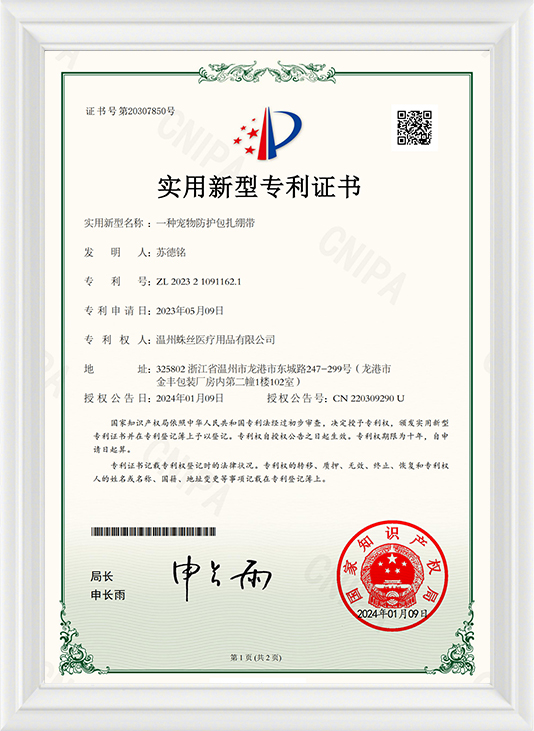
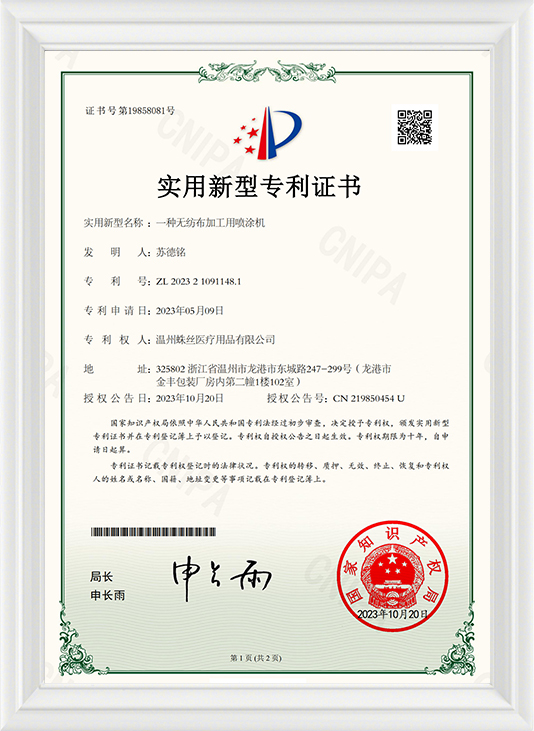
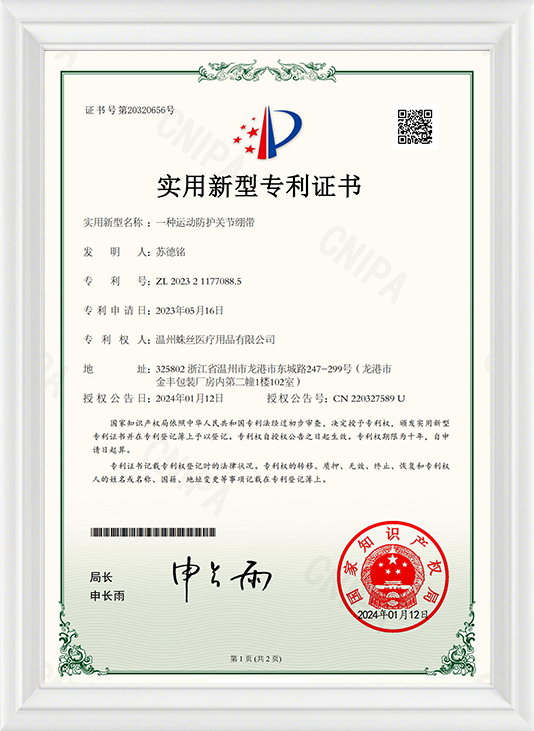
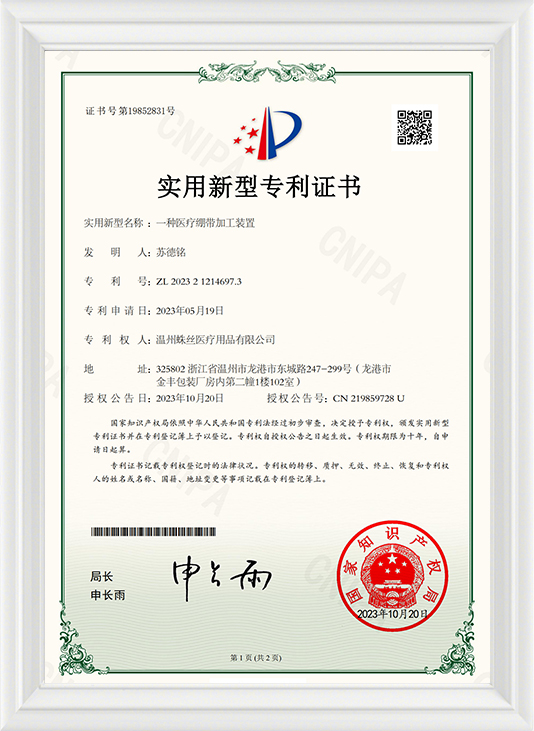
Wenzhou Zhusi Medical is a custom silk tape manufacturer. We specialize in wholesale silk medical tape, providing professional care solutions for clients in the fields of sports, medical care, personal care, animal health, tattoos, and beauty. Through technology and innovation, we strive to enable everyone in the world to enjoy a healthy and fulfilling life.
Our Mission:
We strive to achieve both material and spiritual well-being for all employees, spread love and health, and promote the accessibility of healthcare products to everyday families.
Our Vision:
To become a renowned company recognized by customers, respected by society, and ensuring employee well-being.
Sports taping is often treated as a simple wrapping task, but the material placed closest to the skin can influence how the outer tape feels...
READ MOREA bandage placed around a joint has to deal with constant changes in the shape of the skin. When an ankle bends, a wrist turns, or a knee fl...
READ MOREA cohesive bandage can look simple to use. It stretches, wraps around an area, and holds against itself without needing ordinary adhesive on...
READ MOREA bandage may look simple, but its performance depends on how it behaves after it has been wrapped around the body. It needs to remain in po...
READ MORESilk tape has a quieter presence than paper, plastic, or cloth tape. Its surface catches the light gently, its woven texture adds depth without looking heavy, and even a narrow strip can make a journal page, display board, or storage system feel more considered.
Two commonly compared styles are Breathable Silk Surgical Tape and Gentle Adhesive Silk Strip. Both use a silk or silk-style woven backing, depending on the product specification, but they differ in surface finish, flexibility, color range, and overall appearance. This guide explains those differences and looks at how the tapes can be used in studios, offices, packaging, and decorative projects.
Silk is known for its smooth hand feel and natural-looking luster. When used as a tape backing, its woven structure creates an appearance that is softer and more tactile than ordinary plastic film.
The exact composition can vary by manufacturer. Some products use natural silk fibers, while others use rayon, acetate, or synthetic woven materials designed to produce a silk-like finish. For that reason, buyers who require a specific fiber composition should check the technical data sheet rather than relying on the product name alone.
Silk and silk-style tape backings commonly offer several visual and handling qualities:
The main differences between Breathable Silk Surgical Tape and Gentle Adhesive Silk Strip come from the weave, backing thickness, surface treatment, adhesive formulation, and available formats.
Breathable Silk Surgical Tape
Breathable Silk Surgical Tape typically has a fine woven backing with a smooth surface and a slight sheen. It feels light in the hand and follows gentle curves without creating a bulky edge.
Its appearance is clean and restrained. White, cream, pale neutrals, and soft pastel shades are common, although the available palette depends on the production line. In creative settings, this style is often selected when the tape needs to blend into a composition rather than become its main visual feature.
The word breathable generally refers to the construction of the backing. It should not be treated as proof of a particular medical performance level unless supported by testing and product documentation.
Gentle Adhesive Silk Strip
Gentle Adhesive Silk Strip usually has a softer matte finish and a slightly more substantial feel. The surface may show more of the textile grain, giving it a warm, understated character.
This product family often allows greater design flexibility. Depending on the supplier, it may be available in muted colors, fine patterns, custom widths, sheets, or pre-cut strips. Its relatively firm structure also makes it suitable for straight borders and repeated decorative layouts.
The term gentle adhesive describes the intended adhesive character, but adhesion and removability will still vary by surface. Testing on a small, hidden area is sensible when working with painted walls, photographs, coated paper, delicate fabric, or archival materials.
The two tapes share a similar textile character, but they create different visual and tactile effects.
| Aspect | Breathable Silk Surgical Tape | Gentle Adhesive Silk Strip |
| Backing | Silk or silk-style woven material | Silk or silk-style woven material |
| Surface finish | Smooth with a slight sheen | Matte or softly textured |
| Overall feel | Delicate and lightweight | Soft with moderate firmness |
| Visual character | Clean, refined, understated | Warm, tactile, decorative |
| Typical colors | White, neutrals, limited pastels | Broader muted palette and patterns |
| Common forms | Rolls and sheets | Rolls, sheets, and pre-cut strips |
| Width options | Usually standard widths | Standard and custom widths |
| Best visual use | Subtle highlights and curved details | Borders, layering, and organized layouts |
In simple terms, Breathable Silk Surgical Tape offers a smoother, lighter look, while Gentle Adhesive Silk Strip provides a softer matte surface and more room for decorative variation.
Silk tapes are no longer limited to plain white utility rolls. Creative studios, stationery brands, gift-packaging suppliers, and display designers increasingly use them as visible design materials.
Soft and Muted Colors
Pastels, warm greys, cream, beige, dusty blue, sage, and muted rose work particularly well with woven tape. The texture keeps these shades from looking overly flat or saturated.
Neutral colors are often used for:
More saturated shades can be produced, but the material is usually chosen for subtlety rather than sharp, high-contrast color.
Patterned Silk Strips
Fine stripes, small checks, dots, and low-contrast geometric patterns can add detail without overwhelming the underlying design.
Patterns with a small repeat are especially useful for narrow strips because the design remains recognizable after the master roll is slit into smaller widths. Pattern alignment should be considered when two or more strips will be placed side by side.
Matte and Light-Sheen Finishes
Surface finish changes how the tape interacts with surrounding materials.
The effect is usually subtle. That restraint is part of the appeal—silk tape rarely barges into a design wearing a fluorescent hat.
Custom Widths and Formats
Master rolls can be slit into different widths for specific design tasks.
Available dimensions, tolerances, and minimum order quantities depend on the manufacturer.
Silk tape can serve a practical purpose while still contributing to the appearance of the finished object. Its textile surface makes it especially suitable for projects where ordinary plastic tape would look too shiny or industrial.
In Art and Craft Projects
Artists and paper crafters use silk tape to introduce texture without adding the thickness of a separate fabric layer.
Common applications include:
Before applying tape directly to photographs, original artwork, or valuable paper, check whether the adhesive is archival and acid-free. A pleasant texture is not a substitute for conservation-grade documentation.
In Offices and Studios
Silk tape can make organizational systems look less temporary than ordinary labels or bright utility tape.
It can be used for:
Muted colors are useful when information needs to be visible without making the workspace feel visually busy.
In Packaging and Displays
A narrow silk strip can add a textile accent to otherwise simple packaging.
Possible uses include:
Adhesion should be tested before using the tape on coated, varnished, printed, or high-value packaging. Some surfaces allow easy removal; others may show lifting, staining, or adhesive transfer.
Around the Home
For light decorative and organizational tasks, silk tape offers a softer alternative to glossy labeling materials.
Examples include:
Writing performance depends on the finish. Matte tape generally accepts permanent markers more readily than smooth, lightly coated surfaces.
Current development is moving toward quieter colors, more tactile finishes, adaptable formats, and clearer material sourcing.
Responsibly Sourced Materials
Some buyers now request information about fiber origin, processing, recycled packaging, and supplier standards. When natural silk is specified, traceability may be an important purchasing criterion.
For silk-style synthetic products, relevant information may include:
Claims such as eco-friendly, biodegradable, or sustainable should be supported by product-specific evidence.
Subtle Texture Combinations
Designers are mixing matte, smooth, and lightly lustrous strips within the same color family. This produces contrast through texture rather than relying on several strong colors.
The approach works particularly well in:
Narrow, Minimalist Formats
Slim strips are increasingly used as visual punctuation: a line along a page edge, a small tab on a folder, or a restrained border around a display card.
Narrow widths also reduce material use when only a small accent is needed.
Modular and Customizable Rolls
Short rolls, coordinated color sets, pre-cut lengths, and custom-width packs make it easier to test combinations before ordering full-size production rolls.
These formats are useful for design studios, workshops, sample kits, and limited-edition packaging.
A few practical questions usually make the choice clearer.
A few small habits help silk tape look cleaner and more intentional in finished projects.
Silk and silk-style tapes should be stored carefully to preserve both the adhesive and the appearance of the backing.
Silk tape can support a thoughtful material palette, but its environmental profile depends on more than the appearance of the backing.
Natural silk is renewable, yet its production involves agriculture, processing, dyeing, transport, adhesive coating, and packaging. Silk-style synthetic fibers may offer consistency and durability but are not equivalent to natural silk. The adhesive and release liner also affect the complete product footprint.
More responsible purchasing decisions include:
Are all silk tapes made from natural silk?
No. Some products use natural silk, while others use rayon, acetate, polyester, or another woven backing designed to resemble silk. Check the composition listed in the technical specification.
Can silk tape be written on?
Many matte silk tapes accept permanent marker, but the result depends on the coating and ink. Smooth or lightly lustrous surfaces may require an oil-based or specialized marker. Test first and allow the ink to dry.
Can silk tape be used on photographs or original artwork?
Only when the product is documented as suitable for archival use. Standard adhesive tape may discolor paper, leave residue, or damage delicate surfaces over time.
Is Breathable Silk Surgical Tape suitable for medical use?
Only products carrying the required medical classification, test documentation, labeling, and instructions should be used in clinical or skin-contact applications. The product name by itself does not establish medical suitability.
Are custom colors and widths available?
They may be available through master-roll slitting, custom dyeing, or printing. Options generally depend on order quantity, production tolerances, backing composition, and color requirements.
Is silk tape environmentally friendly?
That depends on the fiber source, processing method, adhesive, liner, packaging, expected lifespan, and disposal route. Product-specific evidence is needed before making environmental claims.
Breathable Silk Surgical Tape and Gentle Adhesive Silk Strip share a woven, textile-like character, but they create different results. The first is typically smoother, lighter, and slightly lustrous. The second leans toward matte texture, decorative variety, and adaptable widths.
For journals, packaging, displays, studio organization, and mixed-media work, both products bring something ordinary tape often lacks: a surface that contributes to the design rather than merely holding it together. The right choice comes down to finish, flexibility, format, adhesive behavior, and the surface on which the tape will be used.

“This website is for users outside of China.”
Copyright © 2025 Wenzhou Zhusi Medical Supplies Co., Ltd. All Reserved. Approval No:浙温械备20250002 & 浙温械备 20190061 号 & 浙温药监械生产备20190011号
Medical Silk Adhesive Tape
