


 English
 中文简体
中文简体
 Español
 عربى
عربى
 Français
 Português
Non-Woven Tape
Sports taping is often treated as a simple wrapping task, but the material placed closest to the skin can influence how the outer tape feels...
READ MOREinformation to be updated
Non-woven paper tape is a type of medical crepe paper coated with medical-grade adhesive, mainly used for fixing gauze, dressings, tubes, infusion needles, etc. It is one of the basic consumables in medical care.
Feature:
Good breathability: The tape has good breathability.
Gentle: The adhesive is gentle.
Lower strength: It is easy to tear, has average sweat resistance and strength, and is not suitable for fixing heavy objects or for joints with high activity levels.
Application scenarios: Fixing lightweight dressings, newborn care, daily fixation for patients with sensitive skin, allergy tests.
Wenzhou Zhusi Medical is a custom nonwoven tape manufacturer. We specialize in OEM non-woven medical tape, providing professional care solutions for clients in the fields of sports, medical care, personal care, animal health, tattoos, and beauty. Through technology and innovation, we strive to enable everyone in the world to enjoy a healthy and fulfilling life.
Our Mission:
We strive to achieve both material and spiritual well-being for all employees, spread love and health, and promote the accessibility of healthcare products to everyday families.
Our Vision:
To become a renowned company recognized by customers, respected by society, and ensuring employee well-being.
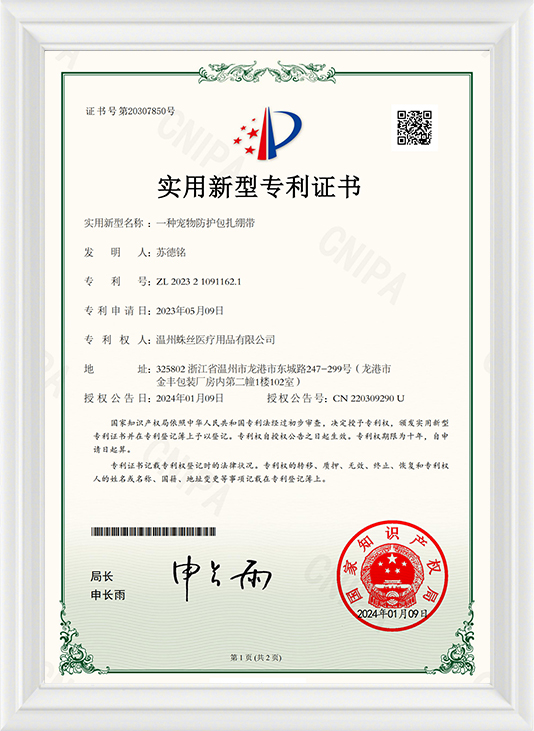
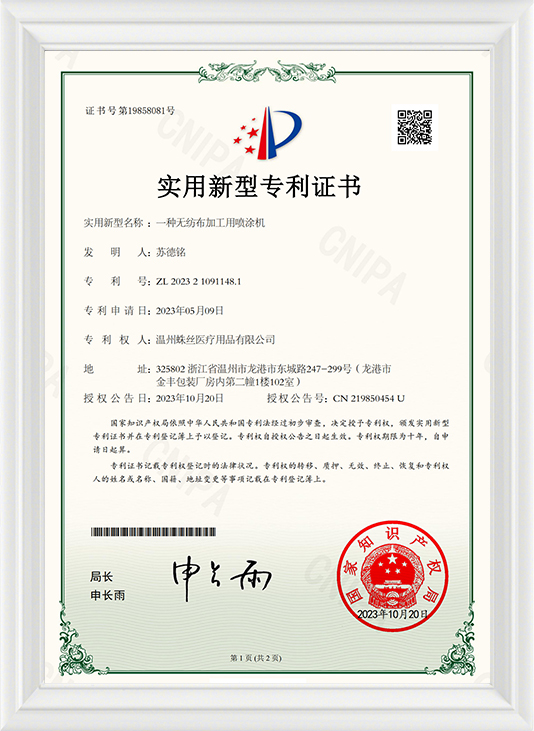
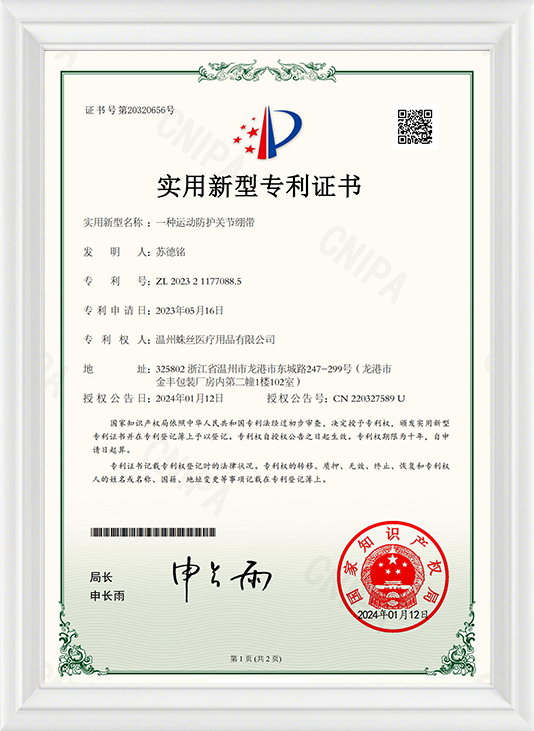
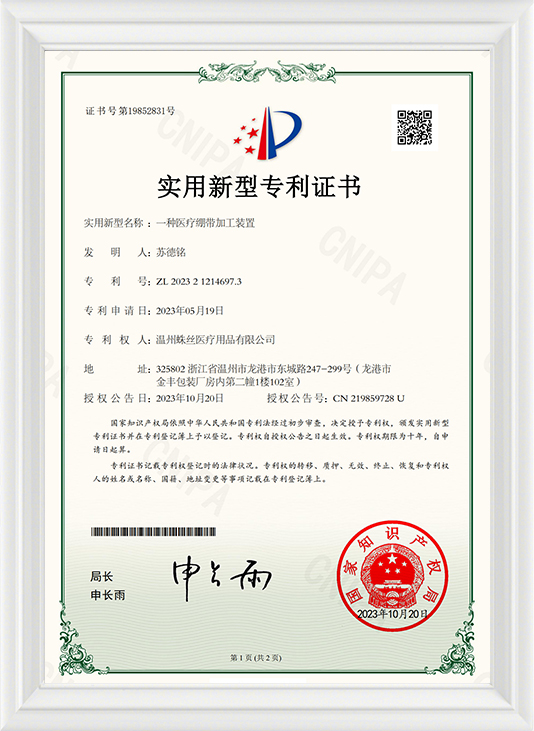
Sports taping is often treated as a simple wrapping task, but the material placed closest to the skin can influence how the outer tape feels...
READ MOREA bandage placed around a joint has to deal with constant changes in the shape of the skin. When an ankle bends, a wrist turns, or a knee fl...
READ MOREA cohesive bandage can look simple to use. It stretches, wraps around an area, and holds against itself without needing ordinary adhesive on...
READ MOREA bandage may look simple, but its performance depends on how it behaves after it has been wrapped around the body. It needs to remain in po...
READ MOREWalk through any household drawer, craft box, or travel kit and there is a good chance a roll of nonwoven tape is sitting in there. It rarely gets much attention, yet it keeps showing up because it does small jobs well: holding a bundle of cables together, wrapping a gift with a soft finish, marking a shelf, or padding a corner during a DIY afternoon.
As a factory that has produced nonwoven tape rolls for years, we get the same questions again and again. What makes nonwoven tape different from ordinary tape? Which version suits which task? How should it be stored? This page brings those answers together in one place.
The name tells most of the story. Instead of being woven on a loom, the base fabric is formed by bonding fibers together directly. The result is a sheet that feels closer to soft paper or thin felt than to cloth. A light adhesive layer is then coated on one side.
That structure gives the tape three traits people notice right away:
Compared with plastic-backed or cloth-backed tapes, nonwoven tape sits on the gentler end of the spectrum. It is not the tape you reach for to seal a shipping carton. It is the tape you reach for when you want something soft, quick, and easy to reposition.
Our production line runs two mainstream styles. They share the same fiber base but differ in density, air permeability, and how they behave on the roll.
Nonwoven Medical Tape
This is the style most people picture first. The fabric is soft, slightly dense, and very smooth to the touch. The name comes from its long association with clinics, but around the home it has quietly become a general-purpose helper.
Where it tends to be used:
The tape holds its shape once applied, which is why it works well for organization tasks that need to stay put for a while.
Breathable Nonwoven Tape
The breathable version uses a more open fiber structure. Hold a strip up to the light and you can see tiny gaps across the surface. It is thinner, more pliable, and wraps around irregular shapes with less effort.
Where it tends to be used:
Because the backing is so light, it is also the easier of the two to cut into narrow strips or custom shapes.
The table below sums up how the two styles differ in day-to-day handling.
| Feature | Nonwoven Medical Tape | Breathable Nonwoven Tape |
| Fabric feel | Soft, slightly dense, smooth | Thin, airy, very pliable |
| Flexibility | Medium | High |
| Hand-tearable | Yes | Yes |
| Typical roll length | 5–10 m | 3–8 m |
| Common width options | 1.25 cm, 2.5 cm, 5 cm | 1.25 cm, 2.5 cm, 5 cm |
| Best suited for | Wrapping, bundling, labeling, crafts | Temporary coverage, decorative work, light padding |
| Storage | Compact, stacks easily | Compact, stacks easily |
In short: pick the medical style when you want a firmer, smoother surface, and the breathable style when you want maximum flexibility and the least bulk.
People often buy nonwoven tape for one purpose and end up using it for five. A few examples we hear about regularly:
Around the home
Wrapping the ends of frayed charging cables, marking the "open" side of storage bins, holding a loose drawer liner in place, or taping a note to a lunch box without leaving marks.
On the road
Bundling toiletries, keeping earphone cords from tangling, securing a folded map or ticket inside a notebook.
In the craft room
Creating soft-edged borders on scrapbook pages, wrapping wire stems for paper flowers, adding a fabric-textured band around a jar candle, or padding the underside of a small wooden piece before it goes on a shelf.
At the desk
Color-coding cables under a monitor, taping down a loose edge of a mouse pad, holding a photo lightly to a corkboard.
None of these are dramatic jobs. That is exactly the point. Nonwoven tape is the quiet tool that saves a few seconds many times a day.
A few practical questions will narrow the choice quickly:
Nonwoven tape is low-maintenance, but a little care extends its working life:
Most tapes on the market are built for strength. Packing tape, duct tape, and filament tape all prioritize holding power, and they pay for it with stiffness, noise, and residue.
Nonwoven tape goes the other direction. It trades raw grip for softness, quiet handling, and easy removal. It tears by hand, sits flat on curved surfaces, and comes off cleanly when the job is done. For the many small tasks that need "just enough" rather than "as strong as possible," that trade-off is exactly right.
Is nonwoven tape the same as paper tape? No. Paper tape uses a paper backing that can crease or tear unevenly. Nonwoven tape uses bonded fibers, which gives it a softer feel and more consistent hand-tearing.
Can nonwoven tape be written on? Yes. Ballpoint pens and permanent markers both work on the matte surface, which is why it doubles as a labeling tape.
Does it leave residue? Under normal room conditions and short-term use, it removes cleanly from most smooth surfaces. Always test on a small corner first for delicate finishes.
Which is more flexible, the medical style or the breathable style? The breathable style. Its open fiber structure bends further with less resistance.
Nonwoven tape does not try to be the strongest roll in the drawer. It aims to be the one you reach for most often: light, soft, easy to tear, and easy to remove. Whether the task is bundling cords before a trip, adding a fabric-textured band to a handmade gift, or simply keeping a workspace tidy, a roll of Nonwoven Medical Tape or Breathable Nonwoven Tape is a small addition that keeps proving useful.

“This website is for users outside of China.”
Copyright © 2025 Wenzhou Zhusi Medical Supplies Co., Ltd. All Reserved. Approval No:浙温械备20250002 & 浙温械备 20190061 号 & 浙温药监械生产备20190011号
Nonwoven Tape Factory
