


 English
 中文简体
中文简体
 Español
 عربى
عربى
 Français
 Português
Foam Adhesive Tape
Sports taping is often treated as a simple wrapping task, but the material placed closest to the skin can influence how the outer tape feels...
READ MOREinformation to be updated
Foam tape is a type of adhesive tape made from polyurethane (PU) foam or other foam materials, with medical pressure-sensitive adhesive applied on one or both sides. It is soft, elastic, and has a certain thickness, feeling like a memory sponge with a backing adhesive. It is not a "stick" tool but a "pad" tool. It is mainly used to protect the skin from damage caused by pressure, friction, and shear force. Main features: Good buffering and pressure reduction capabilities: This is its core function. The thick sponge layer can disperse and absorb the pressure applied to the body area (especially at bony prominences).
Soft and highly elastic: It can fit the body contour, deforming under pressure, and rebounding after the pressure disappears, providing continuous protection.
Breathability and moisture absorption: High-quality medical foam usually has an open-cell structure, allowing air circulation and absorbing a small amount of sweat to keep the skin relatively dry.
Skin-friendly: The glue is usually a mild acrylic glue, and the sponge itself is soft, with little irritation to the skin.
Easy to cut: Can be easily cut into any shape as needed to fit different parts.
Main applications:
Foot protection: Applied to the heel, toes, etc., prone to friction, as a buffer layer.
Relieving pain: Used for hammer toes, toe bone pain, etc., to reduce the pressure when walking.
Preventing pressure ulcers: Directly applied to the tail vertebrae, ankle, hip bone, etc., long-term pressure-bearing bony prominences, providing protection for bedridden or wheelchair-bound individuals.
Sports protection:
Applied to the hands (such as rowing, weightlifting) or shoulders (such as carrying a barbell), reducing direct pressure and friction from equipment.
Used to fill the gaps between sports protective gear and the body to make wearing more comfortable and provide a more stable fixation.
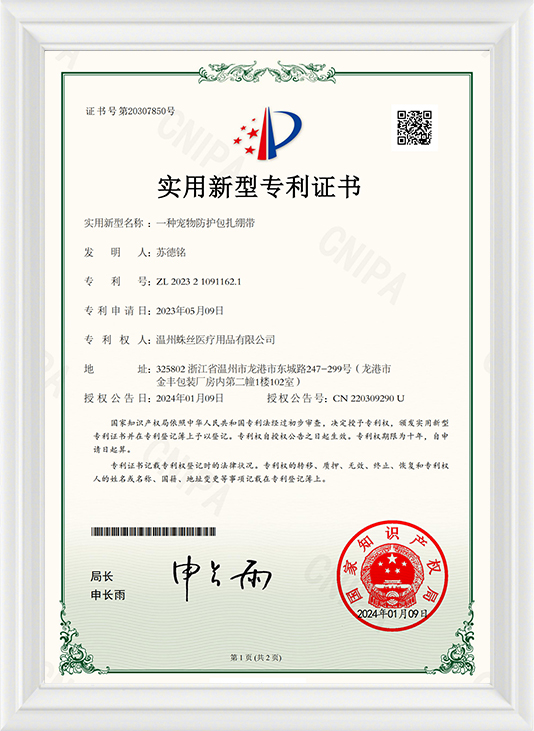
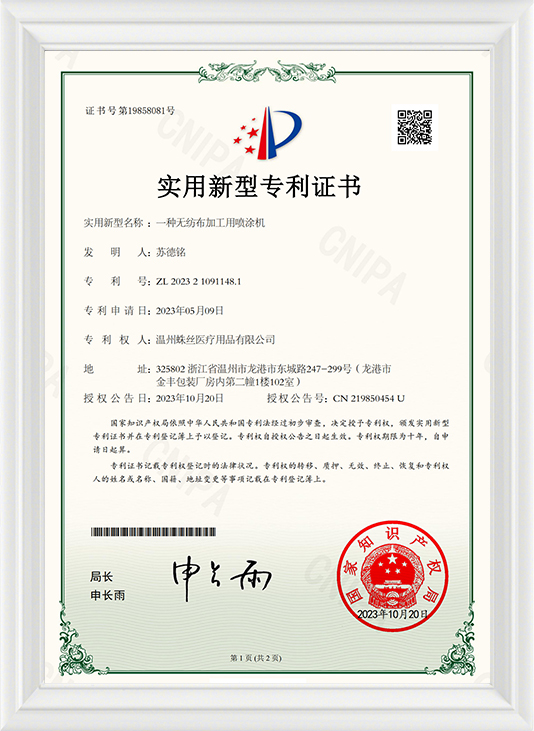
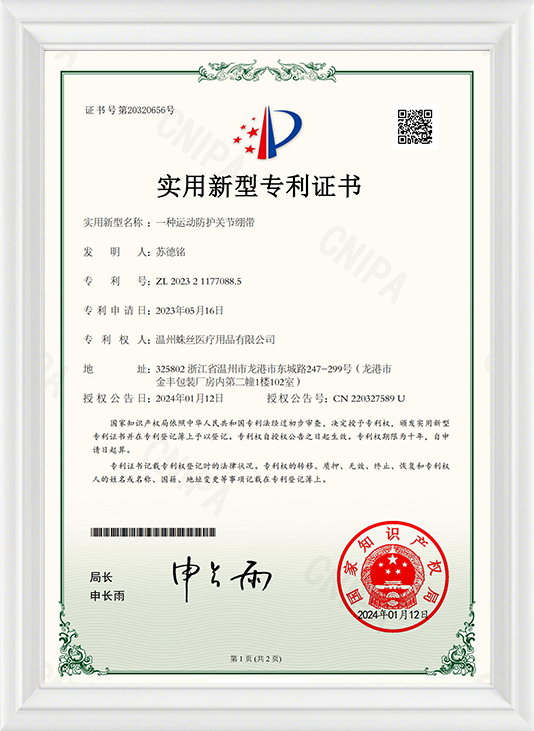
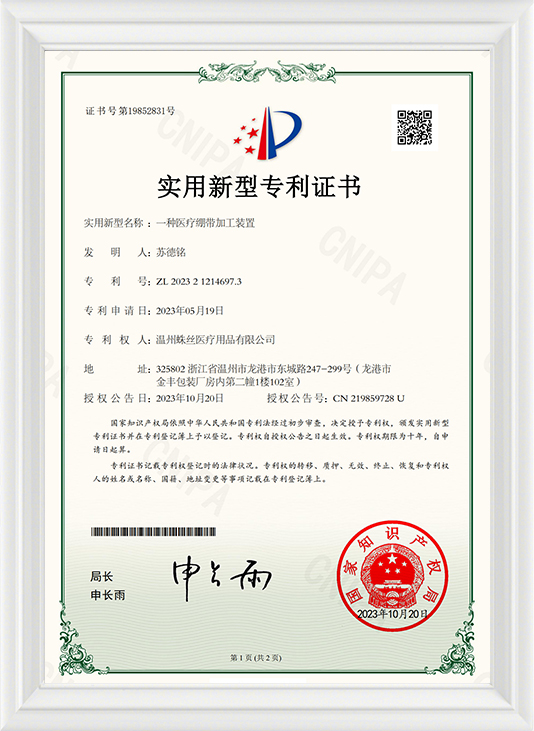
Wenzhou Zhusi Medical is a foam backed adhesive tape manufacturer supporting custom sizes. We specialize in breathable foam adhesive tape, providing professional care solutions for clients in the fields of sports, medical care, personal care, animal health, tattoos, and beauty. Through technology and innovation, we strive to enable everyone in the world to enjoy a healthy and fulfilling life.
Our Mission:
We strive to achieve both material and spiritual well-being for all employees, spread love and health, and promote the accessibility of healthcare products to everyday families.
Our Vision:
To become a renowned company recognized by customers, respected by society, and ensuring employee well-being.
Sports taping is often treated as a simple wrapping task, but the material placed closest to the skin can influence how the outer tape feels...
READ MOREA bandage placed around a joint has to deal with constant changes in the shape of the skin. When an ankle bends, a wrist turns, or a knee fl...
READ MOREA cohesive bandage can look simple to use. It stretches, wraps around an area, and holds against itself without needing ordinary adhesive on...
READ MOREA bandage may look simple, but its performance depends on how it behaves after it has been wrapped around the body. It needs to remain in po...
READ MOREFoam tape is easy to overlook until a project needs a little space between two surfaces. Unlike flat paper or film tape, it has a cellular core that compresses under pressure and springs back slightly when released. That extra thickness can create a shadow line, raise a paper element, soften an edge, or give a display more physical depth.
Two common types are Double-Sided Foam Tape and Weatherproof Foam Tape. Both use a lightweight foam carrier, but they are designed and finished differently. Double-sided foam tape is usually selected for concealed mounting and layered construction, while weatherproof foam tape tends to have a denser, smoother structure suited to exposed or changing environments. This guide explains their materials, formats, design possibilities, and practical differences.
Foam is not one material but a family of cellular materials. Tiny open or closed cells inside the carrier give it a cushioned structure without making it excessively heavy.
Depending on the formulation, foam tape may use polyethylene, polyurethane, EVA, PVC, acrylic foam, or rubber-based foam. Each material behaves differently, so the technical data sheet matters when a project depends on a specific density, temperature range, or environmental resistance.
As a tape carrier, foam introduces several useful characteristics:
The main differences between Double-Sided Foam Tape and Weatherproof Foam Tape come from the foam chemistry, cell structure, density, adhesive system, thickness, and surface treatment.
Double-Sided Foam Tape
Double-Sided Foam Tape has adhesive on both faces of the foam carrier. One side is applied to the first material, and the release liner is removed before the second surface is positioned.
The foam is often soft or moderately firm, making it useful for building raised layers and filling small gaps between relatively rigid surfaces. Common carriers include PE, EVA, PU, PVC, and acrylic foam, although the exact construction varies by grade.
White and black are the most familiar colors, but grey and colored options are also available. In finished work, the tape is often concealed. It can also be left partly visible when the designer wants the foam edge or shadow line to contribute to the composition.
Weatherproof Foam Tape
Weatherproof Foam Tape usually uses a denser closed-cell carrier, often based on polyethylene, PVC, EPDM, neoprene, or another moisture-resistant foam. Closed cells limit the movement of water through the foam more effectively than open-cell structures.
Its surface is generally smooth, and its profile may feel firmer than a soft double-sided mounting foam. Depending on the product, adhesive may be applied to one side or both sides.
The term weatherproof should be read as a performance category rather than an absolute guarantee. Outdoor durability depends on the complete construction, including the foam, adhesive, liner, application surface, UV exposure, temperature cycling, moisture, and installation method. Product-specific test data should be checked for demanding exterior applications.
The table below summarizes the typical material and presentation differences between the two tape families.
| Aspect | Double-Sided Foam Tape | Weatherproof Foam Tape |
| Common carrier | PE, EVA, PU, PVC, or acrylic foam | Closed-cell PE, PVC, EPDM, or similar foam |
| Adhesive coating | Both sides | One or both sides |
| Surface character | Soft or moderately smooth | Smooth and relatively firm |
| Foam feel | Light, cushioned, compressible | Denser and more controlled |
| Typical colors | White, black, grey, selected colors | Black, grey, white, and neutral tones |
| Common thicknesses | Thin mounting grades to thick spacer grades | Usually medium-density sealing or mounting grades |
| Available forms | Rolls, sheets, pads, and die-cut shapes | Rolls, strips, sheets, and custom profiles |
| Visual strength | Raised layers and hidden mounting | Defined edges and structured spacing |
| Typical setting | Indoor creative, display, and organizational work | Indoor or suitably rated exterior applications |
The short version: Double-Sided Foam Tape is the versatile choice for concealed mounting and dimensional layering. Weatherproof Foam Tape has a firmer, often closed-cell construction for projects that may face moisture or changing environmental conditions.
Foam tape has moved well beyond basic white mounting squares. Changes in thickness, density, color, shape, and liner design now allow it to play a more deliberate role in creative and organizational work.
Color Options
White, black, and grey remain the standard choices because they are easy to coordinate with common substrates.
Some foam materials can be produced in custom colors, but availability usually depends on the foam chemistry, order volume, and manufacturing process.
Thickness and Density
Thickness determines how far one surface sits above another, while density affects how soft or firm the layer feels.
Thin foam tapes create restrained separation. They work well when a project needs a slight lift without an obvious gap. Thicker grades produce deeper shadows and more visible relief.
Soft foam compresses readily and can follow minor surface variation. Firmer foam keeps a more consistent profile, which is helpful when parallel lines or repeated elements need to remain visually even.
Smooth and Textured Surfaces
Most foam tapes have a relatively smooth skin, but some grades show a fine cellular grain or lightly embossed texture.
A smooth edge looks clean in graphic displays and geometric compositions. A more visible foam texture can add tactile contrast beside paper, card, wood, fabric, or plastic film.
The surface may be hidden once the tape is installed, but it still matters when the edge remains visible.
Rolls, Sheets, and Die-Cut Shapes
Foam tapes are produced in several formats:
Pre-cut formats save time when a project uses the same dimensions repeatedly. Sheets provide more freedom for prototypes and one-off artwork.
Foam tape is often treated as a hidden mounting material. In creative work, however, its thickness and compressibility can become part of the design.
In the Studio and Craft Room
Foam tape gives artists and paper crafters a simple way to create relief without building a separate support structure.
Common uses include:
Using several thicknesses in one composition can create foreground, middle-ground, and background layers. Even a small difference in height changes how light moves across the work.
For photographs, original artwork, and valuable paper, check whether the adhesive is acid-free and documented for archival use.
In Displays and Interior Projects
Foam tape can support temporary or semi-permanent display details when the tape grade is compatible with the materials involved.
Possible applications include:
Wall paint, coatings, wallpaper, and laminated panels vary widely. A small application test helps identify possible staining, paint lifting, residue, or surface damage before a full installation begins.
In Offices and Workspaces
Foam tape can bring dimension to organization systems without relying on bulky clips or visible fasteners.
It may be used for:
For movable systems, the surface should be tested for clean removal. Standard foam tape is not automatically repositionable, and stronger adhesives may leave foam or residue behind.
Around the Home
Small foam pieces are useful when a decorative element needs to sit slightly above its background.
Examples include:
Foam tape should not be used for heavy, valuable, overhead, or safety-critical items unless the product has been specifically rated for that application.
Foam tape development increasingly reflects the needs of designers who care about thickness, texture, conversion, and material documentation—not only adhesive strength.
Lower-Material Constructions
Some projects are moving toward thinner or lower-density foam carriers to reduce material use while preserving the required visual spacing.
The best option is not always the thinnest tape. An underspecified product may fail early and create more waste through replacement. Material efficiency depends on using the minimum construction that still performs reliably.
Modular Shapes
Foam tape is increasingly supplied as dots, squares, strips, frames, and custom die-cut parts. These modular formats make repeated layouts faster and more consistent.
Designers can combine standard shapes to build:
Digital cutting and die-cut conversion also make short-run custom shapes more practical.
Contrasting Textures
Soft foam edges can be paired with smooth paper, woven fabric, polished plastic, metal foil, or translucent film. The contrast becomes especially visible when the foam is intentionally exposed.
Some projects use black foam between white layers to create a graphic outline. Others hide white foam between pale materials so that only the shadow remains visible.
Minimalist Integration
Narrow strips and thin pads can create depth without dominating a composition. A raised label, a small gap behind a display card, or a single shadow line may be enough to make a flat layout feel more deliberate.
This approach favors precise placement and consistent thickness over highly decorative surfaces.
Application-Specific Adhesives
More buyers are matching adhesives to particular substrates rather than selecting foam tape by thickness alone. Glass, metal, painted walls, untreated wood, fabric, and low-surface-energy plastics do not respond to adhesives in the same way.
For professional projects, foam density and adhesive chemistry should be considered together.
Five practical questions usually point to the right foam tape.
Adhesive compatibility is just as important as appearance. Test the tape on the intended substrate under realistic conditions before beginning a large installation.
A few practical habits make dimensional foam-tape work cleaner and more consistent.
Foam tape remains easier to use when the rolls, sheets, and adhesive surfaces are protected from heat and contamination.
Foam tape presents a more complex recycling challenge than a single-material plastic sheet. A finished product may combine a foam carrier, adhesive coatings, a release liner, colorants, and packaging. After use, the tape may also carry paint, paper fibers, dirt, or fragments of the mounted substrate.
Some manufacturers are exploring:
Claims that a foam tape is recyclable should be treated carefully. Even when the base foam is recyclable in principle, local facilities may not accept adhesive-coated foam tape.
In practice, useful ways to reduce waste include selecting the correct width, avoiding unnecessary full-surface coverage, testing before production, nesting die-cut shapes efficiently, and choosing a construction that will last for the intended service period.
What materials are foam tapes made from?
Common carriers include polyethylene, polyurethane, EVA, PVC, acrylic foam, EPDM, and neoprene. The material varies by product and intended application.
Can foam tape be used outdoors?
Only when the product is specifically rated for the expected outdoor conditions. UV exposure, rain, temperature cycling, surface type, and load all affect performance.
Does thicker foam tape provide stronger adhesion?
Not necessarily. Thickness changes spacing and gap-filling ability, but bond performance also depends on adhesive chemistry, foam density, surface preparation, pressure, temperature, and load.
Can foam tape be cut into custom shapes?
Yes. Rolls and sheets can be cut into strips, dots, frames, letters, and geometric forms. Die cutting is useful when many identical pieces are required.
Can foam tape be removed without damaging a surface?
That depends on the adhesive and substrate. Painted walls, paper, photographs, wallpaper, and coated surfaces can be damaged during removal. Test a small hidden area first.
Is foam tape suitable for archival artwork?
Only if the product is specifically documented as acid-free and archival-safe. Standard foam tape may discolor materials or leave adhesive residue over time.
Is Weatherproof Foam Tape completely waterproof?
Not automatically. Closed-cell foam can resist water penetration, but seams, cut edges, compression, adhesive coverage, and installation quality affect the finished result. Check the manufacturer’s test data and application instructions.
Is foam tape recyclable?
Some uncoated foam materials can be recycled through specialized systems, but adhesive-coated foam tape is rarely accepted in ordinary household recycling. Local rules and product construction should be checked.
Double-Sided Foam Tape and Weatherproof Foam Tape began as practical mounting and sealing materials, but their thickness, texture, and cuttable formats have opened the door to broader creative use.
Double-Sided Foam Tape is the more adaptable option for concealed mounting, raised artwork, paper engineering, and layered displays. Weatherproof Foam Tape offers a firmer profile and, when properly rated, better suitability for projects exposed to moisture or environmental change.
Between the two, designers can create anything from a barely visible shadow line to a strongly layered composition. The most effective choice considers not only color and thickness, but also foam chemistry, adhesive construction, substrate compatibility, exposure conditions, and eventual removal. In foam-tape design, even a few millimeters can do a surprising amount of visual work.

“This website is for users outside of China.”
Copyright © 2025 Wenzhou Zhusi Medical Supplies Co., Ltd. All Reserved. Approval No:浙温械备20250002 & 浙温械备 20190061 号 & 浙温药监械生产备20190011号
Wholesale Foam Tape Factory
