


 English
 中文简体
中文简体
 Español
 عربى
عربى
 Français
 Português
Kinesiology Tape
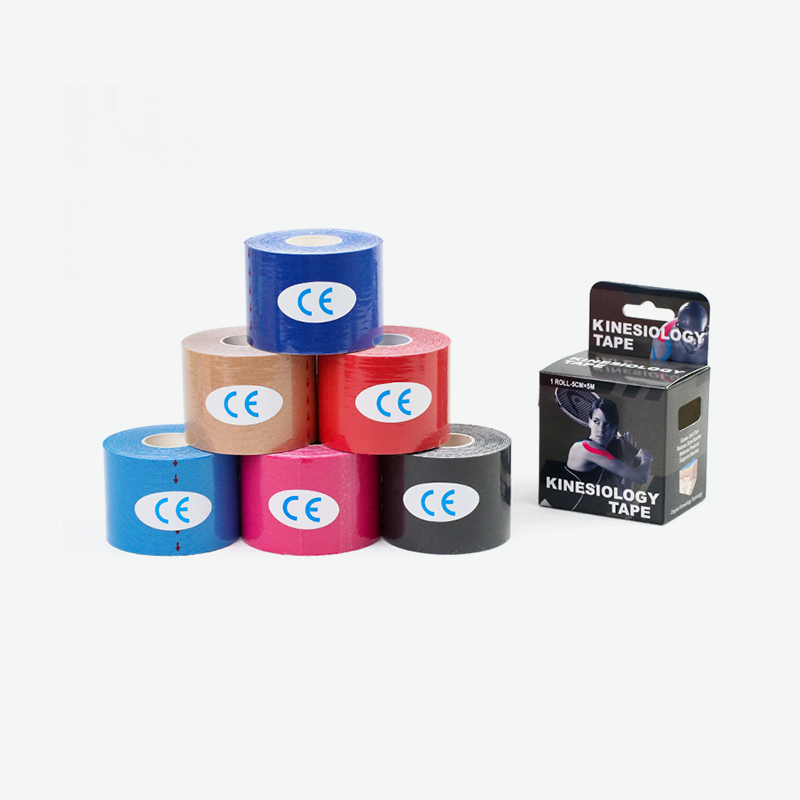
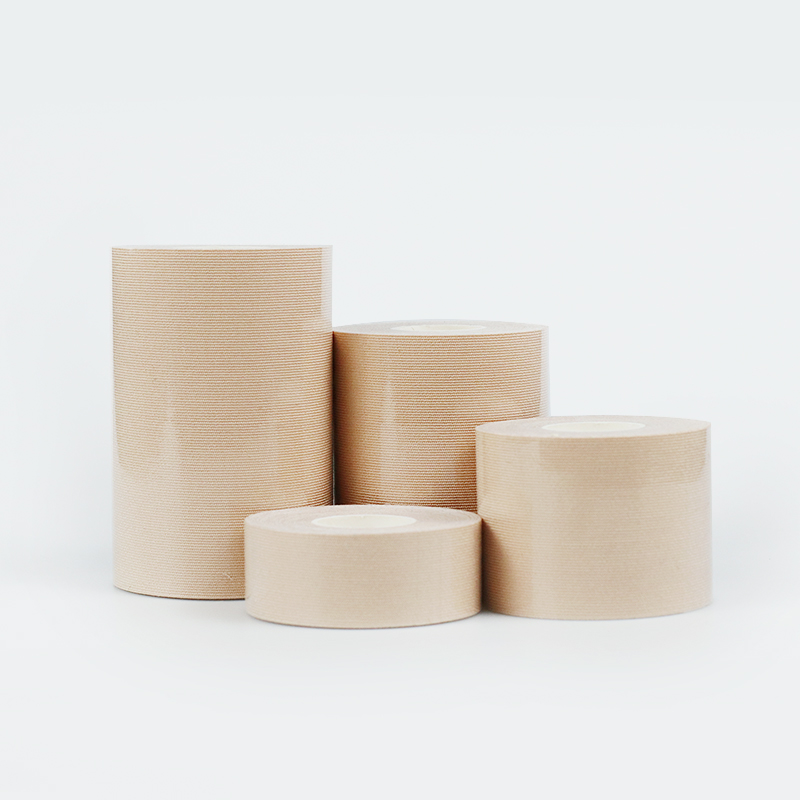
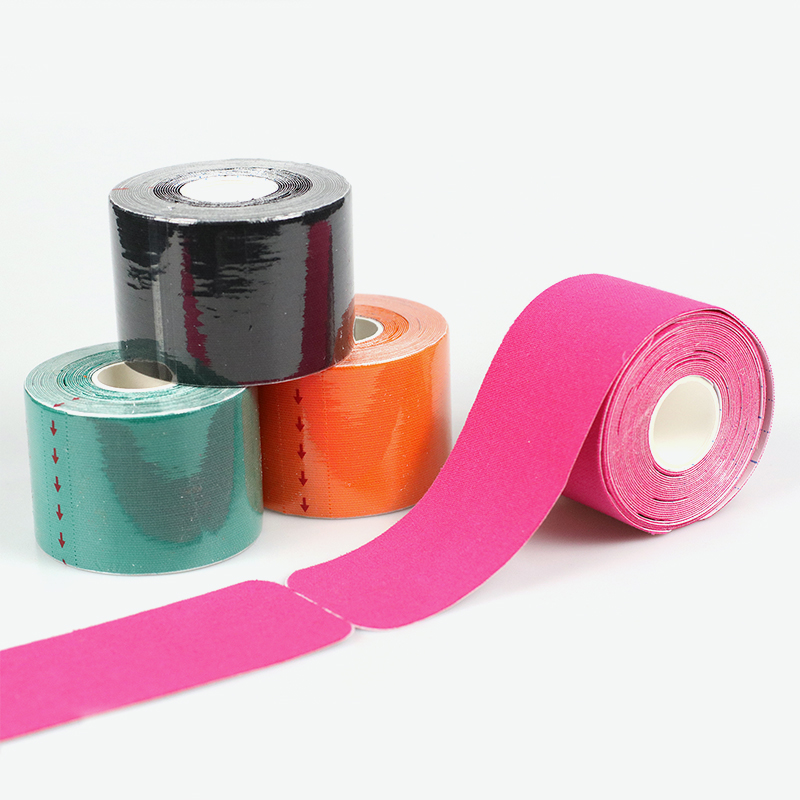
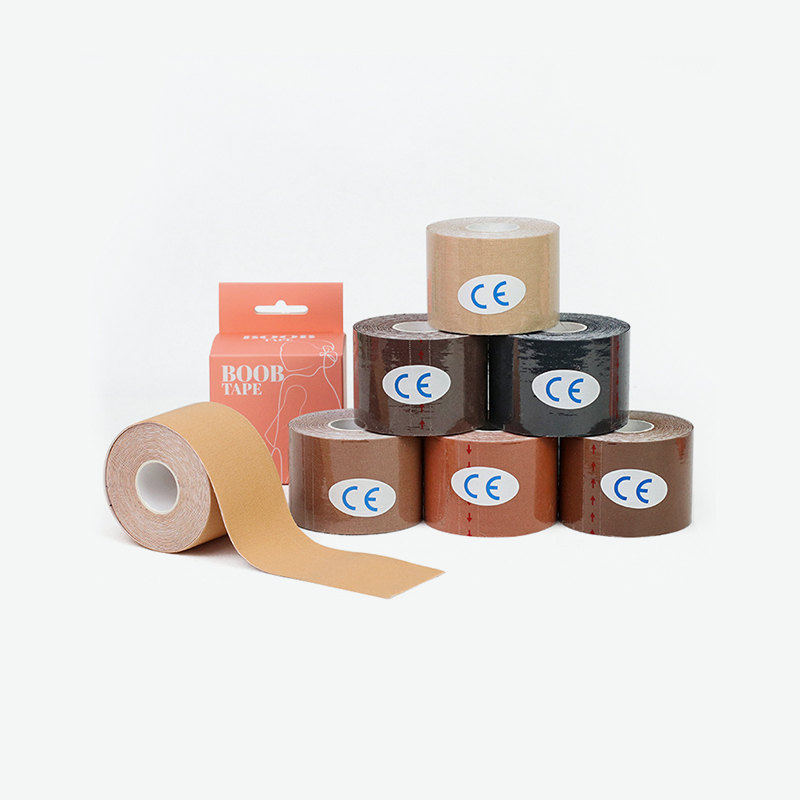
Sports tape is an elastic, ultra-thin, breathable tape primarily used to treat joint and muscle pain, and is widely used in sports health care and protection.
Applications:
1. Relieves joint and muscle pain, suitable for athletes, fitness enthusiasts, and the general public.
2. Relaxes muscles and fascia after exercise, prevents spasms, and strengthens soft tissue.
3. Secures dressings to protect the skin from friction or abrasions.
4. Helps stabilize the wrist or shoulder during weightlifting or other strength training, ensuring correct posture and stability.
Services: We offer customized services to meet the needs of diverse customers, such as packaging design, branding design, and product function design.
Advantages:
1. Thin and breathable, comfortable to use.
2. Highly elastic, suitable for a variety of exercise scenarios.
About Us
Wenzhou Zhusi Medical Supplies Co., Ltd.
Wenzhou Zhusi Medical is a kinesiology tape factory for oem branding and customized specifications. We specialize in kinesiology tape with OEM logo, providing professional care solutions for clients in the fields of sports, medical care, personal care, animal health, tattoos, and beauty. Through technology and innovation, we strive to enable everyone in the world to enjoy a healthy and fulfilling life.
Our Mission:
We strive to achieve both material and spiritual well-being for all employees, spread love and health, and promote the accessibility of healthcare products to everyday families.
Our Vision:
To become a renowned company recognized by customers, respected by society, and ensuring employee well-being.
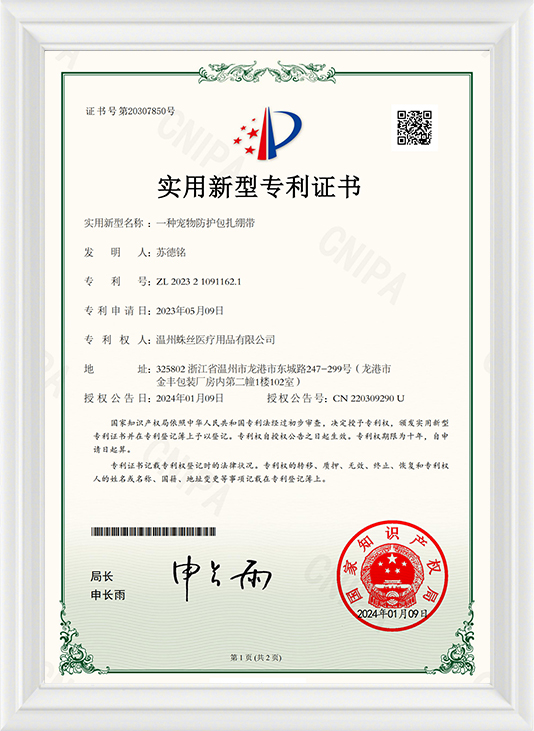
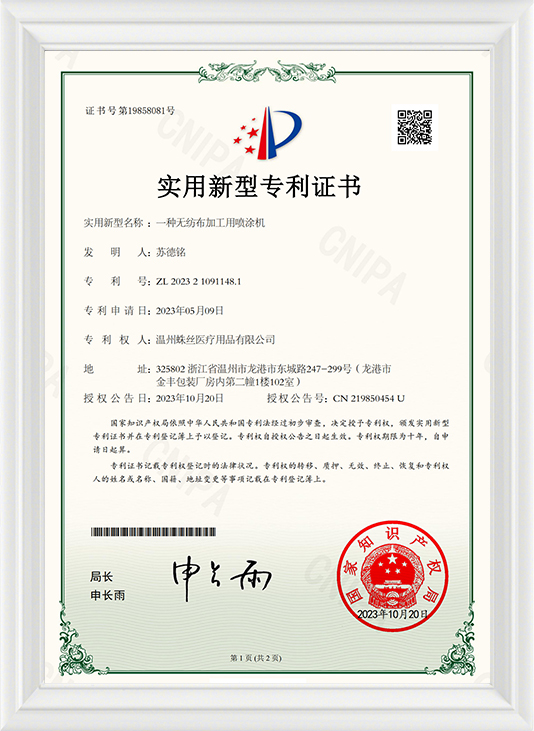
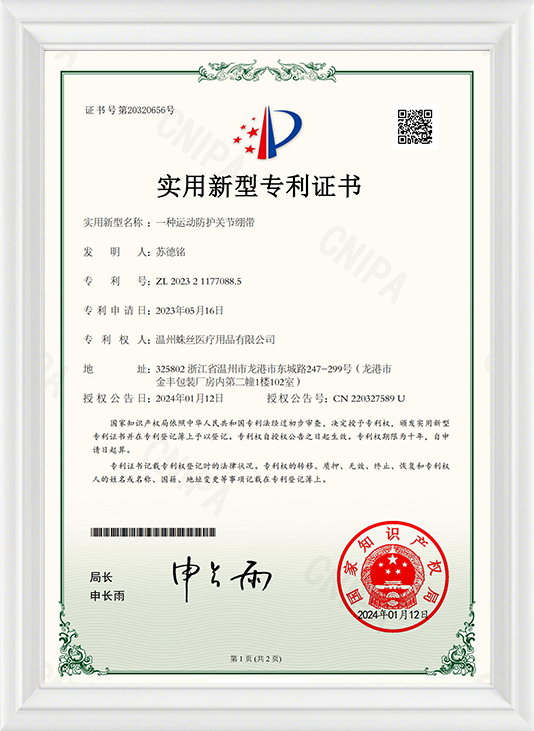
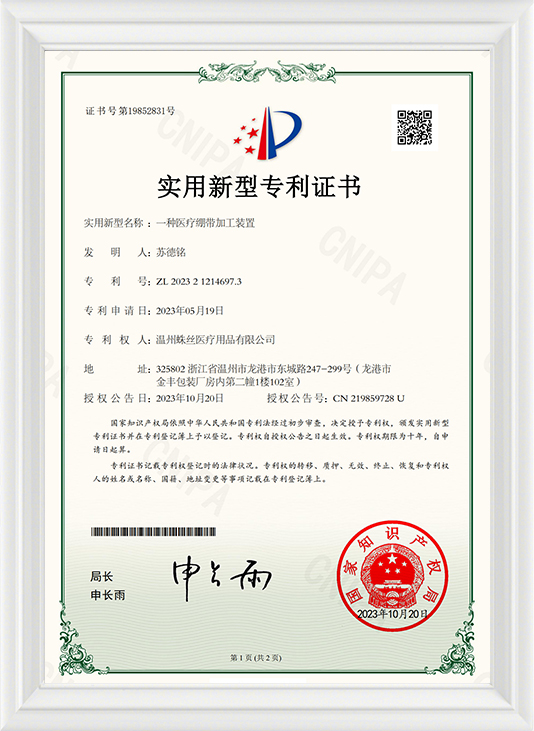
Certificate Of Honor
News
-
A bandage placed around a joint has to deal with constant changes in the shape of the skin. When an ankle bends, a wrist turns, or a knee fl...
READ MORE -
A cohesive bandage can look simple to use. It stretches, wraps around an area, and holds against itself without needing ordinary adhesive on...
READ MORE -
A bandage may look simple, but its performance depends on how it behaves after it has been wrapped around the body. It needs to remain in po...
READ MORE -
A first aid bandage looks straightforward when it is sitting in a package. There is a backing, an adhesive area, a pad in the middle, and a ...
READ MORE
Message Feedback
Kinesiology Tape: Materials, Types, Uses and Selection Guide
Kinesiology tape is an elastic, adhesive-backed fabric used in sports, rehabilitation and general movement-related taping. Unlike rigid athletic tape, it is designed to extend along its length and follow the contours of the body during movement.
Most products use a cotton, synthetic or blended textile backing with a pressure-sensitive acrylic adhesive. They may be supplied as continuous rolls, pre-cut strips or application-specific shapes. Although these products often look similar, their stretch, recovery, adhesive behavior, thickness and wear characteristics can vary considerably.
The names Elastic Therapeutic Tape and Muscle Support Tape are also used in the market. These are descriptive terms rather than universal technical classifications. Product selection should be based on measurable construction and performance data—not the name printed on the package.
What Is Kinesiology Tape?
Kinesiology tape is a flexible fabric tape engineered to stretch primarily in the longitudinal direction. It is applied directly to intact skin using strips cut to match a selected body area or taping method.
A typical product contains:
- Elastic cotton, synthetic or blended fabric
- A pressure-sensitive adhesive
- A release paper or film liner
- Printed stretch indicators or grid lines on the liner
- Optional water-resistant or surface-finishing treatments
- Packaging and instructions for the intended market
Kinesiology tape differs from elastic compression bandages. It is usually applied as individual adhesive strips rather than wrapped repeatedly around an entire limb.
It also differs from rigid sports tape. Rigid tape has little intentional stretch and is commonly used in structured strapping methods. Kinesiology tape is designed to move more readily with the skin.
Common reasons people use kinesiology tape include:
- Incorporating it into a sports taping routine
- Applying flexible tape around moving body areas
- Following a rehabilitation professional’s taping plan
- Using pre-cut strips for specific application patterns
- Providing a wearable external cue during movement
- Covering selected areas without using a rigid wrap
The tape itself does not diagnose an injury. It should not be presented as a replacement for medical assessment, rehabilitation or appropriate protective equipment.
Is Elastic Therapeutic Tape the Same as Kinesiology Tape?
In most commercial contexts, Elastic Therapeutic Tape refers to the same general category as kinesiology tape. Both names usually describe a stretchable fabric tape with a skin-contact adhesive.
However, neither term guarantees a particular:
- Fiber composition
- Stretch percentage
- Elastic recovery
- Adhesive chemistry
- Wear time
- Water resistance
- Medical-device status
- Clinical performance
Similarly, Muscle Support Tape is a marketing description rather than a standardized material definition. A product using this name may be cotton-based, synthetic, pre-cut or supplied in a continuous roll.
A technically useful listing should identify:
- Backing composition
- Total thickness
- Longitudinal and transverse elongation
- Elastic recovery
- Adhesive type
- Adhesive-coating pattern
- Width and roll length
- Intended use
- Recommended wear period
- Relevant warnings
- Applicable product documentation
This information allows buyers and users to compare products that may otherwise be sold under different names.
Main Types of Kinesiology Tape
Kinesiology tape can be grouped by backing material, format, adhesive design and intended use environment.
| Tape Type | Typical Construction | Distinguishing Feature | Common Format |
| Cotton kinesiology tape | Elastic cotton fabric with pressure-sensitive adhesive | Soft textile feel and familiar woven surface | Roll or pre-cut strip |
| Synthetic kinesiology tape | Nylon, polyester or blended elastic fabric | Lower moisture absorption and controlled stretch | Roll or pre-cut strip |
| Cotton-synthetic blend tape | Mixed-fiber elastic backing | Balances textile feel and dimensional consistency | Continuous roll |
| Pre-cut kinesiology tape | Prepared strips or application-specific shapes | Reduces cutting during application | Individual strips or kits |
| Extra-wide kinesiology tape | Elastic backing in a broader width | Covers larger areas with fewer strips | Wide roll |
| Pattern-coated kinesiology tape | Fabric with wave, strip or grid adhesive coating | Controls adhesive distribution and flexibility | Roll or pre-cut strip |
| Uncut bulk tape | Wide or long-format material for converting | Intended for professional or private-label production | Jumbo roll or master roll |
Terms such as professional, advanced, extra strength and therapeutic grade are not meaningful unless they are supported by defined test criteria.
Materials and Composition
The backing, elastic fibers, adhesive and release liner work together as one product system. A change in any layer can affect application and finished performance.
Cotton Elastic Backing
Cotton is widely used because it provides a soft textile surface and can be woven with elastic yarns to create controlled stretch.
Important backing variables include:
- Cotton percentage
- Yarn count
- Fabric weight
- Weave density
- Total thickness
- Elastic-yarn content
- Stretch direction
- Surface texture
- Moisture absorption
- Dimensional stability
A product described as cotton kinesiology tape may still contain elastic or synthetic fibers. Pure cotton does not provide the same elastic recovery required by most kinesiology tape constructions.
Cotton content alone also does not prove that a product is breathable, hypoallergenic or suitable for sensitive skin. Adhesive coverage and the complete material structure must be considered.
Synthetic Elastic Backing
Synthetic tapes may use nylon, polyester, spandex or blended fibers. These materials can provide consistent elasticity and lower moisture absorption than cotton-rich fabrics.
Potential characteristics include:
- Smooth or fine textile surface
- Controlled stretch
- Faster drying
- Lower water uptake
- High tensile strength
- Stable color
- Thin constructions
- Consistent batch-to-batch behavior
Synthetic tape is not automatically more durable or water resistant. Finished performance still depends on the weave, thickness, adhesive and edge quality.
Blended Fabrics
Cotton may be combined with rayon, polyester, nylon or elastic fibers to adjust softness, strength and recovery.
A blended backing can help balance:
- Comfort and surface feel
- Elasticity
- Dimensional stability
- Moisture response
- Printing performance
- Adhesive anchorage
- Converting consistency
The most suitable composition depends on the intended application and product specification rather than a preference for natural or synthetic fibers alone.
Release Liner
The release liner protects the adhesive before use. It may be made from release-coated paper or film.
A practical liner should:
- Separate cleanly from the adhesive
- Remain stable during die-cutting
- Protect the adhesive during storage
- Support accurate strip measurement
- Avoid tearing unexpectedly
- Maintain suitable release force over shelf life
Printed grid lines can help users measure and cut strips. They do not indicate the exact stretch applied after the tape is removed from the liner.
Adhesive Systems Used in Kinesiology Tape
Most kinesiology tapes use a pressure-sensitive acrylic adhesive. The adhesive is activated by firm application pressure rather than by water, heat or a separate curing step.
Acrylic Adhesive
Acrylic adhesives can be formulated for different levels of initial tack, holding power, moisture response and removal.
Relevant properties include:
- Initial adhesion
- Holding strength
- Adhesion after movement
- Resistance to perspiration
- Adhesion after brief water exposure
- Liner release force
- Residue after removal
- Aging stability
- Skin-contact suitability
Acrylic adhesive does not automatically mean hypoallergenic. Skin response depends on the finished formulation, manufacturing controls, application method and individual sensitivity.
Adhesive Coating Patterns
Kinesiology tape adhesive is often applied in a wave pattern, although other patterns or full coatings may be used.
Common configurations include:
- Wave coating
- Longitudinal strips
- Dot coating
- Grid coating
- Full-surface coating
The coating pattern can influence flexibility, skin-contact area and moisture-vapor movement. A visible wave pattern does not itself establish therapeutic effectiveness.
Adhesive-Coating Weight
Too little adhesive can lead to early edge lifting. Excessive coating may increase stiffness, residue or removal difficulty.
Coating weight should be matched to:
- Fabric density
- Backing thickness
- Expected wear conditions
- Application area
- Target unwind performance
- Intended market requirements
The strongest adhesive is not always the best option. A useful product must balance holding performance with practical removal.
How Kinesiology Tape Stretches
Kinesiology tape is usually designed to stretch more along its length than across its width. This directional behavior is created by its woven structure and elastic yarns.
Three properties are particularly important:
- Elongation measures how far the tape can extend relative to its original length. Manufacturers should state whether the figure refers to the backing alone or the finished adhesive tape.
- Working Stretch is the extension range used during normal handling or application. It may be lower than the maximum elongation measured during laboratory testing.
- Elastic Recovery describes how well the material returns toward its original length after being stretched.
A tape with high elongation but weak recovery may remain deformed after movement. For meaningful comparison, elongation and recovery should be evaluated together.
Stretch performance may be affected by:
- Fabric composition
- Yarn orientation
- Adhesive coating
- Temperature
- Moisture
- Repeated movement
- Storage age
Kinesiology tape should not be stretched to its maximum simply because the backing can extend that far. Application tension depends on the specific product and taping method.
Kinesiology Tape vs Rigid Athletic Tape
These products use different structures and are intended for different taping approaches.
| Feature | Kinesiology Tape | Rigid Athletic Tape |
| Backing behavior | Elastic, mainly in the length direction | Low stretch or non-elastic |
| Common material | Cotton, synthetic or blended elastic fabric | Dense cotton, rayon or blended woven fabric |
| Common adhesive | Acrylic pressure-sensitive adhesive | Often rubber-based or zinc oxide adhesive |
| Application | Individual strips with controlled stretch | Structured anchors, strips and wraps |
| Movement response | Follows skin and body contours | Maintains a firmer position |
| Typical width | Commonly around 5 cm | Commonly 2.5–5 cm |
| Hand tearing | Usually cut with scissors | Often designed for hand tearing |
| Wear duration | Product-specific; some are intended for multi-day wear | Often linked to a training session or activity |
Neither product is universally better. The correct choice depends on the intended taping technique and required movement response.
Kinesiology Tape vs Elastic Adhesive Bandage
Kinesiology tape and elastic adhesive bandages both stretch, but their structures and application methods differ.
| Feature | Kinesiology Tape | Elastic Adhesive Bandage |
| Format | Individual adhesive strips | Wider bandage roll |
| Application style | Applied along selected body areas | Commonly wrapped with overlapping layers |
| Stretch direction | Primarily longitudinal | Depends on the woven bandage structure |
| Compression potential | Not generally used as a circumferential compression wrap | Can create compression when applied as a wrap |
| Adhesive pattern | Often wave or patterned coating | Commonly continuous or product-specific coating |
| Typical role | Flexible taping | Support, fixation or compression-related applications |
Elastic adhesive bandages require careful tension control. Neither product should be wrapped so tightly that it causes numbness, swelling, tingling or skin discoloration.
Common Sizes and Formats
Kinesiology tape is commonly sold in continuous rolls, pre-cut strips and bulk formats.
| Format | Typical Use | Selection Consideration |
| 2.5 cm narrow roll | Fingers and small application areas | Precise placement with limited coverage |
| 5 cm standard roll | General body-area applications | Widely used all-purpose format |
| 7.5 cm wide roll | Broader areas | Covers more surface with fewer strips |
| 10 cm extra-wide roll | Large-area or custom conversion | May require more careful contouring |
| Pre-cut strips | Quick and repeatable preparation | Less flexibility in strip length |
| Uncut roll | Custom lengths and shapes | Requires scissors and application preparation |
| Jumbo roll | Manufacturing and private-label conversion | Intended for slitting or die-cutting |
A complete product specification should include:
- Finished width
- Width tolerance
- Roll length
- Length tolerance
- Core diameter
- Total thickness
- Pre-cut strip dimensions
- Number of strips per pack
- Individual or bulk packaging
Product dimensions should be verified physically. Packaging descriptions alone may not indicate whether length is measured before or after material relaxation.
Common Kinesiology Tape Shapes
Kinesiology tape can be cut into different shapes according to the application method. Shape names describe the cut configuration, not a guaranteed clinical outcome.
| Shape | Construction | General Application Style |
| I-strip | One straight strip | Basic linear placement |
| Y-strip | One end remains intact while the other is divided | Wraps around a selected body contour |
| X-strip | Center remains connected with split ends | Covers a broader or crossing area |
| Fan strip | Several narrow tails extend from one anchor | Multi-strip application over a wider area |
| Donut or opening strip | Central opening or overlapping strips | Application around a selected location |
| Pre-cut patch | Factory-cut shape with rounded edges | Repeatable placement and retail convenience |
Users should follow the instructions provided for the specific product. Shape alone does not determine the amount of tension, placement or wear period.
General Application Principles
The following information covers safe product handling. It is not a treatment protocol for a particular injury.
Review the instructions
Confirm that the tape is intended for direct contact with intact skin and check the recommended application and wear period.
Prepare the skin
The area should generally be clean, dry and free from oil, lotion or heavy perspiration.
Measure before cutting
Estimate the required length while the body area is in the position specified by the selected method. Avoid cutting an unnecessarily long strip.
Round the corners
Rounded corners may be less likely to catch on clothing than sharp square edges.
Avoid touching the adhesive excessively
Hold the strip by its backing or release liner to reduce contamination.
Apply anchors without excessive stretch
The starting and finishing ends are commonly applied with little or no stretch, depending on the product instructions.
Use controlled tension
Do not stretch the tape to its maximum. Excessive tension can increase skin stress and cause discomfort.
Activate the pressure-sensitive adhesive
Rub the applied tape gently according to its instructions. Pressure and mild friction help establish adhesive contact.
Check the edges
Make sure the strip is flat and free from folds, wrinkles or exposed adhesive.
Monitor the skin
Remove the tape if itching, burning, blistering, numbness or increasing discomfort occurs.
Overlapping multiple strips does not automatically improve the result. Additional layers can increase skin contact, stiffness and removal difficulty.
Common Application Areas
Kinesiology tape may be applied to many body areas, but placement should follow a suitable technique and the product instructions.
Shoulder and upper arm
Flexible tape can follow the contours of the shoulder and upper arm. Edge lifting may occur where clothing repeatedly rubs against the tape.
Wrist and forearm
Narrow or standard-width strips can be cut for these areas. Tape should not be wrapped tightly around the wrist as an uncontrolled circumferential band.
Back and neck
Application may require assistance because correct placement is difficult to see or reach. Tape should not be used to mask persistent or unexplained pain.
Knee
The knee combines movement, skin folding and clothing friction. Strip length, edge position and application tension should account for bending.
Calf and thigh
Longer strips may be used over larger areas. Highly stretched tape can become uncomfortable as the muscles move.
Ankle and foot
Moisture, footwear friction and movement can affect adhesion. Tape should not interfere with shoe fit or create pressure points.
Body-area examples do not establish a therapeutic indication. Persistent pain, swelling, instability or reduced movement requires appropriate assessment.
Does Kinesiology Tape Work?
Research findings on kinesiology tape vary by condition, outcome, taping method and study design. Some users report short-term changes in comfort, awareness or confidence, while evidence for broad claims such as faster healing, major performance improvement or injury prevention is inconsistent.
A responsible product description should avoid guaranteeing that kinesiology tape will:
- Cure an injury
- Prevent all sports injuries
- Permanently correct posture
- Increase circulation in every user
- Accelerate tissue healing
- Eliminate pain
- Replace rehabilitation
- Improve athletic performance
Potential outcomes depend on factors such as:
- The user’s condition
- The purpose of application
- Tape construction
- Placement and tension
- Wear duration
- Activity level
- Skin tolerance
- Other treatment or training measures
Kinesiology tape may be used as one component of a broader sports-care or rehabilitation plan. Medical or therapeutic claims must be supported by evidence appropriate to the finished product and destination market.
Water Resistance and Wear Time
Many kinesiology tapes are designed to tolerate perspiration or brief contact with water. This does not necessarily mean the product is waterproof.
Performance after exposure depends on:
- Backing fiber
- Fabric density
- Adhesive formulation
- Coating weight
- Skin preparation
- Application pressure
- Edge condition
- Water temperature
- Exposure duration
- Friction from towels or clothing
After showering or light water exposure, the tape should generally be patted rather than rubbed, subject to the manufacturer’s instructions.
Wear time varies by product. Longer wear is not always better. The tape should be removed if it becomes loose, contaminated, uncomfortable or causes a skin reaction.
How to Remove Kinesiology Tape
Careful removal can reduce unnecessary pulling on the skin.
General steps include:
- Remove the tape slowly rather than pulling it off quickly.
- Keep the tape close to the skin instead of lifting it sharply upward.
- Support the skin with the other hand.
- Follow the direction of hair growth where practical.
- Use an appropriate removal aid if recommended.
- Stop if removal causes significant pain or skin damage.
Water or oil may help with some products, but compatibility depends on the adhesive and instructions. Tape should not be aggressively removed immediately after intense activity when the skin is hot and sensitive.
Zhusi manufactures and converts elastic fabric tapes for sports-care, rehabilitation and private-label projects. Available options may include cotton and synthetic backings, different adhesive patterns, continuous rolls, pre-cut strips, custom colors, printed designs and branded packaging.
A good kinesiology tape is not simply the stretchiest or stickiest product. It is one in which the backing, adhesive, liner and converting process remain consistent from the first strip to the last—without turning application into an unexpected arts-and-crafts challenge.

“This website is for users outside of China.”
Copyright © 2025 Wenzhou Zhusi Medical Supplies Co., Ltd. All Reserved. Approval No:浙温械备20250002 & 浙温械备 20190061 号 & 浙温药监械生产备20190011号
Custom Kinesiology Tape Manufacturer with OEM Logo Options
