


 English
 中文简体
中文简体
 Español
 عربى
عربى
 Français
 Português
Foam Pre Wrap
Under Wrap
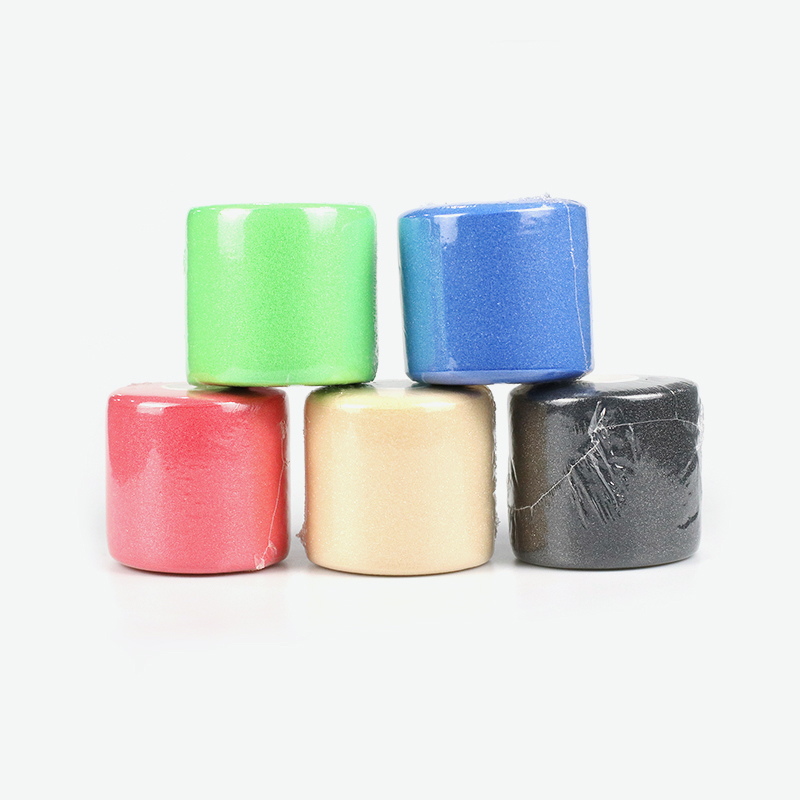
Under wrap is a highly elastic, porous, and non-sticky thin sponge-like material. Its role in sports taping is as a protective liner, placed between the skin and the rigid sports tape (such as cotton or human cotton tape).
Key features:
- Non-sticky: It does not stick to itself and adheres to the body part through its elasticity and friction.
- High elasticity: It has good stretchability and can closely fit any joint area without restricting movement.
- Porous and breathable: Like a sponge, it has many small pores, ensuring breathability and sweat absorption capacity.
- Easy to tear: Usually no scissors are needed, and it can be easily torn apart with hands.
- Soft material: It has a comfortable touch.
About Us
Wenzhou Zhusi Medical Supplies Co., Ltd.
Wenzhou Zhusi Medical is a soft foam bandage manufacturer with breathable and elastic materials. We specialize in elastic under wrap, providing professional care solutions for clients in the fields of sports, medical care, personal care, animal health, tattoos, and beauty. Through technology and innovation, we strive to enable everyone in the world to enjoy a healthy and fulfilling life.
Our Mission:
We strive to achieve both material and spiritual well-being for all employees, spread love and health, and promote the accessibility of healthcare products to everyday families.
Our Vision:
To become a renowned company recognized by customers, respected by society, and ensuring employee well-being.
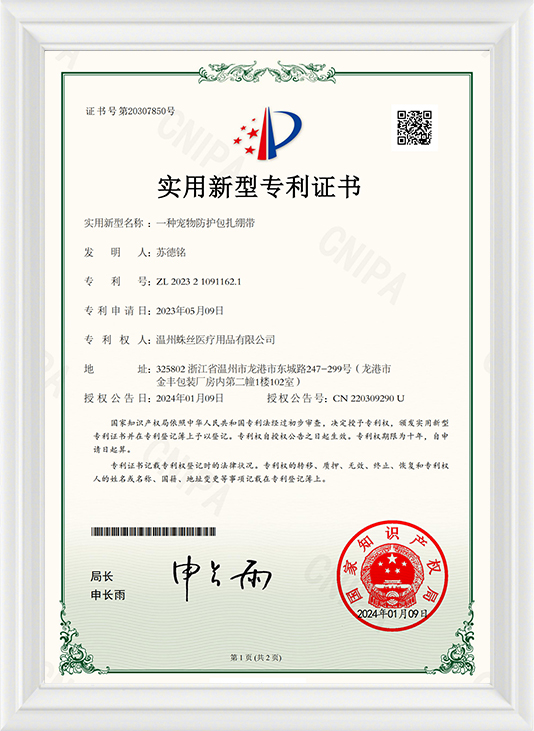
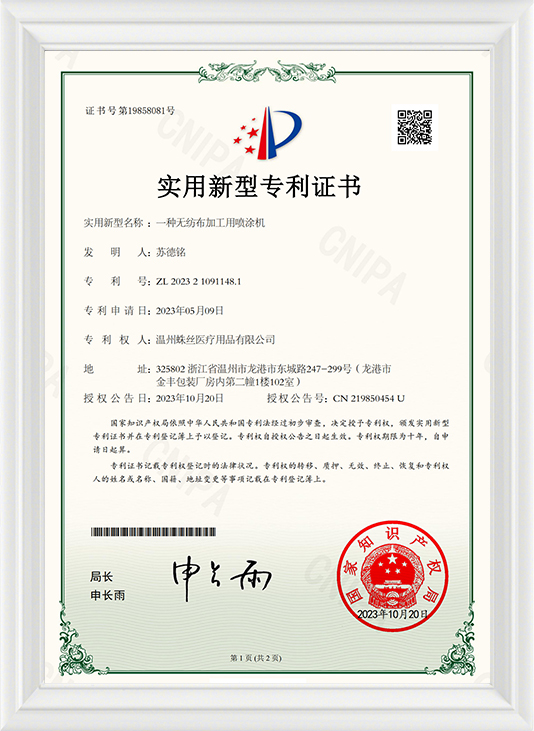
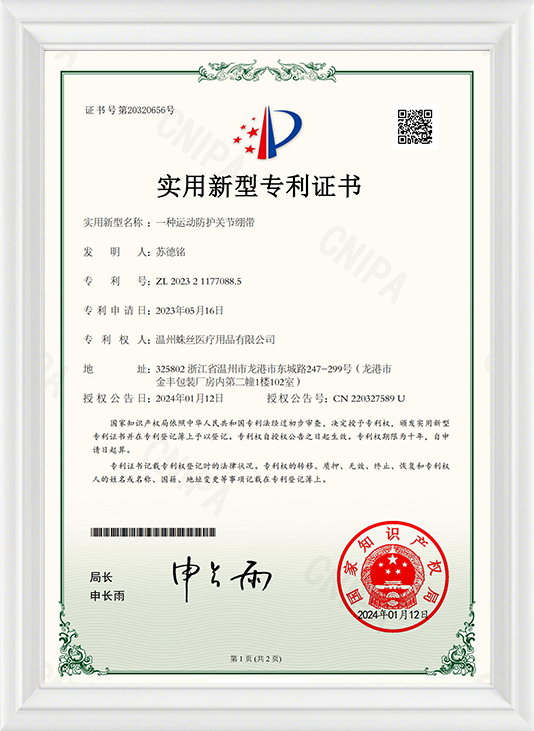
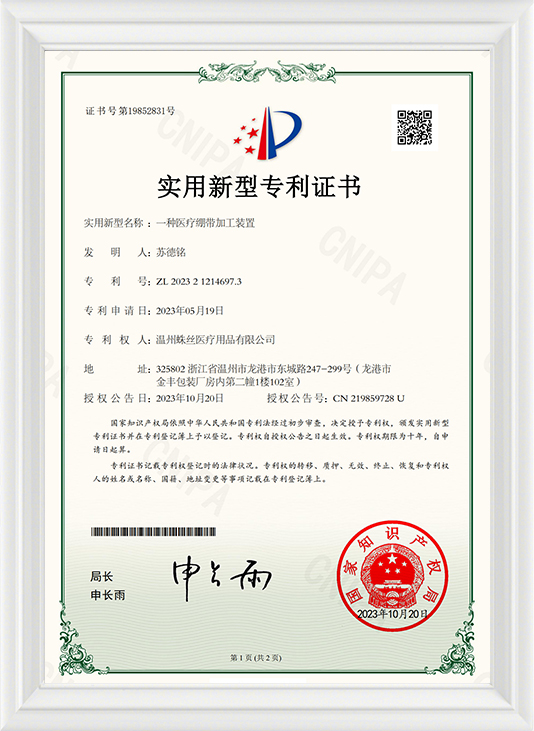
Certificate Of Honor
News
-
Sports taping is often treated as a simple wrapping task, but the material placed closest to the skin can influence how the outer tape feels...
READ MORE -
A bandage placed around a joint has to deal with constant changes in the shape of the skin. When an ankle bends, a wrist turns, or a knee fl...
READ MORE -
A cohesive bandage can look simple to use. It stretches, wraps around an area, and holds against itself without needing ordinary adhesive on...
READ MORE -
A bandage may look simple, but its performance depends on how it behaves after it has been wrapped around the body. It needs to remain in po...
READ MORE
Message Feedback
Foam Bandages and Foam Underwrap: Materials, Uses and Selection Guide
Foam products used in medical care, sports taping and veterinary wrapping may look similar, but they do not necessarily serve the same purpose. A thin sports foam underwrap creates a separating layer beneath adhesive tape. A non-adhesive foam roll may provide padding within a bandage system. An absorbent foam dressing, by contrast, is developed for wound management and requires a different material structure, cleanliness level and regulatory assessment.
These distinctions matter when selecting, manufacturing or describing a foam product. Terms such as foam bandage, foam dressing, padding foam and pre-wrap are sometimes used loosely, which can lead to incorrect applications or purchasing specifications.
What Are Foam Bandages and Foam Under Wraps?
A foam bandage is a broad term that may describe a foam-containing dressing, padding layer or flexible foam roll used within a bandaging system. Because the term is not technically precise, the complete product construction should always be stated.
A foam underwrap, also called sports pre-wrap or athletic underwrap, is usually a thin, lightweight foam supplied in rolls. It is placed beneath rigid athletic tape, cohesive bandages or other wraps to reduce direct contact between the primary tape and the skin.
An absorbent foam dressing is a wound-care product designed to manage fluid under specified conditions. It may include an absorbent foam core, a wound-contact layer, a backing film, an adhesive border or a release liner. It should not be treated as interchangeable with ordinary sports underwrap.
Quick definition
- Foam underwrap: Thin foam used beneath sports tape or another wrap.
- Padding foam: Foam used to add thickness, cushioning or pressure distribution.
- Non-adhesive foam roll: Continuous foam material secured by a secondary bandage or tape.
- Absorbent foam dressing: A wound-care product engineered to absorb and retain exudate.
- Pre-cut foam pad: A shaped foam component used for localized padding or as part of another product.
The intended use determines whether requirements such as absorbency, sterility, biocompatibility, skin contact and wound-contact suitability apply.
Types of Foam Bandages
Foam products can be classified by their structure, absorbency, adhesive design and final application.
| Product Type | Typical Construction | Primary Role | Common Setting |
| Foam underwrap | Thin polyurethane or similar flexible foam | Separates skin from athletic tape | Sports taping and training |
| Non-adhesive foam roll | Flexible open-cell or closed-cell foam | Provides padding within a wrap system | Medical, sports or veterinary wrapping |
| Pre-cut foam pad | Foam sheet cut into pads or shapes | Adds localized padding | Protective wrapping and product assembly |
| Absorbent foam dressing | Absorbent foam with optional film, adhesive or contact layer | Manages wound exudate under specified conditions | Professional wound care |
| Adhesive foam pad | Foam coated or laminated with adhesive | Provides a fixed cushioning component | Medical devices and protective products |
| Laminated foam sheet | Foam combined with film, fabric or nonwoven material | Adds strength, surface protection or handling properties | Converting and custom product development |
The phrase Absorbent Foam Bandage should be used carefully. If the product is intended for wound contact, its absorbency, fluid retention, cleanliness, biocompatibility and regulatory status must be assessed as part of the finished product.
Foam Underwrap vs Absorbent Foam Dressing
Foam underwrap and absorbent foam dressing differ in purpose, structure and application.
| Feature | Foam Underwrap | Absorbent Foam Dressing |
| Main purpose | Creates a thin layer beneath tape or wraps | Manages wound fluid and protects the wound environment |
| Typical structure | Lightweight foam roll | Absorbent foam with optional backing and contact layers |
| Adhesive | Usually non-adhesive | May be non-adhesive or have an adhesive border |
| Sterility | Commonly non-sterile | Often supplied sterile when intended for wound care |
| Direct wound contact | Generally not intended | Depends on the approved product design |
| Absorbency | Not a primary performance requirement | A central performance characteristic |
| Typical application | Sports strapping and protective wrapping | Clinical or home wound care according to instructions |
A sports foam underwrap should not be promoted as an absorbent wound dressing merely because the foam can take up some moisture. Incidental moisture absorption is not the same as validated exudate-management performance.
Common Materials and Composition
Foam behavior depends on polymer type, cell structure, density, thickness and surface treatment. Material names alone do not fully describe finished performance.
Polyurethane Foam
Polyurethane foam is widely used in sports underwrap, wound dressings and cushioning components. Its properties can be adjusted through formulation and manufacturing conditions.
Possible characteristics include:
- Low weight
- Soft hand feel
- Flexibility
- Open-cell structure
- Compressibility
- Conformability
- Compatibility with lamination or die-cutting
Thin polyurethane foam can be used for athletic underwrap, while specially engineered hydrophilic polyurethane foam may form the absorbent core of a wound dressing. These materials have different specifications and should not be considered equivalent.
Polyethylene Foam
Polyethylene foam is often firmer and more structurally defined than very soft polyurethane foam. It is commonly available in closed-cell formats.
Potential characteristics include:
- Low water absorption
- Controlled thickness
- Dimensional stability
- Cushioning
- Resistance to compression
- Smooth or uniform surface
- Compatibility with adhesive lamination
Polyethylene foam may be suitable for padding, spacing and protective components. It is not normally selected as an absorbent wound-management material.
EVA Foam
Ethylene-vinyl acetate foam may be used where a balance of softness, resilience and structural stability is required.
It can be considered for:
- Protective padding
- Die-cut components
- Orthopedic or sports-related accessories
- Equipment-contact layers
- Custom laminated structures
Density, hardness and compression recovery should be defined for the intended application.
Absorbent Hydrophilic Foam
Absorbent wound-care foam is designed to take up and retain fluid. Its structure may include:
- Hydrophilic polyurethane foam
- Perforated or low-adherent wound-contact layer
- Fluid-distribution layer
- Breathable backing film
- Silicone or acrylic adhesive border
- Release liner
Absorption capacity alone does not define dressing performance. Fluid retention under pressure, moisture-vapor transmission, leakage control and integrity after absorption may also need evaluation.
Fabric- or Film-Laminated Foam
Foam can be laminated with nonwoven fabric, knitted fabric, film, paper or another layer to modify its handling and performance.
Lamination may provide:
- Improved tensile strength
- A smoother contact surface
- Easier converting
- Better dimensional stability
- A printable outer surface
- A moisture barrier
- Controlled friction
The laminate adhesive and bonding method must remain compatible with the intended application and processing conditions.
How Foam Structure Affects Performance
Two foam products made from the same polymer can perform differently because of variations in cells, density, thickness and compression behavior.
Open-cell and closed-cell foam
Open-cell foam contains interconnected pores. Depending on its formulation, it may allow greater airflow, flexibility or fluid movement.
Closed-cell foam contains more isolated cells. It generally absorbs less water and may offer greater structural support or barrier behavior.
Neither structure is universally better. Selection depends on whether the product is intended for underwrapping, cushioning, moisture management or protective conversion.
Density
Foam density influences weight, firmness and resistance to compression.
- Low-density foam is often softer and lighter.
- Higher-density foam may provide greater structural stability.
- Very low density can make slitting and die-cutting less predictable.
- Excessive density may reduce conformity and comfort.
Density should be assessed together with hardness and thickness. Foam samples with similar density can still feel different because of their cell structure and formulation.
Thickness
Thin foam conforms more easily around curved areas and creates less bulk beneath athletic tape. Thicker foam provides more separation but may be harder to secure or wrap smoothly.
Common product categories may use substantially different thicknesses:
- Sports underwrap is generally thin and lightweight.
- Padding foam may use a medium or heavy thickness.
- Absorbent foam dressings require enough structure to manage the intended fluid level.
- Equipment padding may prioritize compression resistance over softness.
Compression and recovery
Foam compresses when pressure is applied. Its ability to recover after that pressure is removed affects cushioning and shape retention.
Relevant properties include:
- Compression force
- Compression set
- Resilience
- Recovery time
- Permanent deformation
- Performance after repeated compression
A foam that feels soft before use may flatten permanently under pressure. Product selection should therefore consider the expected load and duration.
Common Applications
The correct foam type depends on the application environment and whether the product contacts intact skin, a wound, animal tissue or equipment.
Sports and Athletics
Foam underwrap is commonly used beneath rigid athletic tape or other sports wraps.
Possible applications include:
- Creating a separating layer under sports tape
- Covering larger skin areas before structured strapping
- Holding protective padding within a wrap system
- Reducing direct adhesive contact
- Wrapping equipment or selected protective components
- Organizing hair before athletic taping
Foam underwrap does not provide the same structural restraint as rigid sports tape. It is an underlayer rather than a substitute for the primary tape.
The complete wrap must not be applied so tightly that it causes numbness, tingling, discoloration or discomfort.
Medical Settings
Medical foam products may be used for:
- Padding within a bandage system
- Protecting skin beneath selected devices
- Filling or cushioning specific areas under professional guidance
- Securing compatible dressings with a secondary wrap
- Managing wound exudate when using a purpose-designed foam dressing
Ordinary foam padding should not be placed directly over an open wound unless the product is specifically designed and approved for that use.
Sterile foam dressings and non-sterile padding foams have different manufacturing controls, packaging requirements and intended applications.
Veterinary Applications
Veterinary wrapping systems may use foam as a padding layer beneath cohesive or elastic bandages.
Possible applications include:
- Equine leg wrapping
- Padding beneath support wraps
- Protecting prominent or pressure-sensitive areas
- Separating skin, fur or dressings from an outer bandage
- Supporting post-procedure bandaging under veterinary direction
Veterinary bandages require careful tension control. Excessive compression, wrinkles or movement of the padding can create pressure points. Application should follow professional veterinary instructions.
Converting and Product Assembly
Foam sheets and rolls are also used as semi-finished materials for:
- Die-cut pads
- Adhesive-backed cushioning parts
- Laminated dressing components
- Medical-device padding
- Protective equipment inserts
- Custom sports-care products
For these applications, converting behavior can be as important as softness or thickness.
Benefits of Using Absorbent Foam Bandage
A correctly designed absorbent foam dressing can provide practical wound-management properties, but these depend on the complete product and its validated intended use.
Potential product characteristics include:
- Fluid absorption
- Fluid retention within the foam structure
- Soft conformity around the application area
- Cushioning against light external contact
- Different thickness and shape options
- Compatibility with a secondary fixation layer
- Adhesive or non-adhesive formats
- Borderless or bordered constructions
These characteristics should not be interpreted as proof that every foam bandage is appropriate for every wound.
Selection may depend on:
- Wound type and location
- Amount and nature of exudate
- Surrounding skin condition
- Infection status
- Required change frequency
- Need for an adhesive border
- Use under compression
- Professional care instructions
Claims involving wound healing, infection control, pain reduction or wear duration require appropriate evidence and regulatory support.
Common Foam Product Formats
Foam materials can be supplied in rolls, sheets, pads or converted shapes.
| Format | Description | Typical Application |
| Continuous roll | Long foam web wound onto a core | Sports underwrap and general padding |
| Pre-cut pad | Rectangular, square or shaped foam piece | Localized protection or product assembly |
| Foam sheet | Flat material supplied in standard dimensions | Die-cutting, lamination and custom conversion |
| Adhesive-backed foam | Foam laminated with pressure-sensitive adhesive and liner | Fixed cushioning components |
| Bordered foam dressing | Absorbent foam with an adhesive perimeter | Wound-care applications |
| Non-bordered foam dressing | Absorbent pad requiring secondary fixation | Areas where flexible fixation is preferred |
| Perforated roll | Foam roll with tear points or openings | Easier separation or application-specific handling |
The product format affects packaging, application speed, material waste and converting costs.
Choosing the Right Size and Thickness
Foam dimensions should be based on the required coverage, wrap system and intended level of cushioning.
Width
Narrow foam formats can be useful for fingers, toes or small product components. Medium-width rolls may suit wrists, ankles or localized padding. Wider formats can cover larger surfaces or improve production efficiency during converting.
Rather than selecting by body area alone, buyers should confirm:
- Required coverage
- Degree of overlap
- Curvature of the application area
- Secondary fixation method
- Maximum acceptable bulk
- Required roll yield
Thickness
A thin foam may work well beneath sports tape because it follows contours and creates limited bulk. A thicker foam may be selected for cushioning or spacing, but it can be harder to wrap evenly.
For wound dressings, thickness should be evaluated together with absorbency and fluid retention. A thicker product is not automatically more absorbent if its foam chemistry and pore structure differ.
Roll length and core
Commercial specifications should also define:
- Roll width
- Roll length
- Material thickness and tolerance
- Core diameter
- Roll diameter
- Perforated or continuous format
- Individual or bulk packaging
- Rolls per carton
These details influence both user convenience and production efficiency.
How to Apply Foam Underwrap
The following steps provide general handling guidance for sports underwrap. They are not a treatment protocol for a specific injury.
- Check the product purpose
Confirm that the material is intended for sports underwrapping and contact with intact skin.
- Prepare the area
The skin should generally be clean and dry. Check for irritation, wounds or sensitivity before application.
- Position any required padding
If additional protective pads are part of the taping method, place them according to the applicable instructions.
- Apply the underwrap with light control
Guide the foam around the area without pulling it tightly. The purpose is to create a smooth separating layer.
- Use limited overlap
Excessive layers can create bulk and uneven pressure. Keep the material flat and avoid wrinkles.
- Apply the primary tape or wrap
Place the compatible outer tape according to the selected taping method.
- Check comfort and circulation
Remove the wrap if the user experiences numbness, tingling, increasing pain, swelling or unusual skin color.
Foam underwrap is thin and can tear easily by design. It should not be expected to provide the tensile strength or holding power of the outer athletic tape.
General Guidance for Applying Foam Dressings
Application procedures differ between products. The manufacturer’s instructions and professional wound-care guidance should take priority.
General principles include:
- Clean and prepare the wound according to the recommended care procedure.
- Select a dressing that covers the wound with the required surrounding margin.
- Avoid touching the wound-contact surface unnecessarily.
- Place the dressing without stretching or folding it.
- Secure a non-adhesive foam dressing with an appropriate secondary fixation product.
- Do not apply excessive compression unless directed by a qualified professional.
- Replace the dressing according to its instructions or sooner if leakage, contamination or displacement occurs.
- Monitor the wound and surrounding skin for changes.
An absorbent foam dressing is not appropriate for every wound. Deep wounds, infected wounds, heavily bleeding wounds or deteriorating conditions require professional assessment.
Manufacturing and Converting Considerations
Foam materials can be difficult to process because they compress, stretch and deform under tension. Production settings should be matched to the specific structure.
Foam formation and inspection
Incoming or newly produced foam may be checked for:
- Material composition
- Density
- Thickness
- Cell uniformity
- Surface defects
- Color
- Width
- Tensile behavior
- Compression response
Thickness should be measured using an appropriate method because excessive gauge pressure can compress the foam and produce misleading results.
Lamination
Foam may be bonded to film, fabric, nonwoven material, adhesive transfer tape or release liner.
Lamination requires control of:
- Bonding temperature
- Adhesive compatibility
- Nip pressure
- Web tension
- Surface treatment
- Curl
- Shrinkage
- Bond uniformity
Excessive pressure can crush the foam, while insufficient pressure may create weak or uneven bonding.
Slitting and rewinding
Thin foam underwrap requires careful tension control. Too much tension may stretch or narrow the web, while too little control can produce loose rolls or uneven edges.
Common defects include:
- Telescoping
- Wrinkles
- Crushed edges
- Variable roll width
- Uneven winding
- Foam tearing
- Core deformation
Die-cutting
Foam sheets and laminated structures may be converted into pads, rings, strips or custom shapes.
Important factors include:
- Foam thickness
- Density
- Compression during cutting
- Tool design
- Cut depth
- Liner integrity
- Dimensional recovery
- Waste removal
Foam may expand slightly after compression, so finished dimensions should be checked after the material has recovered.
Safety Considerations
Safety requirements depend on whether the foam is used on intact skin, within a wound-care system, on an animal or as an equipment component.
General precautions include:
- Do not assume ordinary foam underwrap is suitable for direct wound contact.
- Do not apply sports underwrap or outer bandages too tightly.
- Avoid wrinkled layers that may create pressure points.
- Replace products that become wet, soiled, damaged or displaced.
- Stop use if irritation, numbness, swelling or discoloration occurs.
- Do not reuse products labeled for single use.
- Check adhesive and material information where sensitivities are known.
- Follow professional medical or veterinary guidance when treating an injury.
Terms such as hypoallergenic, latex-free, sterile, antimicrobial and suitable for open wounds require product-specific evidence. They should not be inferred from the presence of foam alone.
Frequently Asked Questions About Foam Bandages
What is foam underwrap used for?
Foam underwrap is usually placed beneath rigid athletic tape or another wrap. It creates a thin separating layer between the skin and the outer taping material but does not replace the structural function of athletic tape.
Is foam underwrap adhesive?
Most sports foam underwrap is non-adhesive. It is held in place temporarily during application and then secured by the outer tape or bandage.
Is foam underwrap the same as a foam dressing?
No. Foam underwrap is generally a non-sterile sports-taping material. A foam dressing is a wound-care product designed and tested for wound management.
Can foam underwrap be placed over an open wound?
Ordinary sports underwrap should not be applied directly to an open wound. A wound-contact product suitable for the specific condition should be used according to professional guidance.
What is an absorbent foam dressing?
An absorbent foam dressing is a wound-care product containing a foam layer engineered to absorb and retain wound fluid. It may include a backing film, contact layer, adhesive border and release liner.
What is the difference between open-cell and closed-cell foam?
Open-cell foam has interconnected pores and may provide greater flexibility or fluid movement. Closed-cell foam absorbs less water and often provides greater structural stability. Suitability depends on the application.
Can foam bandages be cut into custom shapes?
Many foam sheets and non-adhesive rolls can be cut or die-cut into custom shapes. Cutting suitability depends on thickness, density, elasticity and lamination structure.
How should foam products be stored?
Keep them clean, dry and protected from sunlight, heat, sharp objects and prolonged compression. Sterile products should remain in intact individual packaging until use.
Is every absorbent foam product suitable for wound care?
No. A foam must be specifically designed, manufactured and evaluated for wound contact. General cushioning foam should not be presented as a medical dressing based only on its ability to absorb some moisture.
Zhusi manufactures and converts foam-based rolls, sheets, pads and laminated components for sports-care, healthcare, veterinary and private-label projects. Available configurations may include foam underwrap, non-adhesive padding, adhesive-backed foam and custom converted components.

“This website is for users outside of China.”
Copyright © 2025 Wenzhou Zhusi Medical Supplies Co., Ltd. All Reserved. Approval No:浙温械备20250002 & 浙温械备 20190061 号 & 浙温药监械生产备20190011号
Foam Bandage Factory Supporting Material, Size, and Packaging Customization
