


 English
 中文简体
中文简体
 Español
 عربى
عربى
 Français
 Português
Pre-Cut Sports Tape
Precut Kinesiology Tape
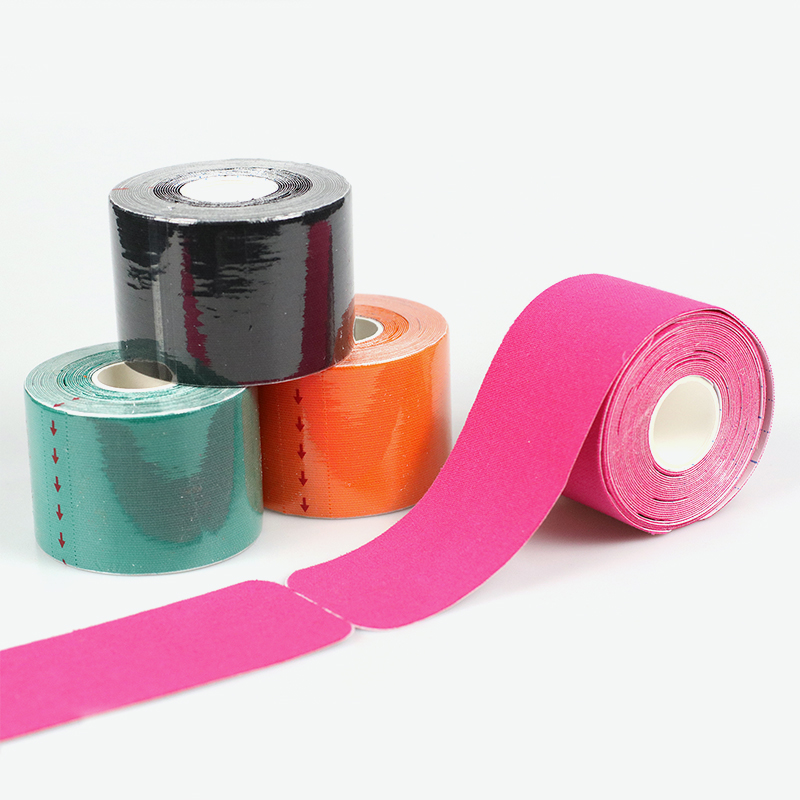
Pre-slit muscle tape is a type of tape designed specifically for sports protection and rehabilitation. It is pre-cut into shapes that fit specific parts of the body, providing a convenient and efficient use experience.
Applications:
- Sports injury protection: Enhance joint stability and reduce sports injuries.
- Sports performance improvement: Assist muscle strength and improve exercise efficiency.
- Assisted rehabilitation: relieve pain.
Advantages:
- Convenience: No need to cut; just use it directly, saving time.
- Precision: Fits specific parts.
- Comfort: High elasticity and breathability, suitable for long-term use.
- Versatility: Suitable for a variety of sports scenarios and body parts.
About Us
Wenzhou Zhusi Medical Supplies Co., Ltd.
Wenzhou Zhusi Medical is a pre-cut sports tape manufacturer with elastic and breathable materials. We specialize in wholesale pre-cut kinesiology tape rolls, providing professional care solutions for clients in the fields of sports, medical care, personal care, animal health, tattoos, and beauty. Through technology and innovation, we strive to enable everyone in the world to enjoy a healthy and fulfilling life.
Our Mission:
We strive to achieve both material and spiritual well-being for all employees, spread love and health, and promote the accessibility of healthcare products to everyday families.
Our Vision:
To become a renowned company recognized by customers, respected by society, and ensuring employee well-being.
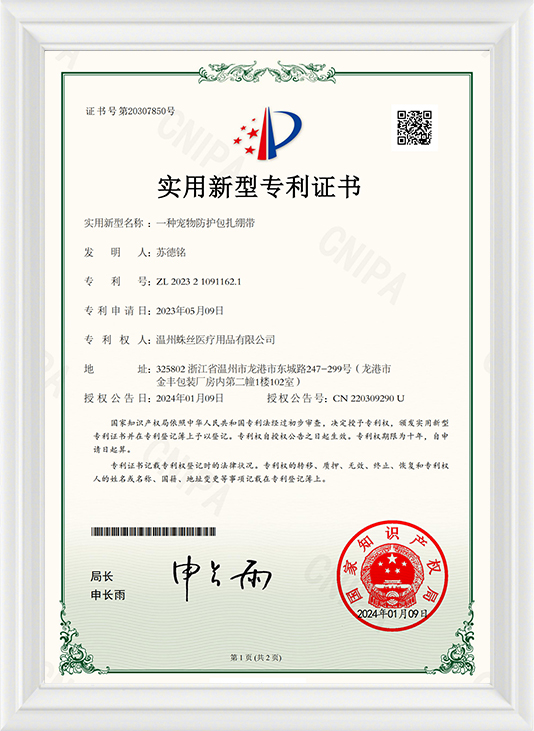
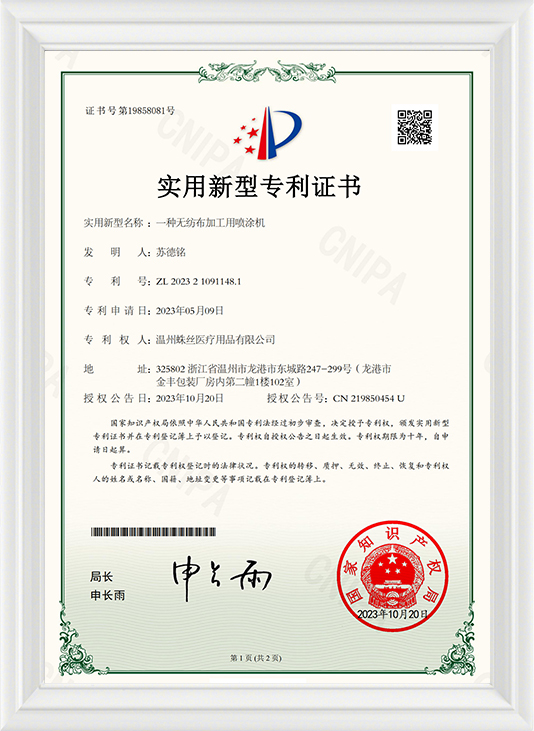
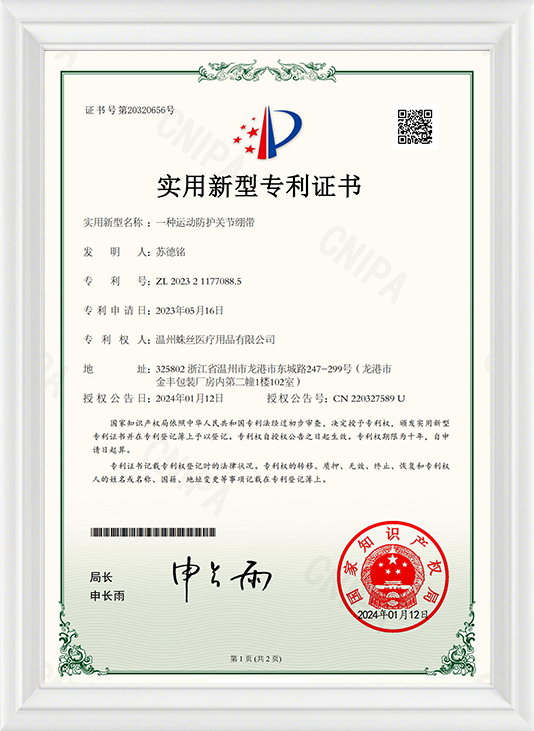
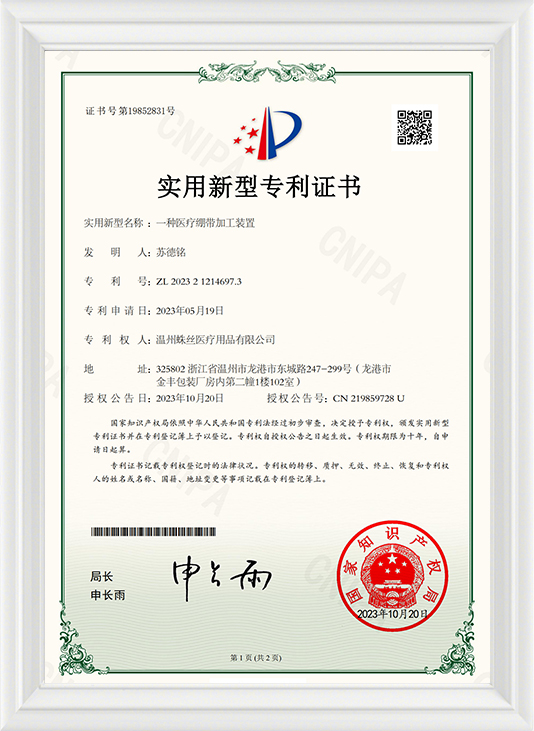
Certificate Of Honor
News
-
Sports taping is often treated as a simple wrapping task, but the material placed closest to the skin can influence how the outer tape feels...
READ MORE -
A bandage placed around a joint has to deal with constant changes in the shape of the skin. When an ankle bends, a wrist turns, or a knee fl...
READ MORE -
A cohesive bandage can look simple to use. It stretches, wraps around an area, and holds against itself without needing ordinary adhesive on...
READ MORE -
A bandage may look simple, but its performance depends on how it behaves after it has been wrapped around the body. It needs to remain in po...
READ MORE
Message Feedback
Precut Kinesiology Tape: Materials, Shapes, Performance, and Manufacturing
Precut kinesiology tape is elastic adhesive tape converted into ready-sized strips or body-contoured shapes before packaging. Its construction normally combines an elastic backing, a pressure-sensitive adhesive, a release liner, and a defined die-cut profile. Compared with standard roll tape, the precut format reduces manual preparation, improves dimensional consistency, and allows each shape to be developed around a particular placement direction. For product development and professional application, its value lies in repeatability: strip dimensions, corners, liner sections, and packaging can all be controlled during production. Actual experience still varies with application technique, skin condition, activity level, environment, and individual response.
What Is Precut Kinesiology Tape?
This format turns a continuous elastic tape material into pieces with predetermined dimensions. The finished product may be a simple rectangular strip or a more complex patch with divided tails, openings, or curved edges.
A typical precut kinesiology tape contains four essential components:
- Elastic backing: A cotton-rich, synthetic, or blended textile that stretches mainly along its length.
- Pressure-sensitive adhesive: Usually an acrylic-based system that forms contact after the tape is pressed onto intact skin.
- Release liner: Coated paper or film that protects the adhesive before application.
- Precut structure: A shape created through die-cutting, kiss-cutting, slitting, or a combination of converting processes.
Standard kinesiology tape rolls require each strip to be measured, cut, and shaped manually. Precut tape moves these steps into factory production. Length, width, corner radius, tail configuration, and liner segmentation can therefore remain more consistent from one piece to the next.
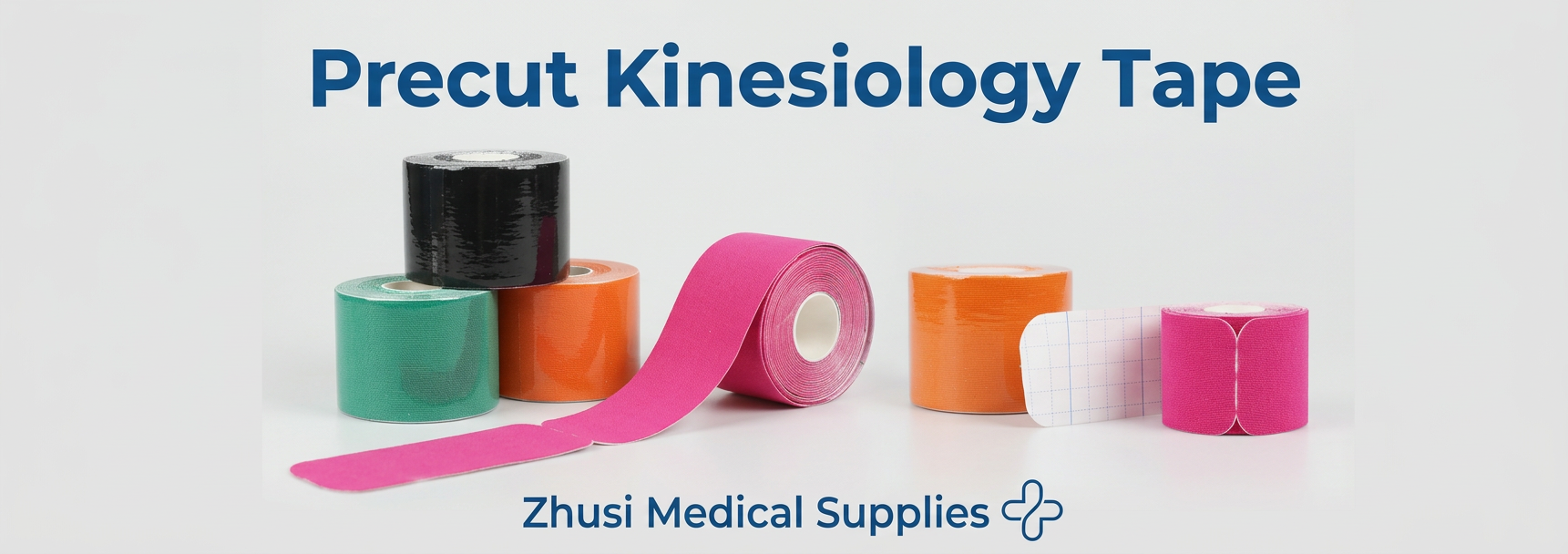
The format can also reduce the need for scissors and simplify preparation in clinics, sports-care settings, training facilities, and personal wellness routines. Body-specific versions may be shaped for placement around areas such as the shoulder, knee, calf, back, or foot. Such designs indicate an intended placement direction rather than a confirmed medical outcome.
Precut tape is not a diagnostic device and should not replace clinical evaluation. Results and wear characteristics may be influenced by skin preparation, strip tension, movement, perspiration, clothing friction, temperature, humidity, and application duration.
Common Precut Shapes and Product Formats
Precut kinesiology tape is available in several recognizable configurations. Each design changes how the tape is separated from the liner, positioned, and converted during production.
The following table compares common shapes without assigning absolute health effects to any format.
| Shape | Structural Feature | Typical Application Direction | Product Design Consideration |
| I-strip | One straight, undivided piece | Linear placement along a selected area | Length, width, and corner radius should remain consistent |
| Y-strip | One anchor connected to two tails | Tails may be placed around a body contour | Tail symmetry and split depth require accurate cutting |
| X-strip | Connected center with divided ends | Placement may extend in opposing directions | The center needs enough strength to resist tearing |
| Fan cut | One anchor with several narrow tails | Multi-directional placement across a broader area | Narrow tails require clean edges and controlled liner release |
| Grid or cross patch | Intersecting strips or a lattice-style profile | Localized placement around a defined area | Internal cuts and waste removal must remain precise |
| Body-specific cut | Contoured shape developed for a selected body area | Follows a predetermined placement orientation | Shape, size range, and left-right versions require clear labeling |
These formats may use identical fabric and adhesive systems, yet behave differently because of their geometry. A narrow fan tail, for example, can distort more easily than a straight strip when it is removed from the liner.
Shape and Dimension Details
Several small design choices have a noticeable effect on handling:
- Rounded corners reduce sharp points that may catch on clothing, towels, or equipment.
- Strip length determines how much adjustment is possible during placement.
- Strip width affects coverage, flexibility, and the number of pieces required for a selected area.
- Tail count changes the complexity of cutting and liner removal.
- Split depth determines the length of the anchor and divided sections.
- Segmented liners allow part of the adhesive to be exposed while the remainder stays protected.
- Left-right symmetry is relevant when patches are designed as mirrored pairs.
- Finger-lift tabs can make liner separation easier without touching the adhesive surface.
Common presentations include individually packed strips, multi-piece sets, mixed-shape kits, precut sections supplied in a roll, and paired left-right structures. Packaging should keep the pieces flat and protect exposed edges from dust, heat, and deformation.
Backing Materials, Adhesive Systems, and Key Performance Factors
The precut shape receives plenty of attention, but the underlying material system determines how the piece stretches, releases, and retains its dimensions. Fabric, adhesive, and liner must therefore be evaluated together.
Elastic Fabric Backing
The backing may be woven or knitted from cotton, nylon, polyester, elastane, or a combination of fibers.
Cotton-rich backing generally has a soft, matte textile surface. Cotton absorbs more moisture than many synthetic fibers, so drying behavior can vary after perspiration or brief water exposure. Elastic yarns are still required because cotton alone does not provide the expected recovery.
Synthetic backing may use nylon, polyester, elastane, or engineered blends. It often has a smoother surface, lower moisture absorption, and stable color reproduction. Synthetic construction does not automatically make the finished tape waterproof or suitable for every skin type.
Blended backing combines natural and synthetic fibers to adjust feel, elasticity, drying time, strength, and converting stability. The actual fiber ratio is more informative than a broad description such as “cotton tape” or “performance fabric.”
Relevant backing properties include:
- Fabric weight
- Total thickness
- Weave or knit structure
- Surface texture
- Longitudinal elongation
- Transverse elongation
- Elastic recovery
- Tensile strength
- Dimensional stability
- Moisture-vapor transmission
- Color fastness
- Edge-fraying behavior
Material selection also affects die-cutting. A loose weave may fray around narrow tails, while a highly elastic synthetic fabric may contract after cutting. Stable converting requires suitable tension control and time for the material to relax before final measurement.
Pressure-Sensitive Adhesive
Precut kinesiology tape commonly uses a pressure-sensitive acrylic adhesive. It forms contact through applied pressure and does not require a separate activation liquid.
Three adhesive properties should be distinguished:
- Initial tack describes how quickly the adhesive begins to contact the application surface.
- Holding power relates to its ability to remain in position under specified conditions.
- Peel adhesion describes the force associated with removing the tape from a defined test surface.
These properties are related but not interchangeable. High initial tack does not necessarily indicate reliable wear, and greater peel force is not always desirable for a skin-contact product.
Adhesive performance can be influenced by:
- Coating weight
- Wave, stripe, dot, or full-surface coating
- Coating uniformity
- Fabric-to-adhesive anchorage
- Perspiration and moisture exposure
- Ambient temperature
- Storage time
- Application pressure
- Skin condition
- Removal method
Claims such as hypoallergenic or suitable for sensitive skin require evaluation of the finished product. Fiber choice alone cannot establish skin compatibility, because adhesive ingredients, dyes, inks, processing residues, tension, and wear duration may also influence skin response.
Performance Parameters
Precut products require both material testing and converting inspection. The table below outlines the principal factors and their relevance.
| Performance Factor | What to Evaluate | Why It Matters for Precut Tape |
| Elasticity and recovery | Lengthwise extension, crosswise movement, and return after stretching | Helps the shape retain predictable dimensions |
| Adhesive consistency | Tack, holding behavior, coating weight, and coating distribution | Reduces variation between separate pieces and narrow tails |
| Breathability | Fabric structure, adhesive coverage, and moisture-vapor movement | Influences heat and moisture behavior during wear |
| Edge quality | Fraying, notches, incomplete cuts, and loose fibers | Supports clean separation and reduces premature edge damage |
| Liner release | Release force, liner splitting, and paper integrity | Allows the shape to be exposed without excessive distortion |
| Moisture resistance | Response to perspiration and controlled water exposure | Helps characterize adhesion and drying under relevant conditions |
| Dimensional stability | Length, width, symmetry, shrinkage, and relaxation | Maintains consistency between production and final use |
No single parameter defines the complete product. A tape with high elongation but weak recovery may lose its intended profile. Similarly, a cleanly cut patch can still be difficult to handle if liner release is uneven.
Why Precut Format Matters in Product Development
Precut development connects material engineering with converting, packaging, and application design. A successful shape must be practical to manufacture as well as easy to separate and position.
Converting Accuracy and Material Use
Die-cutting creates the external outline, internal splits, or openings. Kiss-cutting separates the adhesive fabric while keeping the release liner intact.
Cutting depth requires close control:
- A shallow cut may leave textile fibers connected.
- An excessively deep cut may weaken or penetrate the liner.
- Worn cutting tools may create frayed edges.
- Unstable web tension may distort dimensions.
- Rapid waste removal may stretch narrow tails.
Shape layout also affects material use. Complex contours can create more unused space between pieces than simple strips. Nesting several shapes efficiently across the web can reduce material loss, although very tight layouts may complicate cutting and matrix removal.
Packaging Configurations
The precut format supports several presentation methods:
- Single-piece pouch: Protects one strip or patch until use.
- Multi-piece set: Places repeated shapes in one package.
- Mixed-shape kit: Combines I-strips, divided pieces, and patches.
- Precut roll: Uses perforations or repeated liner sections within a roll format.
- Mirrored pair: Provides left-right versions of the same contour.
- Application sequence set: Numbers pieces according to a defined placement sequence.
Packaging efficiency must be balanced with protection. A compact pouch saves space, but tight folding can deform contoured patches. A larger flat pack protects the shape more effectively but uses more packaging material.
Balancing Design Priorities
Precut product development often requires compromise among several objectives:
- Easy liner separation
- Low material waste
- Accurate die-cutting
- Clean edge appearance
- Stable dimensions
- Efficient packaging
- Clear product positioning
- Compatibility with automated inspection
- Consistent appearance across every piece
An elaborate shape may look distinctive but introduce narrow sections that tear during converting. A simple strip is easier to produce, though it provides less application-specific guidance. The most practical design usually balances usability with repeatable factory processing.
Why Choose Zhusi Precut Format
This section explains the manufacturing considerations behind the Zhusi precut format without relying on unsupported performance claims.
Zhusi develops precut kinesiology tape through coordinated control of elastic backing, pressure-sensitive adhesive, release liner, die-cutting, and packaging. Available configurations may include cotton-rich, synthetic, or blended fabrics, along with straight strips, divided shapes, fan cuts, and contoured patches.
Product development can address:
- Customized strip dimensions and contours
- Cotton-rich or synthetic elastic backing
- Acrylic pressure-sensitive adhesive systems
- Wave or other defined coating patterns
- Rounded corners and divided tails
- Segmented or printed release liners
- Solid colors and printed designs
- Single-piece or multi-piece packaging
- Mirrored left-right configurations
- Mixed-shape application sets
Zhusi also considers whether a proposed shape can remain stable during coating, lamination, die-cutting, waste removal, inspection, and packaging. This manufacturing perspective is important because an attractive drawing does not always convert into a clean, repeatable elastic tape piece.
Quality control may cover incoming fabric condition, coating uniformity, liner alignment, cutting depth, edge cleanliness, dimensional tolerance, elastic recovery, piece count, print position, and package integrity. Applicable inspection criteria depend on the agreed product specification and destination-market requirements.

“This website is for users outside of China.”
Copyright © 2025 Wenzhou Zhusi Medical Supplies Co., Ltd. All Reserved. Approval No:浙温械备20250002 & 浙温械备 20190061 号 & 浙温药监械生产备20190011号
Wholesale Pre-Cut Kinesiology Tape Supplier
