


 English
 中文简体
中文简体
 Español
 عربى
عربى
 Français
 Português
Rubber Elastic Bandage
Sports taping is often treated as a simple wrapping task, but the material placed closest to the skin can influence how the outer tape feels...
READ MOREinformation to be updated
The stretchy elastic bandage is a tube-shaped or flat bandage made of high-stretch rubber fibers (such as latex, synthetic rubber) as the core material, and is wrapped with cotton yarn, polyester fibers, etc. on the outside. Its main features and advantages are:
Strong elasticity and pressure: This is its core value. It can apply continuous, uniform and adjustable strong pressure to the body part.
Better breathability: The outer layer of cotton yarn wrapping makes it more absorbent and breathable than pure rubber bands, making it relatively more comfortable.
Durable and wear-resistant: The woven structure makes it stronger than ordinary elastic bandages and less prone to snagging or tearing.
Strong adhesion: The high elasticity enables it to fit any body contour, including complex parts like joints.
Main uses and application scenarios:
Due to its strong compression properties, it is used in scenarios that require strict control of swelling and provide strong support.
Sports protection:
In high-risk sports (such as Rugby, American football), it is used to reinforce and protect existing old injuries or fragile joints with very strong reinforcement.
Hand wraps: The hand wraps used in combat sports such as boxing and Muay Thai are mostly high-stretch elastic bandages, providing protection for the wrists and metacarpals.
Fixation dressings and splints: It can provide a firm fixation effect.
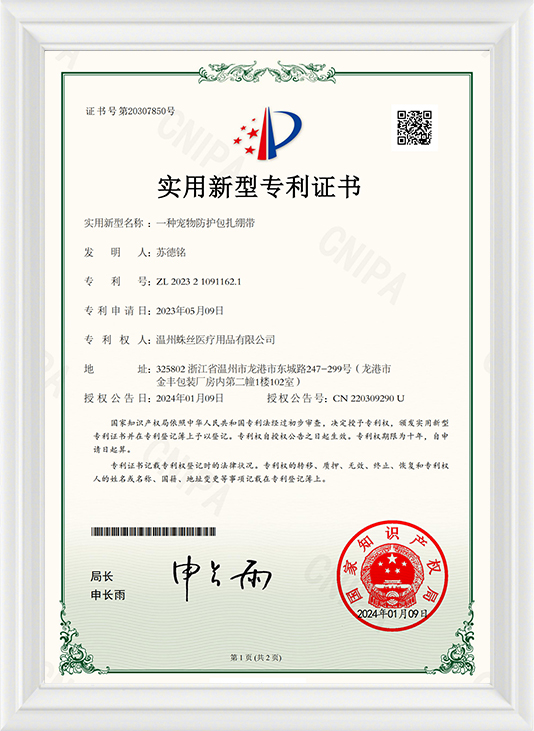
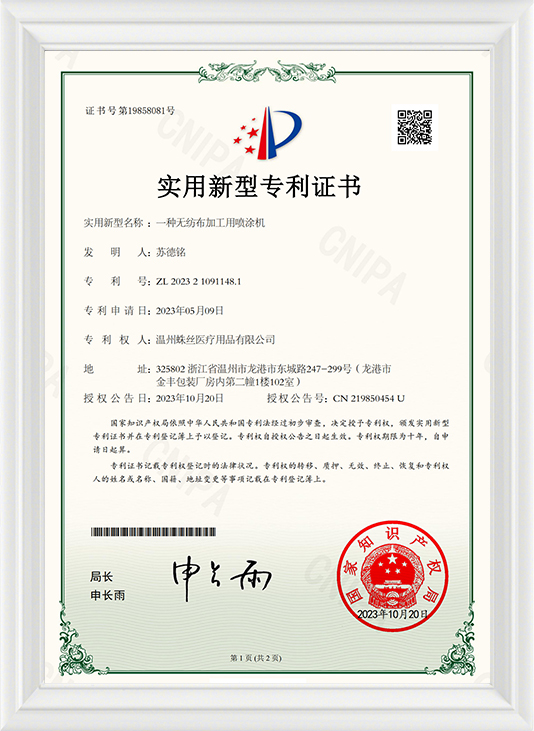
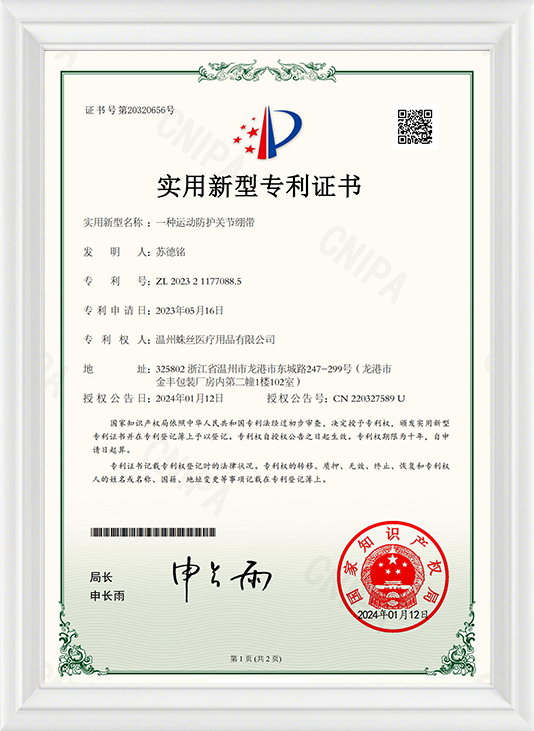
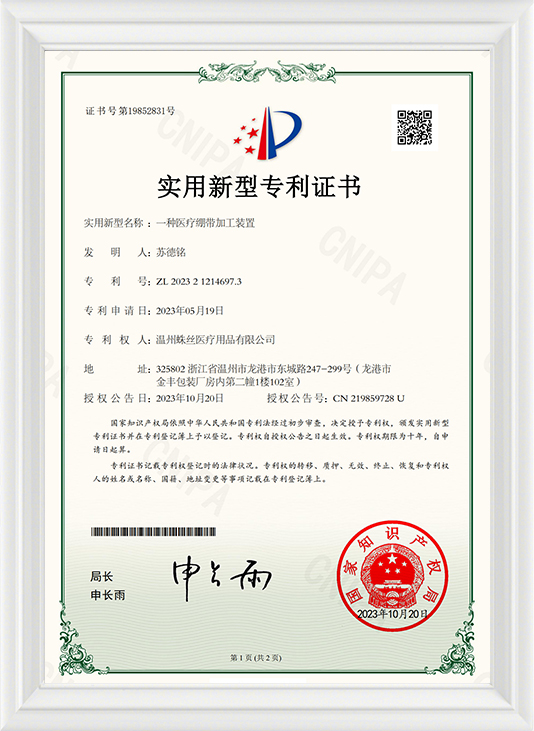
Wenzhou Zhusi Medical is a wholesale high elastic bandage supplier for sports protection. We specialize in high quality elastic bandage, providing professional care solutions for clients in the fields of sports, medical care, personal care, animal health, tattoos, and beauty. Through technology and innovation, we strive to enable everyone in the world to enjoy a healthy and fulfilling life.
Our Mission:
We strive to achieve both material and spiritual well-being for all employees, spread love and health, and promote the accessibility of healthcare products to everyday families.
Our Vision:
To become a renowned company recognized by customers, respected by society, and ensuring employee well-being.
Sports taping is often treated as a simple wrapping task, but the material placed closest to the skin can influence how the outer tape feels...
READ MOREA bandage placed around a joint has to deal with constant changes in the shape of the skin. When an ankle bends, a wrist turns, or a knee fl...
READ MOREA cohesive bandage can look simple to use. It stretches, wraps around an area, and holds against itself without needing ordinary adhesive on...
READ MOREA bandage may look simple, but its performance depends on how it behaves after it has been wrapped around the body. It needs to remain in po...
READ MOREHigh-elasticity bandages are usually judged by how far they stretch and how firmly they recover. Unroll one on a studio table, however, and other qualities become noticeable: fine ribs running along the surface, a weave that changes under tension, and edges that move from straight to gently curved with a small pull.
Two related products are High-Tension Compression Bandage and Stretchable Medical Bandage. Both use elastic textile structures, but they differ in stretch resistance, surface character, fiber composition, and handling. A high-tension bandage usually feels firmer and creates controlled, rhythmic lines. A stretchable medical bandage tends to be softer and easier to drape. Below is a closer look at their materials, styles, creative applications, selection points, and responsible handling.
Elasticity is more than the ability to make a strip longer. When a woven bandage stretches, the spacing between its threads changes. Ribs become more visible, the surface flattens, and the strip narrows or curves according to the direction of tension.
High-elasticity bandages may contain polyester, cotton, polyamide, rayon, elastane, natural rubber, or synthetic elastic yarns. The exact blend depends on the required stretch, recovery, hand feel, and intended use.
Several material characteristics make these bandages visually distinctive:
The main differences between High-Tension Compression Bandage and Stretchable Medical Bandage come from the fiber blend, weave, elastic yarns, stretch range, recovery force, edge finish, and fastening system.
High-Tension Compression Bandage
High-Tension Compression Bandage usually has a fine woven or knitted construction with visible longitudinal ribs. It stretches readily but resists extension more firmly than a soft general-purpose wrap. Once tension is applied, the material attempts to return toward its original length.
That recovery force is important in medical use, but it also affects creative handling. The bandage can form clean arcs, tensioned lines, repeated grids, and structured wrapped shapes. Its surface typically looks more regular than a loose cotton weave.
Common colors include white, tan, black, and muted shades. Some products incorporate printed guides, center lines, or geometric markings. These can become part of a visual composition, although printed medical indicators may not be suitable where an unmarked surface is required.
The term high-tension compression bandage has medical implications. Any use for compression therapy must follow the manufacturer’s instructions and appropriate clinical guidance. Creative material should never be substituted for a medically specified product.
Stretchable Medical Bandage
Stretchable Medical Bandage is a broader category. It may use cotton-rich yarns, synthetic fibers, or a blended construction designed to provide gentle, pliable stretch.
Compared with a high-tension compression bandage, it often feels softer and moves more easily into folds. The surface may be smooth, lightly creped, or subtly ribbed. This relaxed handling suits draped arrangements, textile backgrounds, wrapped objects, and layered mixed-media work.
Some stretchable medical bandages are non-adhesive and secured with clips or fasteners. Others are cohesive and cling to themselves. Adhesive, non-adhesive, and cohesive constructions behave differently, so the complete product specification should be checked rather than inferred from the name.
The table below summarizes the typical differences between the two product families. Individual products may vary.
| Aspect | High-Tension Compression Bandage | Stretchable Medical Bandage |
| Common composition | Polyester, polyamide, elastane, or blended elastic yarns | Cotton, polyester, rayon, or synthetic blend |
| Surface finish | Fine weave with visible ribbing | Smooth, creped, or lightly textured |
| Stretch feel | Firm, controlled resistance | Gentle and pliable |
| Elastic recovery | Usually strong | Low to moderate, depending on grade |
| Visual character | Structured and rhythmic | Soft and understated |
| Common colors | White, tan, black, and muted tones | White, cream, pastels, and assorted colors |
| Typical forms | Rolls and pre-cut strips | Rolls, strips, and cohesive wraps |
| Width options | Multiple medical and conversion widths | Standard and wide wrapping formats |
| Creative strength | Tensioned lines and structured shapes | Draping, folding, and soft layering |
The short version: High-Tension Compression Bandage is the firmer option for controlled curves and structured patterns. Stretchable Medical Bandage offers softer movement for draping, gathering, and relaxed textile effects.
High-elasticity bandages come in more variations than their first-aid appearance might suggest. Color, width, weave, stretch, and edge construction all affect how the material behaves in a design.
Neutral Colors and Muted Tones
White and tan remain common, but grey, black, muted blue, pale green, soft pink, and other low-saturation colors are increasingly available.
Neutral shades allow the weave to carry the visual interest. Dark colors produce stronger outlines, while pastels work well in layered compositions that need distinction without high contrast.
Exact color consistency can vary between fiber blends and dye lots. Material for one installation or production run should ideally come from the same batch.
Ribbed and Smooth Weaves
High-tension products often show fine longitudinal ribs. These become clearer when the bandage is stretched and side-lit.
Stretchable medical bandages may have:
Combining ribbed and smooth materials in one color family creates contrast through texture rather than through a busy palette.
Width and Length Options
Narrow rolls work well for lines, borders, small wrapped forms, and repeated patterns. Wider formats can cover panels or create broad textile bands.
Available dimensions depend on the manufacturer. Custom conversion may include:
Very narrow strips may curl or fray if the backing is not designed for slitting.
Stretch and Recovery Levels
Two bandages can extend to a similar length yet feel very different. One may pull easily and recover gently; another may require more force and snap back firmly.
For creative work:
Medical compression classifications should not be translated casually into design terminology—or vice versa.
Clean, unused bandage material can behave like a cross between woven ribbon, stretch fabric, and flexible tape. Its changing surface makes it particularly interesting in projects involving line, movement, or repeated texture.
In the Studio and Craft Room
Artists and model makers can use high-elasticity bandages to introduce controlled textile movement.
Common applications include:
The appearance changes with tension. A relaxed strip may look dense and soft, while the same strip under tension appears narrower, flatter, and more linear.
Test paint, ink, glue, and stitching methods on an offcut first. Cotton-rich materials may absorb liquid quickly, while synthetic fibers may cause color to bead or dry unevenly.
In Displays and Installations
Elastic bandages can create temporary visual structures without the hard edges of wire, timber, or plastic trim.
They may be used for:
Tensioned material stores energy. Both ends must be attached securely, and the installation should be positioned so an accidental release cannot strike a person or damage nearby objects.
In Offices and Creative Workspaces
Stretchable wraps can provide softer organizational details than rigid dividers or plastic ties.
Examples include:
Do not overtighten wraps around cables, electronic accessories, delicate tools, or soft containers. Firm elastic recovery can create more pressure than the material’s quiet appearance suggests.
Around the Home
Unused bandages can also be incorporated into temporary household projects.
Possible uses include:
Bandages previously used for medical care should not be repurposed for crafts, storage, or decoration.
Current developments reflect growing interest in tactile surfaces, modular formats, restrained colors, and clearer material documentation.
Modular Creative Formats
Instead of using only full rolls, designers are cutting elastic material into loops, short bands, arcs, and repeated geometric sections.
These pieces can be assembled into:
Templates should account for whether each piece is measured in its relaxed or stretched state.
Texture Layering
Fine ribs, smooth weaves, and creped surfaces are increasingly combined in a single composition. The contrast becomes especially visible under angled lighting.
Using one color across several textures creates a quieter effect. Mixing both texture and color produces a more graphic result.
Soft, Interior-Led Palettes
Warm white, sand, stone, sage, muted blue, dusty rose, and charcoal coordinate easily with paper, unfinished wood, ceramics, fabric, and painted interiors.
These colors move the material away from a strictly clinical appearance while preserving its restrained character.
Custom Width Sets
Coordinated packs containing narrow, medium, and wide strips allow designers to build visual rhythm without cutting every piece by hand.
Short sample rolls also reduce the commitment required for testing colors, textures, and stretch behavior.
More Transparent Material Specifications
Buyers increasingly ask about:
Clear specifications are more useful than vague labels such as natural, green, or skin-friendly.
Five practical questions usually make the choice easier.
For non-medical projects, test fraying, color transfer, stretch recovery, and compatibility with nearby materials before preparing the full layout.
A few workshop habits help keep elastic compositions controlled and visually consistent.
Correct storage helps preserve elasticity, color, surface texture, and edge quality.
High-elasticity bandages are often multi-material products. A single wrap may combine cotton, polyester, polyamide, elastane, rubber yarns, dyes, surface treatments, closures, labels, and packaging.
That complexity can make ordinary textile recycling difficult. A cotton blend is not automatically biodegradable, and recycled synthetic content does not mean the finished bandage can enter household recycling.
More thoughtful material use includes:
Used medical bandages may be contaminated and must be discarded according to relevant healthcare or local waste procedures. They should not be reused in art, display, or organizational projects.
Sustainability claims should address the full construction. A small percentage of recycled polyester is useful information, but it does not describe the environmental profile of the entire product.
What is a High-Tension Compression Bandage?
It is an elastic bandage designed to generate relatively firm recovery force when stretched. In medical contexts, it may be used as part of a compression system, but application should follow the product instructions and suitable clinical guidance.
What materials are high-elasticity bandages made from?
Common materials include polyester, cotton, polyamide, rayon, elastane, natural rubber, and synthetic elastic yarns. Composition varies by product.
Are all stretchable medical bandages compression bandages?
No. A bandage can stretch without providing a defined or clinically appropriate level of compression. Compression performance depends on the material, application tension, overlap, number of layers, limb shape, and product instructions.
Can high-elasticity bandages be cut into narrow strips?
Some can, but cutting may cause fraying, curling, or uneven recovery. Factory-cut widths usually provide cleaner and more stable edges.
Can these bandages be painted or printed?
Possibly. Cotton-rich surfaces tend to absorb ink and paint, while synthetic fibers may resist them. Printing and coating should be tested for adhesion, flexibility, colorfastness, and cracking after stretch.
Are high-tension bandages reusable?
Some non-adhesive products may be reusable if permitted by the manufacturer and if their elasticity, cleanliness, edges, and closures remain acceptable. Medical reuse requires strict adherence to the product instructions.
Are these bandages latex-free?
Not necessarily. Natural rubber may be present in elastic threads, coatings, or closures. Latex-free status should be confirmed through manufacturer documentation.
Can any elastic bandage be used for medical compression?
No. Improper compression can cause harm. Use a suitable medical product and follow professional guidance, particularly where circulation, sensation, swelling, wounds, or underlying health conditions are involved.
Are elastic bandages recyclable?
Most are difficult to recycle through normal household systems because they combine several fibers, elastic elements, dyes, coatings, and closures. Local acceptance and the complete product composition determine available disposal routes.
High-Tension Compression Bandage and Stretchable Medical Bandage share a woven, flexible character, but they create different visual results. High-Tension Compression Bandage provides firmer resistance, visible rhythm, and controlled shaping. Stretchable Medical Bandage offers gentler movement, softer folds, and easier draping.
In artwork, displays, packaging, and workspace organization, both can introduce something rigid materials cannot: a line that responds to tension. The right choice depends on fiber composition, surface texture, stretch resistance, recovery, width, fastening method, and intended reuse.
A high-elasticity bandage may look quiet on the roll, but once stretched, curved, or layered, it becomes a material with its own sense of movement—and a surprisingly good eye for rhythm.

“This website is for users outside of China.”
Copyright © 2025 Wenzhou Zhusi Medical Supplies Co., Ltd. All Reserved. Approval No:浙温械备20250002 & 浙温械备 20190061 号 & 浙温药监械生产备20190011号
OEM High Elastic Bandage Manufacturer
