


 English
 中文简体
中文简体
 Español
 عربى
عربى
 Français
 Português
Boob Tape
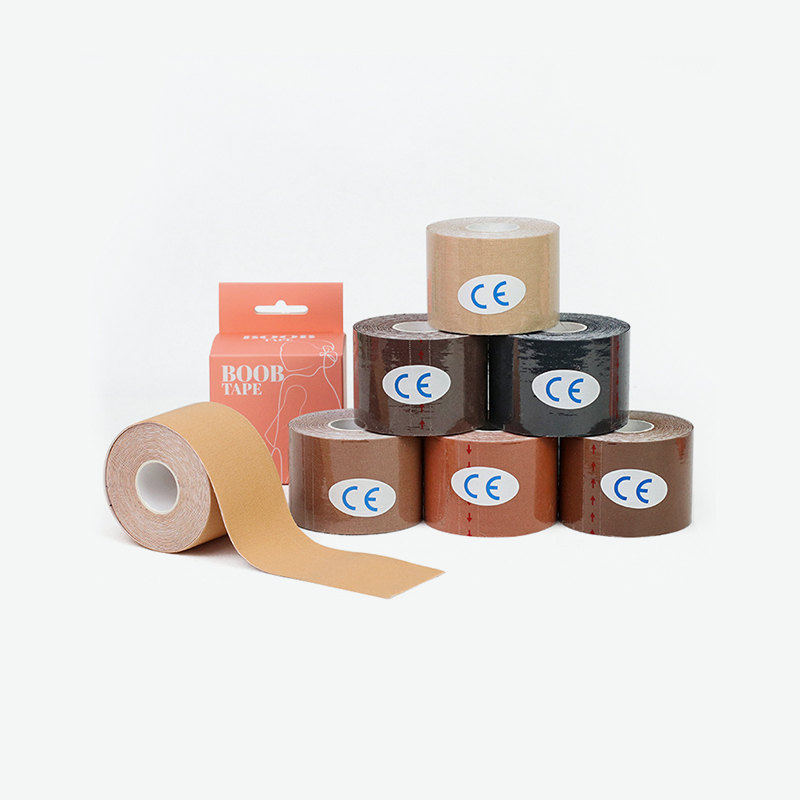
It is a specially designed high-elasticity, high-viscosity, breathable muscle-effect patch (Kinesio Tape), usually made of cotton or synthetic fibers, with good elasticity. Its principle is not like that of traditional sports bras which provide support through mechanical pressure, but rather it lifts the skin at the lower edge of the breasts through the lacing technique, utilizing the skin's elasticity to provide dynamic support. Main features:
High elasticity: Offers comfortable dynamic support without restricting breathing or upper limb movement. Strong adhesion: Medical-grade glue, can be firmly adhered and withstands sweat. Breathable and skin-friendly: Cotton or synthetic fiber material, wavy back adhesive.
About Us
Wenzhou Zhusi Medical Supplies Co., Ltd.
Wenzhou Zhusi Medical is a boob tape supplier and factory for custom tape production. We specialize in nipple cover tape for women, providing professional care solutions for clients in the fields of sports, medical care, personal care, animal health, tattoos, and beauty. Through technology and innovation, we strive to enable everyone in the world to enjoy a healthy and fulfilling life.
Our Mission:
We strive to achieve both material and spiritual well-being for all employees, spread love and health, and promote the accessibility of healthcare products to everyday families.
Our Vision:
To become a renowned company recognized by customers, respected by society, and ensuring employee well-being.
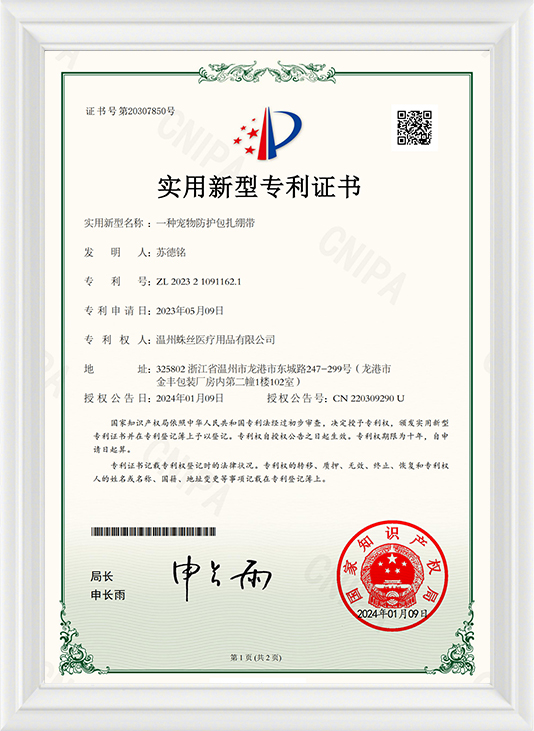
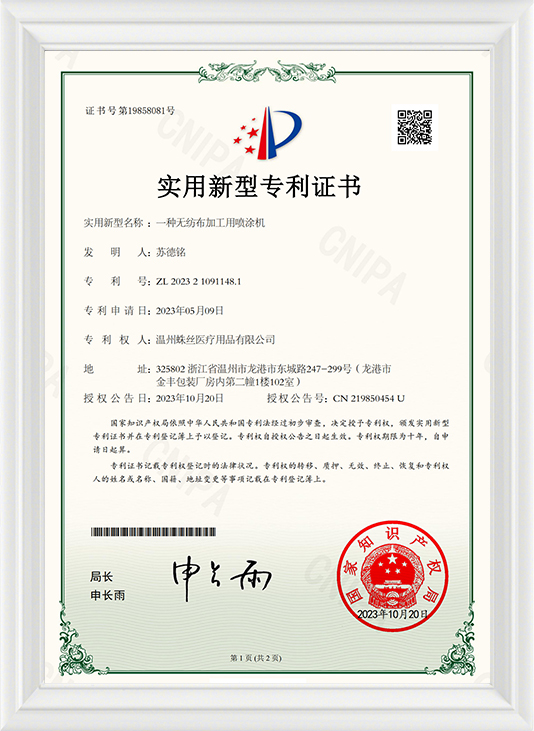
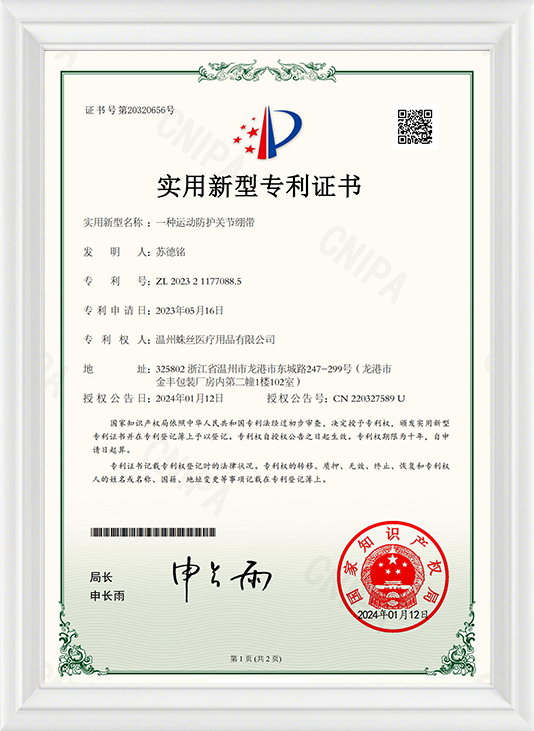
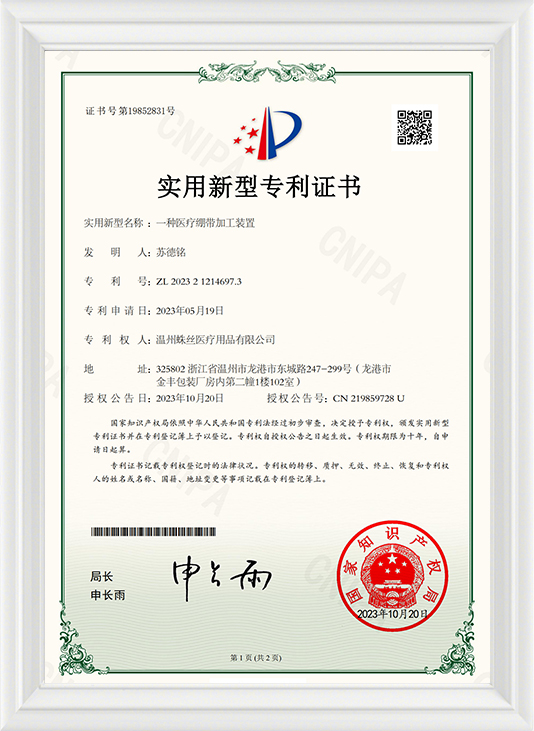
Certificate Of Honor
News
-
Sports taping is often treated as a simple wrapping task, but the material placed closest to the skin can influence how the outer tape feels...
READ MORE -
A bandage placed around a joint has to deal with constant changes in the shape of the skin. When an ankle bends, a wrist turns, or a knee fl...
READ MORE -
A cohesive bandage can look simple to use. It stretches, wraps around an area, and holds against itself without needing ordinary adhesive on...
READ MORE -
A bandage may look simple, but its performance depends on how it behaves after it has been wrapped around the body. It needs to remain in po...
READ MORE
Message Feedback
Boob Tape: Materials, Types, Adhesive Design and Safe Use
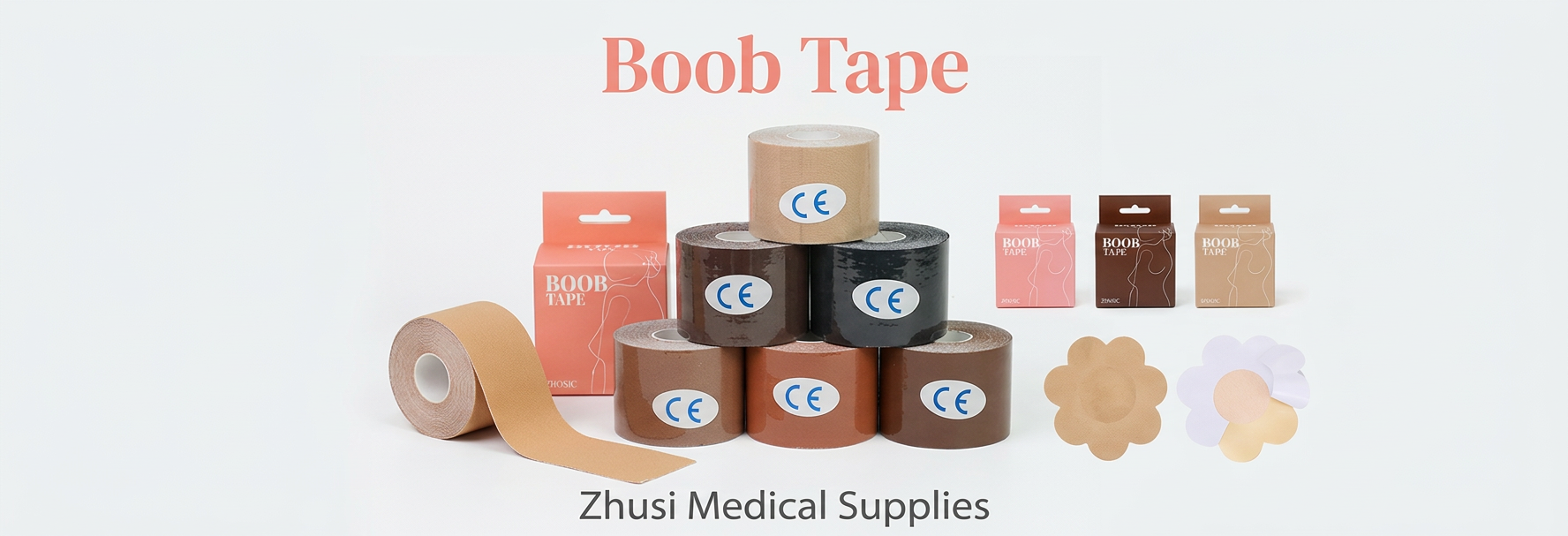
Boob Tape is a flexible adhesive textile applied around the chest as a wardrobe-styling accessory. It is commonly used with strapless, backless, low-cut or asymmetrical clothing where conventional straps may remain visible. Available as rolls, precut strips and shaped patches, Boob Tape combines an elastic backing, pressure-sensitive adhesive and release liner. Its usability depends on the fabric construction, controlled stretch, adhesive consistency, skin preparation and removal method. Adhesive Breast Tape and Women Nipple Tape may appear in the same product range, but their dimensions, coverage and intended placement should be stated clearly.
What Is Boob Tape?
Boob Tape is generally wider than ordinary garment-positioning tape and is designed for direct application to intact skin around the breast and chest area. Users cut or select strips according to the garment opening, desired appearance and individual body contour.
A typical Boob Tape product contains:
- An elastic cotton-rich, synthetic or blended backing
- Pressure-sensitive adhesive on the skin-contact side
- A release liner that protects the adhesive
- Optional measurement marks or cutting guides
- Individual packaging and application instructions
- Optional Women Nipple Tape pieces or covers
Boob Tape may help create a particular clothing silhouette, but the product should not be described as a medical or therapeutic device. Its appearance and wear characteristics can vary with body shape, skin condition, application technique, movement, perspiration, temperature and length of wear.
Terms such as skin-friendly, hypoallergenic, waterproof or suitable for sensitive skin should not be treated as automatic characteristics. They require appropriate material documentation and evaluation of the finished product.
Understanding Adhesive Breast Tape
Adhesive Breast Tape is a product description commonly used for Boob Tape supplied in continuous rolls, ready-sized strips or contoured pieces. The term emphasizes the adhesive format and intended chest-area placement rather than a separate material category.
Adhesive Breast Tape can differ in:
- Backing composition
- Fabric weight and thickness
- Tape width and length
- Stretch direction
- Elastic recovery
- Adhesive chemistry
- Adhesive coating pattern
- Liner construction
- Color and surface texture
- Packaging configuration
Roll-format Adhesive Breast Tape provides greater freedom when different strip lengths are needed. Precut versions reduce manual preparation but provide less flexibility in sizing. Contoured patches offer a defined shape, although they require accurate die-cutting and may not fit every body contour in the same way.
The most suitable construction depends on the product format and intended wardrobe use. A highly elastic tape is not necessarily more practical than one with moderate extension and stable recovery.
Types of Women Nipple Tape
Women Nipple Tape generally refers to small adhesive pieces or patches intended to provide localized coverage beneath clothing. It may be supplied separately or included with Boob Tape.
Women Nipple Tape and Boob Tape should not be presented as identical products. Boob Tape is typically applied in wider or longer sections across the chest, while Women Nipple Tape focuses on a smaller area.
The following table outlines the principal product formats.
| Type | Construction | Typical Wardrobe Use | Design Consideration |
| Precut Women Nipple Tape | Small round, oval or petal-shaped adhesive pieces | Localized coverage under selected garments | Edge profile and removal characteristics require attention |
| Roll Adhesive Breast Tape | Continuous elastic tape with release liner | Adjustable strip lengths for different garment styles | Cutting guides and clean edges improve preparation |
| Precut Boob Tape | Ready-sized elastic strips | Reduces measuring and manual cutting | Fixed dimensions may not suit every application |
| Skin Tone Boob Tape | Neutral-colored backing in one or more shades | Less noticeable beneath certain fabrics | One neutral shade cannot match every skin tone |
| Patterned Boob Tape | Printed elastic backing | Decorative or coordinated styling | Ink must remain stable as the fabric stretches |
| Boob Tape Kit | Tape supplied with Women Nipple Tape and accessories | Organized preparation for travel or events | Each component needs separate instructions |
This classification describes physical formats and wardrobe applications. It does not indicate that one design provides a guaranteed result for every wearer.
Women Nipple Tape Design Considerations
Women Nipple Tape may use elastic fabric, nonwoven material, foam, film or other product-specific constructions. Relevant design factors include:
- Patch diameter
- Overall thickness
- Center construction
- Edge thickness
- Adhesive coverage
- Release-liner design
- Surface color
- Flexibility
- Removal method
- Single-use labeling
Direct adhesive contact with the nipple area may be uncomfortable and can make removal more difficult. Product instructions should clearly explain intended placement and whether a separate protective center is included.
Materials and Composition
The backing, adhesive and liner form one material system. Changing one component can affect stretch, cutting, adhesion, appearance and storage stability.
Elastic Fabric Backing
Boob Tape can be made with cotton-rich, polyester, nylon or blended elastic fabric. The material should provide enough flexibility to follow body contours without becoming difficult to control.
Cotton-rich fabric commonly offers:
- A soft, matte surface
- Familiar textile texture
- Relatively high moisture absorption
- Lengthwise stretch created by elastic yarns
- Compatibility with neutral and fashion colors
Cotton-rich Boob Tape is usually not made entirely from cotton. Elastane, spandex or another elastic fiber is commonly incorporated to provide extension and recovery.
Synthetic fabric may provide:
- A smooth surface
- Lower moisture absorption than cotton-rich fabric
- Stable dimensions
- Clear color or print reproduction
- Relatively fast drying after brief moisture exposure
Synthetic construction does not automatically establish skin compatibility or water resistance. These properties depend on the complete finished product.
Blended fabric can combine cotton, polyester, nylon or rayon with elastic fibers. Blends may be developed to balance softness, strength, stretch, recovery and converting stability.
Pressure-Sensitive Adhesive
Boob Tape and Adhesive Breast Tape commonly use pressure-sensitive adhesive. Acrylic adhesive systems are frequently selected for skin-contact tape, although the actual formulation varies by product.
Three properties are particularly important:
- Initial tack: How quickly the adhesive starts to make contact
- Holding power: How well it maintains contact under specified conditions
- Peel adhesion: The measured force associated with removal from a defined surface
These terms are not interchangeable. A tape with high initial tack may not provide consistent holding behavior, while unusually high peel force can make removal more difficult.
Adhesive performance may be affected by:
- Coating weight
- Coating uniformity
- Adhesive pattern
- Fabric surface
- Skin preparation
- Application pressure
- Perspiration
- Temperature
- Wear duration
- Storage conditions
The aim is not simply to create the strongest possible adhesive. Product development needs to balance contact, flexibility and manageable removal.
Release Liner
The release liner protects the adhesive before application and stabilizes the elastic backing during cutting and rewinding.
It may include:
- Measurement grids
- Cutting lines
- Printed instructions
- Split sections
- Finger-lift areas
- Piece numbers on precut products
Release force should be controlled. A liner that separates too easily may shift during storage, while excessive release force can stretch or distort the tape during preparation.
Key Performance Factors
Boob Tape should be evaluated as an adhesive textile rather than judged only by color, width or visual appearance.
| Performance Factor | What to Evaluate | Why It Matters for Boob Tape |
| Elasticity | Lengthwise and crosswise extension | Influences how the tape follows body contours |
| Elastic recovery | Return after controlled stretching | Helps reduce permanent distortion |
| Adhesive consistency | Coating weight, distribution and anchorage | Supports more consistent contact across each strip |
| Peel characteristics | Removal force under defined conditions | Relevant to controlled removal from skin |
| Breathability | Fabric structure and adhesive coverage | Influences heat and moisture behavior |
| Edge quality | Fraying, adhesive buildup and irregular cuts | Affects handling and visibility under garments |
| Color fastness | Dry and wet transfer | Helps reduce staining of skin or clothing |
| Dimensional stability | Width, shrinkage and curling | Supports predictable cutting and application |
| Liner release | Release force and liner integrity | Helps prevent distortion before application |
| Moisture response | Behavior after perspiration or brief water contact | Indicates how the finished construction responds to moisture |
A single result cannot describe the entire product. High elasticity, for example, has limited value if recovery is weak or the adhesive becomes inconsistent as the backing stretches.
Skin Tone Boob Tape and Visual Design
Skin Tone Boob Tape is intended to appear less noticeable beneath selected clothing. Because skin tones vary widely, one beige shade should not be presented as a universal match.
A considered color range may include:
- Light neutral
- Pink-neutral
- Warm beige
- Golden tan
- Medium brown
- Olive-brown
- Deep brown
- Black
- White
- Fashion colors
Shade development should account for the difference between relaxed and stretched fabric. When the backing extends, the yarns may move apart and make the tape appear lighter.
Relevant color controls include:
- Batch-to-batch shade consistency
- Dry color transfer
- Wet color transfer
- Appearance under thin fabric
- Color change after stretching
- Resistance to light exposure
- Compatibility with adhesive processing
Patterned Boob Tape may carry decorative graphics or repeated motifs. In these products, the ink should remain flexible enough to avoid excessive cracking or transfer during normal handling.
Boob Tape Compared with Standard Fashion Tape
Boob Tape and standard fashion tape can both support wardrobe styling, but they use different constructions and placement methods.
| Feature | Boob Tape / Adhesive Breast Tape | Standard Fashion Tape |
| Typical width | Medium to wide | Usually narrow |
| Backing | Elastic textile | Film, nonwoven or thin carrier |
| Adhesive construction | Normally adhesive on one side | Frequently adhesive on both sides |
| Main placement | Applied across areas of the chest | Positioned between clothing and skin |
| Stretch | Usually elastic | Often limited |
| Format | Roll, precut strip or shaped patch | Short strip or narrow roll |
| Preparation | May require measuring and cutting | Usually applied in short sections |
| Contact area | Comparatively broad | Localized |
Standard fashion tape is generally used to keep a garment edge in position. It should not be assumed to have the same dimensions, stretch or application method as Boob Tape.
Choosing a Boob Tape Format
Selection should begin with the product structure rather than a broad claim such as “extra strong.” Measurable specifications provide more useful information.
Roll Boob Tape
A continuous roll allows users to prepare different strip lengths. Product details should identify:
- Tape width
- Roll length
- Backing composition
- Stretch direction
- Release-liner markings
- Cutting requirements
- Recommended storage conditions
Roll Boob Tape provides dimensional flexibility but requires scissors and additional preparation.
Precut Boob Tape
Precut Boob Tape is supplied in ready-sized strips, often with rounded corners. It reduces cutting but may not accommodate every body shape or garment opening.
Important controls include:
- Strip length and width
- Corner radius
- Liner segmentation
- Dimensional tolerance
- Piece count
- Shape recovery
- Packaging flatness
Women Nipple Tape Sets
Women Nipple Tape may be packed as individual pieces, paired patches or part of a Boob Tape kit. The package should identify the material, intended placement, single-use status and removal instructions.
Patterned and Skin Tone Boob Tape
Visual options should be considered alongside backing performance. Color or pattern does not determine adhesive strength, wear time or skin compatibility.
Frequently Asked Questions About Boob Tape
What is Boob Tape?
Boob Tape is a wide, flexible adhesive textile applied around the chest as a wardrobe accessory for selected clothing styles.
What is Adhesive Breast Tape?
Adhesive Breast Tape is a common product term for Boob Tape supplied as rolls, precut strips or shaped adhesive pieces.
What is Women Nipple Tape?
Women Nipple Tape refers to smaller adhesive pieces intended for localized coverage. Its material and placement differ from wider Boob Tape strips.
Is Boob Tape the same as standard fashion tape?
No. Boob Tape is usually wider, elastic and adhesive on one side. Standard fashion tape is commonly narrow and double-sided.
Is all Boob Tape hypoallergenic?
No. Hypoallergenic performance cannot be assumed from the product name or backing material. It requires suitable evaluation of the complete product.
Is Boob Tape suitable for sensitive skin?
Not universally. Skin response depends on the adhesive, fabric, dyes, application tension, wear duration and individual sensitivity.
Can Boob Tape be applied directly over the nipple?
Direct application is generally avoided unless the instructions expressly permit it. Women Nipple Tape or another specified protective piece may be used.
Is Boob Tape waterproof?
Not automatically. Resistance to perspiration or brief water contact does not necessarily establish waterproof performance.
Can Boob Tape be reused?
Boob Tape is generally intended for single use. Adhesion, cleanliness and shape cannot be reliably restored after removal.
How should Boob Tape be removed?
Follow the supplied instructions, use a compatible removal aid where recommended, and peel slowly while supporting the skin.
How should Boob Tape be stored?
Store it in its original packaging in a clean, cool and dry place, away from direct sunlight, excessive heat, oils and dust.
Can Boob Tape colors and sizes be customized?
Possible development options include backing material, adhesive construction, width, length, skin tone shades, patterns, precut shapes and packaging.

“This website is for users outside of China.”
Copyright © 2025 Wenzhou Zhusi Medical Supplies Co., Ltd. All Reserved. Approval No:浙温械备20250002 & 浙温械备 20190061 号 & 浙温药监械生产备20190011号
Breast Body Tape Factory for OEM Design
