


 English
 中文简体
中文简体
 Español
 عربى
عربى
 Français
 Português
Non Woven Bandage
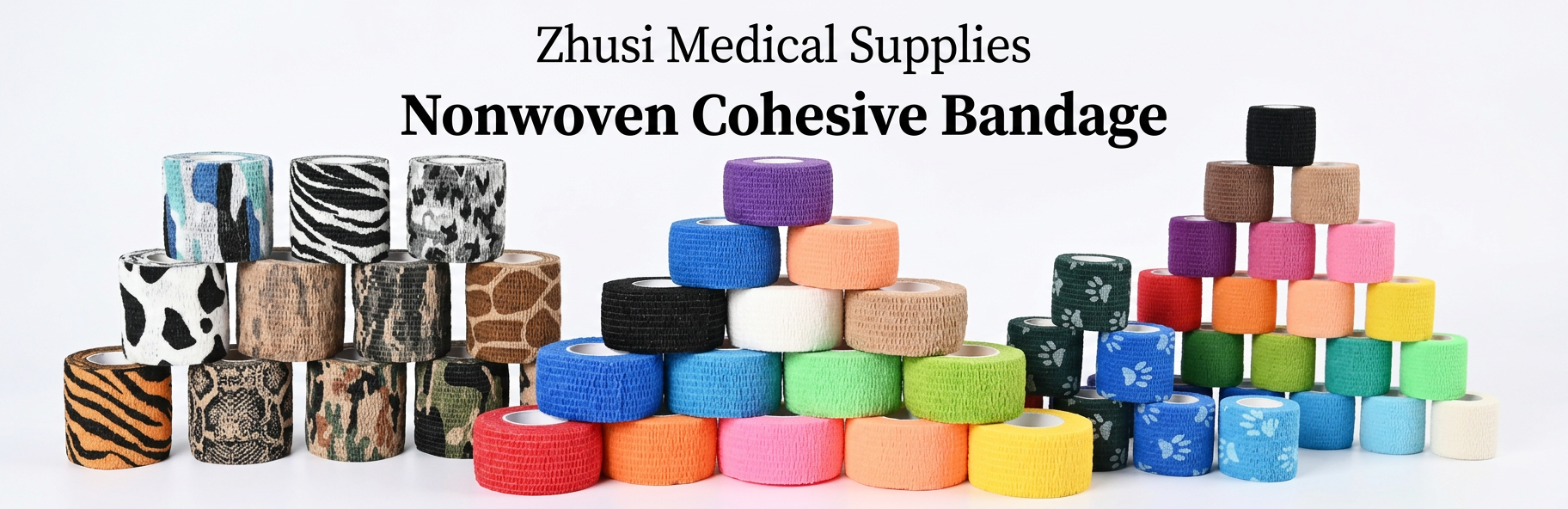
Nonwoven Cohesive Bandage
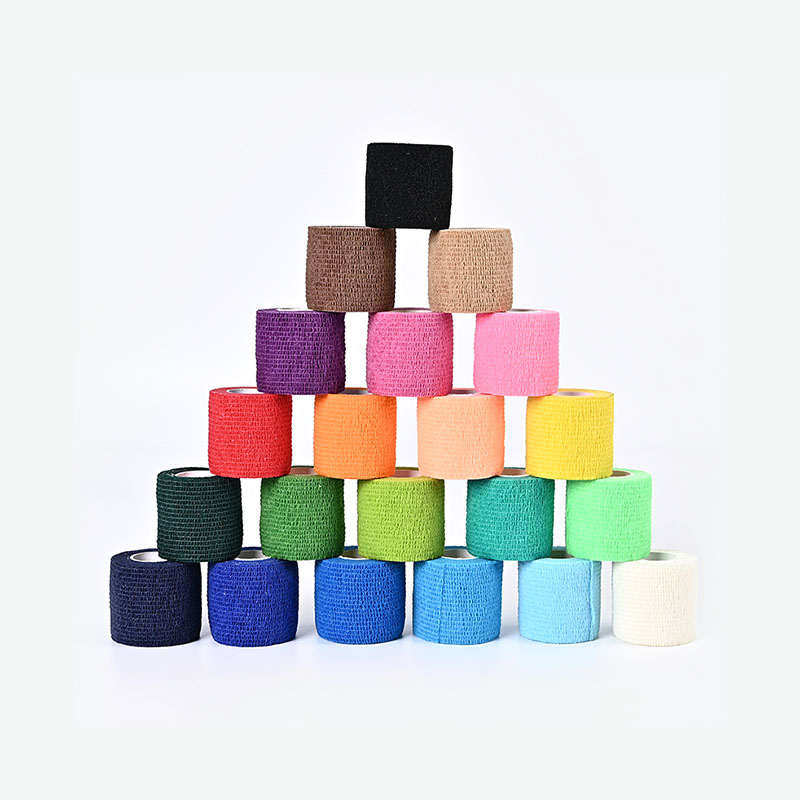
A non-woven self-adhesive bandage is a type of bandage made of non-woven fabric and coated with a self-adhesive layer. Its main feature is that it only adheres to itself and does not stick to the skin or hair.
Main features:
1. Self-adhesive (key feature): No need for pins, clips or tape for fixation. Just wrap it and it will stick by itself, making it convenient to use.
2. Good breathability: The non-woven fabric material gives it good breathability, preventing skin from becoming sweaty and damp, reducing discomfort.
3. Moderate elasticity: Provides uniform pressure and good fit, can adapt to the contours of various body parts, such as joints, without affecting movement.
4. Soft and comfortable: The material is soft and has good skin compatibility, making it comfortable to wear.
5. Easy to tear and remove: No need for scissors, just tear it off with your hands; when removing, simply slowly loosen it, painless and without leaving any residual glue.
6. Cost-effective: High cost performance. Main uses: Fixing dressings: This is the core purpose. Used to fix gauze, cotton pads and other wound dressings to prevent them from shifting or falling off. Provide mild compression: Used to handle soft tissue injuries such as sprains and strains, providing mild compression and support to help reduce swelling. Sports protection: Provides mild support and protection for athletes' wrist joints, ankle joints, etc. Used for wrapping hands (such as boxing, fighting), fixing sports equipment, etc. Post-operative care: Used to fix dressings on post-operative wounds or for compression bandaging, such as for varicose veins, lymphedema care. Pet care: Because it does not stick to hair, it is suitable for wrapping wounds for pets.
About Us
Wenzhou Zhusi Medical Supplies Co., Ltd.
Wenzhou Zhusi Medical is a custom nonwoven cohesive bandage factory for OEM sizes and colors. We specialize in wholesale nonwoven cohesive bandage, providing professional care solutions for clients in the fields of sports, medical care, personal care, animal health, tattoos, and beauty. Through technology and innovation, we strive to enable everyone in the world to enjoy a healthy and fulfilling life.
Our Mission:
We strive to achieve both material and spiritual well-being for all employees, spread love and health, and promote the accessibility of healthcare products to everyday families.
Our Vision:
To become a renowned company recognized by customers, respected by society, and ensuring employee well-being.
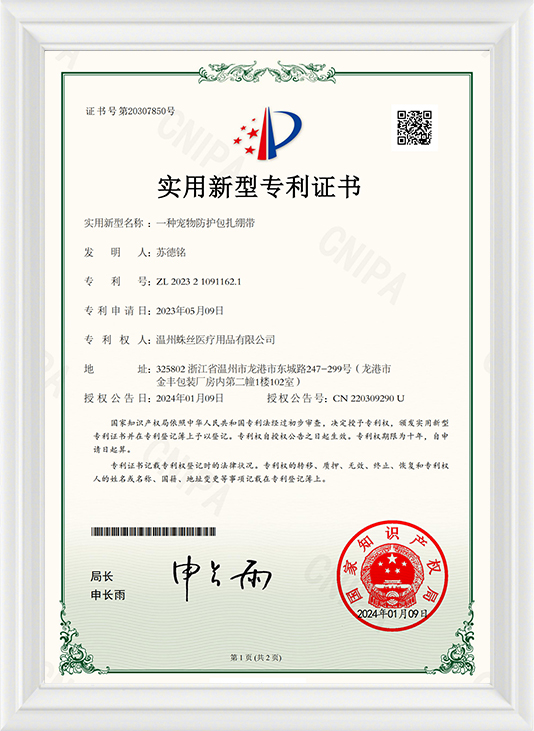
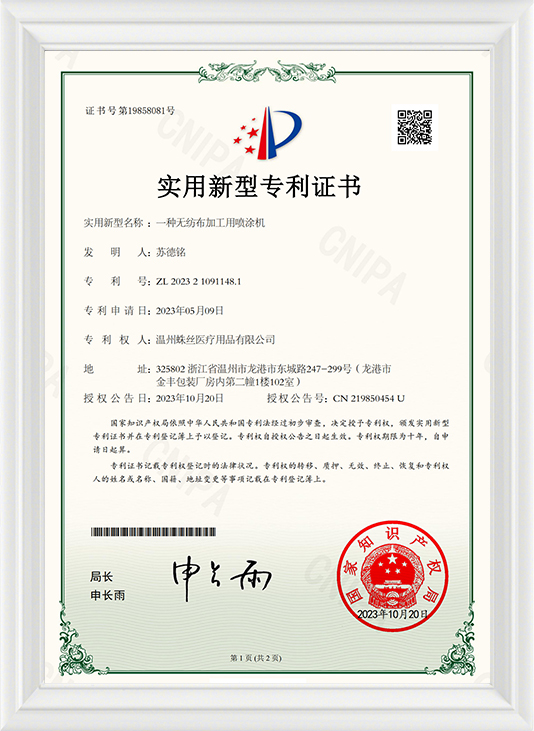
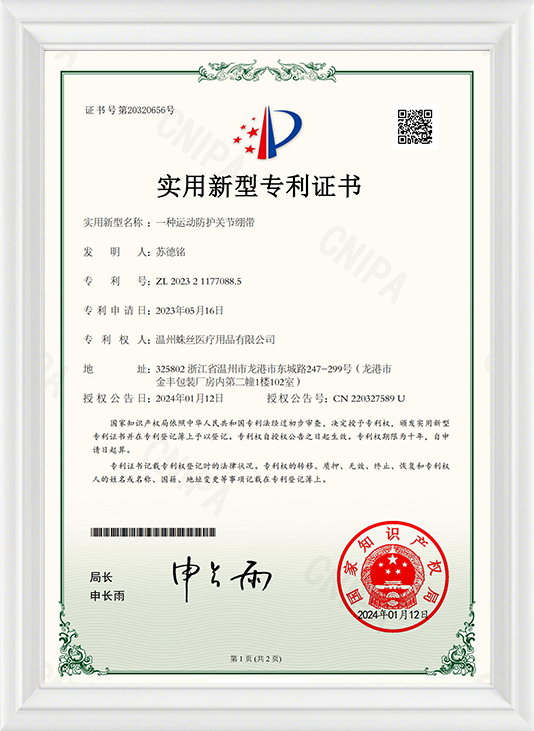
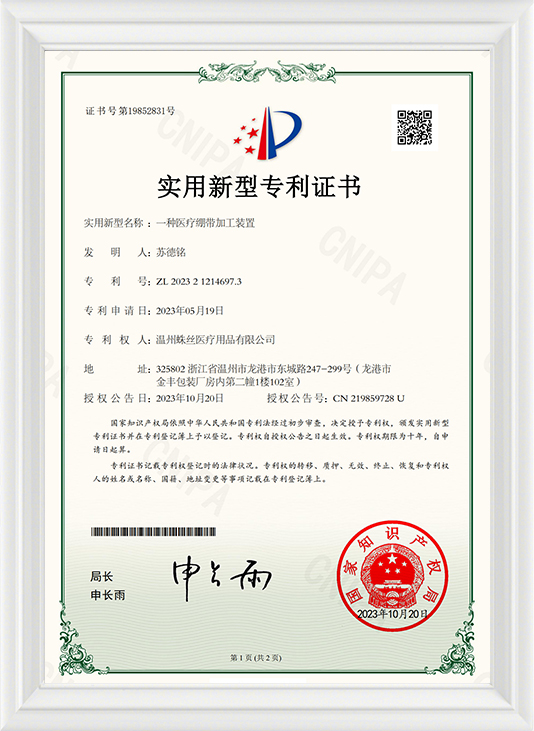
Certificate Of Honor
News
-
Sports taping is often treated as a simple wrapping task, but the material placed closest to the skin can influence how the outer tape feels...
READ MORE -
A bandage placed around a joint has to deal with constant changes in the shape of the skin. When an ankle bends, a wrist turns, or a knee fl...
READ MORE -
A cohesive bandage can look simple to use. It stretches, wraps around an area, and holds against itself without needing ordinary adhesive on...
READ MORE -
A bandage may look simple, but its performance depends on how it behaves after it has been wrapped around the body. It needs to remain in po...
READ MORE
Message Feedback
Nonwoven Cohesive Bandage: Materials, Performance and Manufacturing
A nonwoven cohesive bandage is a lightweight, elastic wrap made from fibers bonded into a web rather than woven into yarn-based fabric. A cohesive compound allows overlapping layers to attach primarily to each other, so the bandage usually requires no clips or pins. Products described as Breathable Cohesive Wrap or Soft Elastic Medical Bandage often use this construction, although their fiber composition, stretch and cohesive chemistry can differ. The nonwoven format supports conformability and hand tearing, but reliable performance depends on web uniformity, elastic recovery, layer-to-layer cohesion, unwind force and controlled application tension.
What Is a Nonwoven Cohesive Bandage?
A nonwoven cohesive bandage consists of a flexible fiber web, an elastic component and a self-adherent compound. The material is converted into narrow or wide rolls for wrapping around curved surfaces or securing a separate dressing or protective layer.
Unlike woven bandages, the backing is not constructed by interlacing two organized sets of yarns. Fibers are formed into a sheet and bonded through mechanical, thermal or chemical processes. Elastic threads or stretchable structural elements may then be incorporated to provide controlled extension.
A typical product includes:
- Polyester, polypropylene, viscose or blended nonwoven fibers
- Elastane, spandex or another elastic component
- Natural rubber latex or a synthetic cohesive compound
- Optional dye or printed design
- A paper, plastic or coreless roll format
- Individual protective packaging
- Product identification and wrapping instructions
The terms cohesive, self-adherent and self-sticking refer to the bandage's ability to bond to itself. Although "self-adhesive" is frequently used in product descriptions, the bandage is not intended to behave like ordinary adhesive tape on skin.
Nonwoven cohesive bandages are not all interchangeable. Products may differ in basis weight, thickness, stretch, recovery, hand-tear behavior, cohesion, unwind force, latex status and roll dimensions.
How Does a Nonwoven Cohesive Bandage Work?
A cohesive compound is applied to or incorporated into the nonwoven backing. When one layer overlaps another and light pressure is applied, the coated surfaces form a layer-to-layer bond.
This construction has several practical implications:
- Separate clips or pins are normally unnecessary.
- The wrap can often be repositioned during initial application.
- The end can be pressed against the previous layer to close the wrap.
- The material generally has limited attachment to skin compared with ordinary adhesive tape.
- Most lightweight versions can be torn by hand.
- The self-adherent mechanism should not be confused with compression. An elastic cohesive wrap can generate circumferential pressure, but the amount depends on its extension, number of layers, overlap, wrapping angle and the dimensions of the wrapped area.
A product can be highly cohesive yet still be difficult to use if the roll blocks during storage or requires excessive force to unwind. Practical design therefore involves balancing cohesive strength with controlled unwind.
Breathable Cohesive Wrap
Breathable Cohesive Wrap is a nonwoven self-adherent bandage designed with an open fiber structure that allows some movement of air and moisture vapor. Breathability depends on the complete construction rather than the backing alone.
Relevant variables include:
- Fiber type
- Web density
- Basis weight
- Pore distribution
- Cohesive coating weight
- Coating coverage
- Number of overlapping layers
- Applied stretch
- Moisture exposure
A lightweight, open nonwoven may allow more air movement than a dense woven material. However, repeated overlap increases total thickness and can reduce effective permeability. A bandage that is breathable as a single layer may behave differently after several turns.
What Breathability Does—and Does Not—Mean
The term breathable should refer to a measurable material property. It does not automatically mean that the bandage:
- Remains dry in every condition
- Prevents skin irritation
- Can be worn indefinitely
- Is waterproof
- Is suitable for every skin type
- Maintains the same permeability when stretched
- Provides a particular clinical outcome
Air permeability and moisture-vapor transmission are related but different measurements. Technical content should identify which property was evaluated and under what test conditions.
Soft Elastic Medical Bandage
Soft Elastic Medical Bandage is a broad product term that may describe a flexible cohesive wrap intended for healthcare, first-aid or personal-care settings. The name alone does not define its sterility, compression level or suitability for direct wound contact.
A soft elastic construction generally aims to provide:
- A low-weight nonwoven backing
- Controlled lengthwise stretch
- Conformability around curved areas
- Layer-to-layer self-adherence
- Low bulk after wrapping
- Hand-tear capability where specified
The word soft usually describes surface feel or bending flexibility. It should not be treated as evidence that the bandage is suitable for all sensitive skin.
Similarly, medical in a commercial name does not establish regulatory classification or sterile status. The intended use, labeling and available documentation must be evaluated for the finished product and destination market.
Nonwoven Backing Materials
The backing determines how the bandage feels, tears, stretches and responds to coating. Fiber selection also affects web formation, linting, color consistency and production stability.
Polyester
Polyester is commonly used because it provides consistent fiber strength and comparatively low moisture absorption.
Potential characteristics include:
- Lightweight construction
- Stable fiber dimensions
- Smooth surface feel
- Compatibility with bright colors
- Resistance to ordinary handling
- Controlled production in nonwoven webs
Polyester fibers themselves are not elastic enough to create the usual stretch of an Elastic Cohesive Wrap. An elastic yarn, stretchable web design or other elastic component is generally required.
Polypropylene
Polypropylene is a lightweight synthetic fiber with low moisture absorption. It may be used alone or blended with other materials.
Its properties can include:
- Low density
- Soft hand feel
- Low water absorption
- Compatibility with thermal bonding
- Consistent fiber formation
- Suitability for lightweight nonwoven structures
Finished performance depends on fiber diameter, bonding method, web density and cohesive coating. The fiber name alone does not determine softness or breathability.
Viscose or Rayon
Viscose may be added to modify softness and moisture response. It generally absorbs more moisture than polyester or polypropylene.
A blended web containing viscose may provide:
- A textile-like surface
- Increased absorbency
- Soft handling
- Different dye response
- Modified tear behavior
Higher moisture absorption is not always preferable. It may affect drying time, web strength and the behavior of the cohesive compound after exposure.
Cotton and Cotton Blends
Some nonwoven bandages contain cotton fibers or use cotton-synthetic blends. Cotton can contribute softness and a matte appearance, but its presence does not establish skin compatibility.
Relevant considerations include:
- Fiber cleanliness
- Moisture absorption
- Linting
- Web strength
- Color consistency
- Cohesive-compound compatibility
Elastic Components
Stretch may be introduced through:
- Elastane or spandex threads
- Natural or synthetic rubber strands
- Crimped fibers
- Elastic nonwoven structures
- Mechanically extended web formations
- Combined fiber-and-yarn systems
The elastic component affects maximum elongation and recovery. It should be evaluated separately from the cohesive compound because the two may use different material chemistries.
Cohesive Compounds and Latex Status
The cohesive compound is responsible for bonding one bandage layer to another. Natural rubber latex and synthetic systems are both used in this product category.
Natural Rubber Latex
Natural rubber latex can provide strong cohesion and flexible bonding between overlapping surfaces. When present, it should be declared clearly because natural rubber latex proteins may be relevant to users with known sensitivity.
A vague statement such as "skin-safe material" should not replace latex disclosure.
Synthetic Cohesive Systems
Synthetic compounds may be selected for products developed without natural rubber latex. Their behavior varies according to formulation and compatibility with the backing.
Factors to evaluate include:
- Layer-to-layer bond
- Unwind force
- Odor
- Heat sensitivity
- Aging stability
- Surface transfer
- Coating uniformity
- Color interaction
A latex-free statement requires documentation covering the relevant raw materials and manufacturing process. It should not be inferred from appearance, fiber type or product name.
Coating Weight and Distribution
Cohesive material may be applied through coating, spraying, impregnation or another controlled process. Uniform distribution is important across the full width and length of the bandage.
Insufficient compound can lead to:
- Weak closure
- Layers opening after application
- Uneven holding between sections
- Poor end security
Excessive compound can cause:
- Difficult unwinding
- Layer blocking during storage
- Stiff surface feel
- Transfer between layers
- Increased odor or residue
The goal is balanced self-adherence, not maximum stickiness. More is not always merrier—especially when the roll refuses to unroll.
Key Performance Parameters
A nonwoven cohesive bandage should be assessed as a complete material system. Backing formation, elasticity, cohesion and roll conversion all influence handling.
The following table summarizes the principal evaluation areas.
| Performance Factor | What to Evaluate | Why It Matters |
| Cohesive strength | Bond between overlapping bandage layers | Helps the wrap remain closed without clips |
| Unwind force | Force needed to pull material from the roll | Affects application and identifies possible layer blocking |
| Elongation | Extension under a defined load | Indicates how much the wrap can stretch |
| Elastic recovery | Return after controlled extension | Influences tension retention and permanent deformation |
| Tensile strength | Resistance to breakage | Relevant during wrapping, tearing and removal |
| Basis weight | Mass of the nonwoven per unit area | Affects softness, strength and wrapped thickness |
| Air permeability | Air passing through the material under set conditions | Helps characterize Breathable Cohesive Wrap |
| Moisture-vapor response | Vapor movement through the construction | Provides additional information about moisture management |
| Hand-tear performance | Ease and direction of manual tearing | Determines whether scissors are normally required |
| Edge quality | Fraying, loose fibers and width variation | Influences handling and finished appearance |
| Layer thickness | Thickness before and after overlap | Helps assess bulk around smaller areas |
| Color fastness | Dry and wet color transfer | Helps reduce staining of skin, clothing or packaging |
| Dimensional stability | Width, length, shrinkage and curling | Supports consistent roll specifications |
| Aging stability | Performance after defined storage conditions | Supports shelf-life assessment |
A test value should be accompanied by the method, units, sample conditioning and acceptance range. Results obtained under different extension rates or environmental conditions may not be directly comparable.
Nonwoven Cohesive Bandage vs Woven Bandage
Nonwoven and woven bandages differ in material structure, tear behavior and securing method. Neither structure is automatically more appropriate for every application.
| Feature | Nonwoven Cohesive Bandage | Traditional Woven Bandage |
| Backing formation | Fibers bonded into a web | Yarns interlaced in a woven structure |
| Securing method | Bonds primarily to itself | Often uses clips, tape or hook-and-loop closure |
| Stretch | Usually created by elastic components | Depends on yarn and weave construction |
| Hand tearing | Common in lightweight versions | Often requires scissors |
| Surface feel | Soft, low-weight and slightly textured | More textile-like and structured |
| Edge behavior | May split or lint if web bonding is weak | May fray along cut edges |
| Conformability | Often suitable for curved shapes | Depends on weave density and elasticity |
| Bulk after overlap | Generally low to moderate | Product-specific and sometimes higher |
| Color options | Wide range of solid colors and prints | Often neutral, though colored versions are available |
| Main production control | Web uniformity and cohesive distribution | Yarn quality, weave consistency and edge finishing |
The self-adherent property, rather than the nonwoven structure alone, removes the usual need for fasteners.
How Width, Length and Stretch Affect Selection
Nonwoven cohesive bandages are produced in narrow, standard and wide roll formats. Exact dimensions vary by product specification.
Width
Width influences coverage and handling:
- Narrow rolls are easier to position around smaller areas but can concentrate pressure if stretched excessively.
- Medium-width rolls provide a balance between control and coverage.
- Wide rolls cover a larger area with fewer turns but may crease around sharply curved surfaces.
A nominal width should be accompanied by a dimensional tolerance. Elastic slitting and winding can introduce variation if web tension is not controlled.
Roll Length
Technical specifications should distinguish between:
- Unstretched length
- Extended length
- Usable length under defined conditions
Unstretched length provides a clearer basis for product quantity. Maximum extended length can vary with the applied force and should not be presented without test conditions.
Stretch and Recovery
Maximum elongation does not indicate recommended wrapping tension. A highly elastic bandage can create substantial pressure when repeatedly stretched and overlapped.
Elastic recovery also matters. Weak recovery may result in a loose wrap, while aggressive recovery can contribute to tightening if application tension is not controlled.
Wrapping Safety and Tension Control
A nonwoven cohesive bandage can feel easy to apply because it holds to itself immediately. That convenience makes tension control especially important.
General Application Principles
Product-specific instructions should take priority. General handling considerations include:
- Select a suitable bandage width.
- Inspect the intended wrapping area.
- Apply the first turn with low tension.
- Overlap successive layers evenly.
- Avoid wrinkles and folded edges.
- Do not stretch the bandage to its limit.
- Press the final section onto the previous layer.
- Check skin color, temperature, comfort and sensation.
- Reassess the wrap after movement or changes in swelling.
Each stretched turn adds circumferential force. Several apparently gentle layers can produce a tighter wrap than expected.
Signs That a Wrap May Be Too Tight
The bandage should be loosened or removed if the area beyond it develops:
- Tingling
- Numbness
- Increasing pain
- Throbbing
- Swelling
- Unusual coolness
- Pale, blue or darkened skin
- Reduced movement
- Loss of sensation
Symptoms that continue after removal require appropriate professional assessment.
Skin, Hair and Wound Contact
Nonwoven cohesive bandages are designed to minimize direct adhesion to skin and hair. They may still catch fine hair or adhere slightly after pressure, perspiration or prolonged contact.
Ordinary cohesive wrap should not be placed directly on an open wound unless the finished product is specifically designed and documented for that use. A suitable wound-contact dressing may be required beneath it.
Individual packaging does not mean that a bandage is sterile. Sterility must be explicitly stated and supported.
Common Product Settings
The same basic nonwoven construction can appear in first-aid, sports-care, personal-care and animal-care ranges. Product labeling should define the intended setting.
First-Aid and Personal Care
A nonwoven cohesive bandage may be used to secure a separate dressing or maintain an external protective layer. Instructions should clarify whether it is intended for direct skin contact and whether it is sterile.
Sports Care
Breathable Cohesive Wrap may be selected where a lightweight, self-adherent wrap is preferred. Product descriptions should not imply that the bandage prevents every injury or replaces assessment of persistent pain, swelling or loss of function.
Animal Care
Nonwoven cohesive bandages are also used in animal-care routines because their layers attach without clips. Tension must be controlled carefully, particularly around limbs.
The wrapped area should be monitored for:
- Swelling
- Slippage
- Moisture
- Temperature changes
- Discoloration
- Chewing or ingestion of the material
Personal-Care and Equipment Uses
Some lightweight wraps are used to organize or cover handles, tools and care-related accessories. Products intended for these purposes may not have the same requirements as wraps designed for healthcare applications.
Is a Nonwoven Cohesive Bandage Reusable?
A cohesive bandage can often be lifted and repositioned while it is initially being wrapped. This does not necessarily make it reusable.
After removal, the material may show:
- Reduced self-adherence
- Permanent stretching
- Surface contamination
- Wrinkles
- Compressed sections
- Moisture retention
- Torn or uneven edges
Unless the instructions state otherwise, the bandage should be regarded as a single-use product. Reapplication may produce unpredictable cohesion, tension and hygiene conditions.
Frequently Asked Questions About Nonwoven Cohesive Bandages
What is a Nonwoven Cohesive Bandage?
A Nonwoven Cohesive Bandage is a flexible fiber-based wrap designed to attach primarily to itself when overlapping layers are pressed together.
How is it different from a woven bandage?
A nonwoven backing is made from bonded fibers rather than interlaced yarns. It is often lighter and more easily torn by hand, although performance varies by construction.
What is Breathable Cohesive Wrap?
Breathable Cohesive Wrap is a self-adherent bandage with an open material structure intended to permit some air or moisture-vapor movement.
What is Soft Elastic Medical Bandage?
Soft Elastic Medical Bandage is a broad term for a flexible, elastic wrap used in healthcare or personal-care settings. The name does not automatically establish sterility or wound-contact suitability.
Does a nonwoven cohesive bandage stick to skin?
It is designed to bond mainly to itself rather than skin. Fine hair or skin may still be caught under pressure or prolonged contact.
Does it contain adhesive?
It contains a cohesive compound that bonds overlapping bandage layers. This may be based on natural rubber latex or a synthetic formulation.
Are all nonwoven cohesive bandages latex-free?
No. Some use natural rubber latex, while others use synthetic cohesive systems. Latex status must be confirmed from product-specific documentation.
Is every nonwoven cohesive bandage breathable?
Not to the same degree. Permeability depends on web density, coating coverage, stretch and the number of overlapping layers.
Can it provide compression?
An elastic cohesive bandage can generate circumferential pressure. The amount depends on extension, overlap, layer count and wrapping technique.
Can it be applied directly to a wound?
Not unless the finished product is specifically intended and documented for direct wound contact. A suitable dressing is commonly used underneath.
Is an individually packed bandage sterile?
Not necessarily. Individual packaging protects the roll but does not establish sterility.
Can it be reused?
It may be repositioned during initial wrapping, but most versions should be treated as single-use products after removal.

“This website is for users outside of China.”
Copyright © 2025 Wenzhou Zhusi Medical Supplies Co., Ltd. All Reserved. Approval No:浙温械备20250002 & 浙温械备 20190061 号 & 浙温药监械生产备20190011号
Non Woven Bandage Manufacturer
