


 English
 中文简体
中文简体
 Español
 عربى
عربى
 Français
 Português
Custom Synthetic Kinesiology Tape
Synthetic Kinesiology Tape
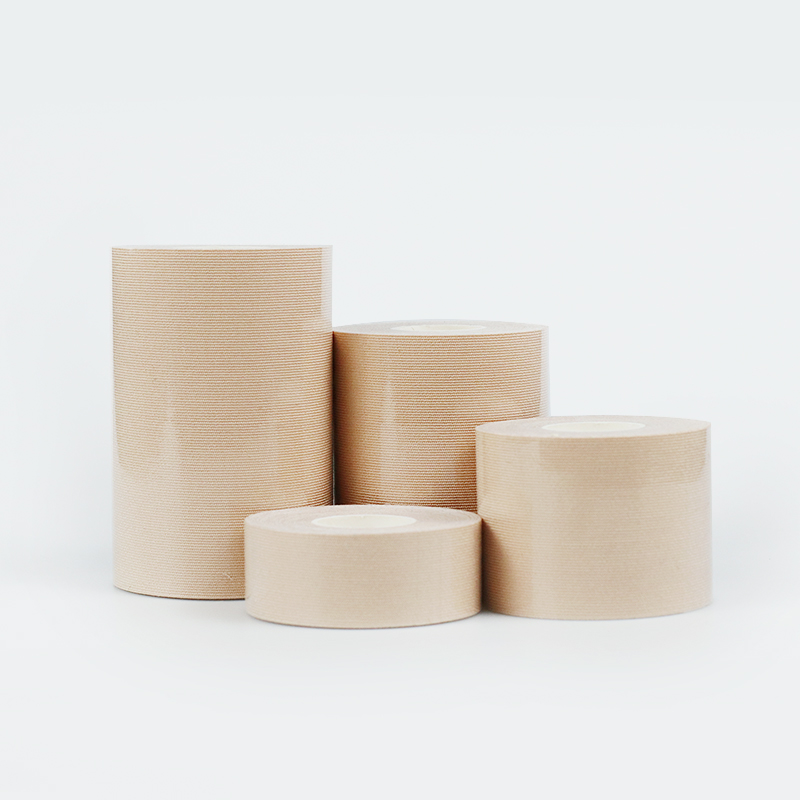
Synthetic k tapemainly composed of artificial silk (Rayon), are mixed with a small amount of spandex to provide elasticity.
Key features:
- Smooth and lightweight: This is its prominent characteristic. The surface of the artificial silk fibers is smooth, which results in: a comfortable touch: After being applied, the skin feels almost no sensation, as if it is a "second layer of skin".
- Reduces resistance: It is highly suitable for water-based activities (such as swimming, surfing) or sports that require reduced air/water resistance.
- Strong moisture absorption and quick drying: The moisture absorption performance of artificial silk far exceeds that of pure cotton. It can quickly absorb a large amount of sweat and quickly evaporate, keeping the skin dry. This makes it good in high-intensity, sweaty sports (such as marathons, triathlons, ball sports), remaining highly sticky even after getting wet, and not easily falling off.
- High strength and durability: The strength of artificial silk fibers is very high, meaning the patches are more resistant to pulling and wear and tear. They can maintain their shape and function even after long-term or repeated stretching, and are not prone to fraying or breaking.
- Good elasticity and support: Like all muscle effect patches, it has 30%-60% elasticity, providing dynamic support for muscles and joints without restricting the range of motion.
- Breathability: The wave-shaped back adhesive and porous fiber structure ensure good breathability. Main applications: Water sports athletes: swimmers, divers, surfers, canoeists. They are the good choice because their stickiness remains strong even after getting wet. Endurance athletes: marathon runners, triathletes, cyclists, etc., who need the patches to continue working for several hours or even days in the presence of a large amount of sweat. High-intensity team sports athletes: footballers, basketballers, rugby players, etc., who still need good muscle support during intense collisions and sweating.
About Us
Wenzhou Zhusi Medical Supplies Co., Ltd.
Wenzhou Zhusi Medical is a synthetic kinesiology tape manufacturer with lightweight rayon material. We specialize in rayon sports tape, providing professional care solutions for clients in the fields of sports, medical care, personal care, animal health, tattoos, and beauty. Through technology and innovation, we strive to enable everyone in the world to enjoy a healthy and fulfilling life.
Our Mission:
We strive to achieve both material and spiritual well-being for all employees, spread love and health, and promote the accessibility of healthcare products to everyday families.
Our Vision:
To become a renowned company recognized by customers, respected by society, and ensuring employee well-being.
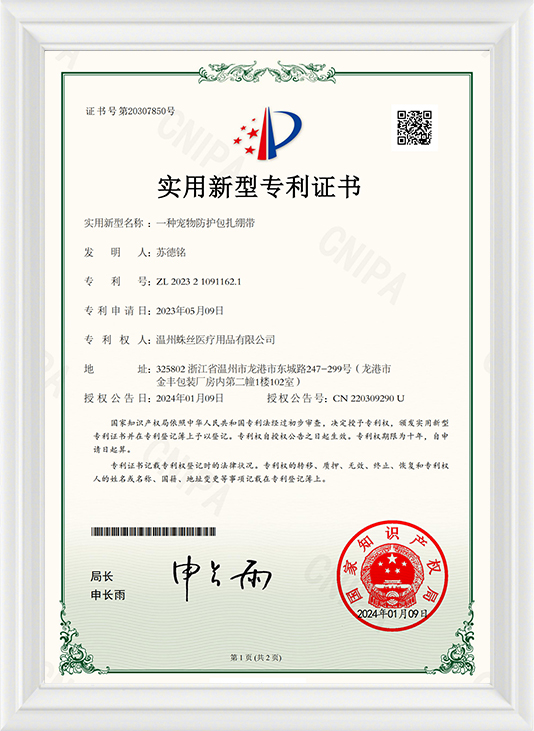
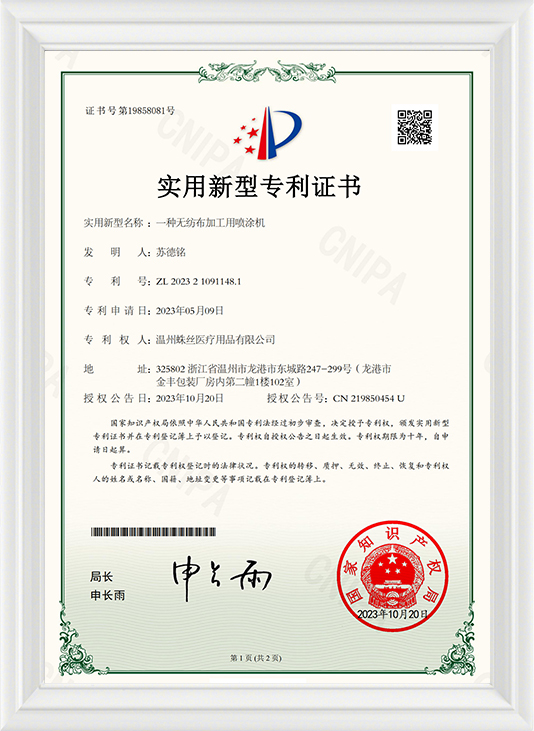
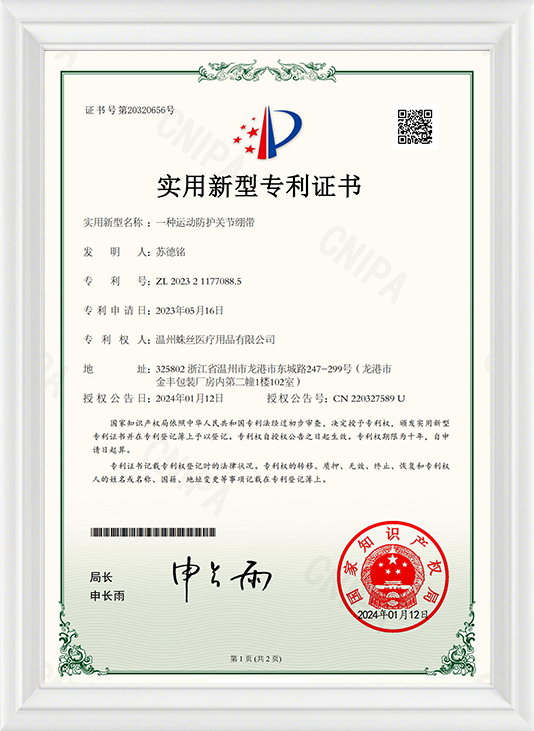
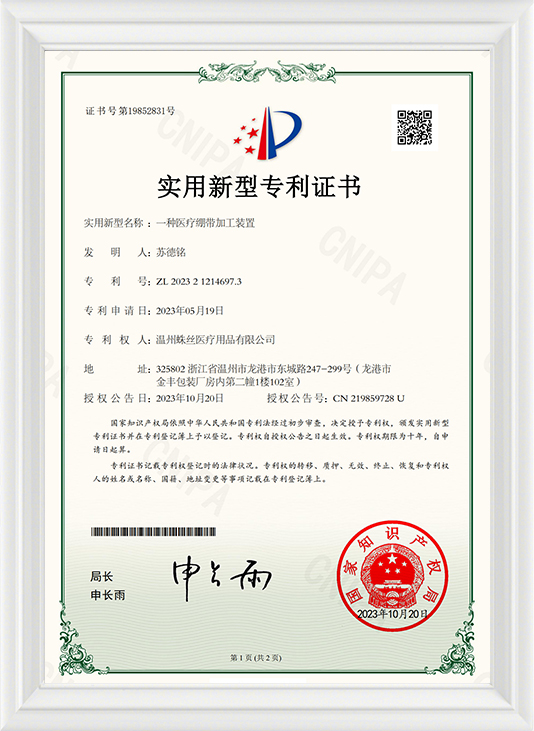
Certificate Of Honor
News
-
Sports taping is often treated as a simple wrapping task, but the material placed closest to the skin can influence how the outer tape feels...
READ MORE -
A bandage placed around a joint has to deal with constant changes in the shape of the skin. When an ankle bends, a wrist turns, or a knee fl...
READ MORE -
A cohesive bandage can look simple to use. It stretches, wraps around an area, and holds against itself without needing ordinary adhesive on...
READ MORE -
A bandage may look simple, but its performance depends on how it behaves after it has been wrapped around the body. It needs to remain in po...
READ MORE
Message Feedback
Synthetic Kinesiology Tape: Materials, Construction and Performance Guide
Synthetic kinesiology tape is an elastic, adhesive-backed textile used in sports, rehabilitation and movement-related taping. Instead of relying mainly on cotton yarns, its backing is produced from synthetic fibers such as nylon, polyester or engineered fiber blends.
The synthetic construction can create a smoother surface, lower moisture absorption and more controlled elasticity than many cotton-rich alternatives. However, the word synthetic does not guarantee stronger adhesion, longer wear or better results. Finished performance depends on the fabric structure, elastic recovery, adhesive formulation, coating pattern and manufacturing consistency.
What Is Synthetic Kinesiology Tape?
Synthetic kinesiology tape is a flexible fabric tape designed to stretch mainly along its length while following the contours of the body. It is normally applied to intact skin in individual strips rather than wrapped repeatedly around a limb.
A typical product includes:
- Synthetic textile backing: Commonly made from nylon, polyester or a blended material.
- Elastic fibers: Provide longitudinal extension and recovery.
- Pressure-sensitive adhesive: Creates contact with the skin after firm application pressure.
- Release liner: Protects the adhesive before cutting and application.
- Optional colors or printing: Used for visual design, identification and private-label presentation.
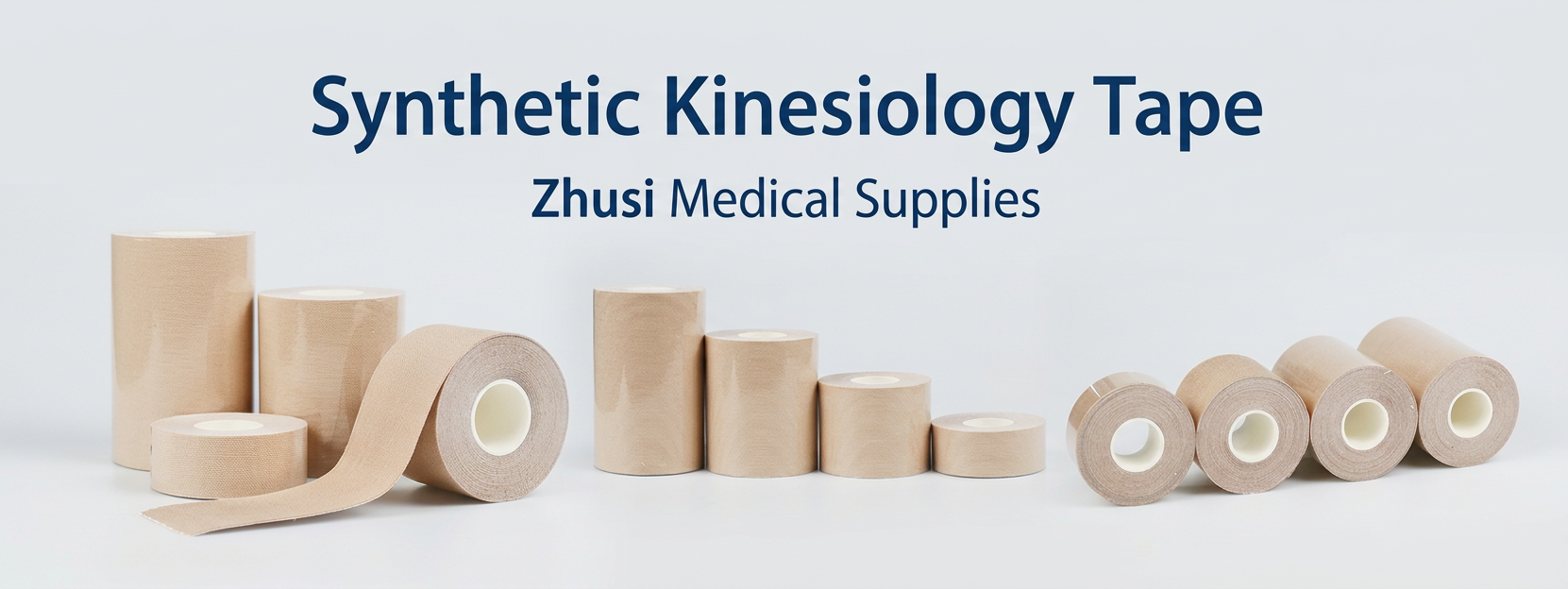
The tape may be supplied as:
- Continuous rolls
- Pre-cut strips
- I-, Y-, X- or fan-shaped pieces
- Application-specific patches
- Extra-wide rolls
- Wide coated material for further conversion
Synthetic kinesiology tape should not be confused with rigid athletic tape. Rigid tape has little intentional stretch, while synthetic kinesiology tape is designed to extend and move with the application area.
What Does Synthetic Elastic Therapeutic Tape Mean?
Synthetic Elastic Therapeutic Tape generally describes kinesiology tape made predominantly from synthetic textile fibers. The term does not refer to one standardized composition.
Products using this description may differ in:
- Nylon or polyester content
- Elastic-yarn percentage
- Fabric weight
- Weave or knitted structure
- Surface treatment
- Longitudinal elongation
- Transverse elongation
- Elastic recovery
- Adhesive chemistry
- Coating weight
- Release-liner design
- Recommended wear duration
The word therapeutic should be used carefully. It does not independently establish that the tape can treat an injury, relieve pain or improve physical performance.
Any medical or therapeutic statement must be consistent with the intended use, supporting evidence and regulations in the market where the product is supplied.
What Is Performance Kinesiology Tape?
Performance kinesiology tape is a commercial description generally used for elastic tape intended for sports, exercise or high-movement environments.
It may be designed with:
- Controlled longitudinal stretch
- Consistent elastic recovery
- Lower moisture absorption
- Smooth synthetic fibers
- Flexible pressure-sensitive adhesive
- Secure fabric-to-adhesive anchorage
- Stable edges during movement
- Printed or high-visibility designs
The word performance does not define a specific material, test result or clinical effect. One product may use lightweight nylon, while another uses polyester or a synthetic-cotton blend.
A technical description should therefore state the actual composition and measurable properties rather than relying on the word performance alone.
Main Types of Synthetic Kinesiology Tape
Synthetic kinesiology tape can be classified by fiber composition, adhesive design, surface structure and finished format.
| Product Type | Typical Construction | Main Characteristic | Common Format |
| Nylon kinesiology tape | Nylon-rich fabric with elastic yarns | Smooth surface and controlled extension | Roll or pre-cut strip |
| Polyester kinesiology tape | Polyester-based elastic textile | Dimensional stability and relatively low water absorption | Continuous roll |
| Blended synthetic tape | Combination of nylon, polyester, elastane or other fibers | Balances stretch, feel and strength | Roll or patch |
| Synthetic-cotton blend tape | Mixed natural and synthetic fibers | Combines textile softness with moisture control | Continuous roll |
| Pre-cut synthetic tape | Synthetic tape converted into prepared shapes | Reduces cutting before application | Strip set or kit |
| Printed synthetic tape | Colored or printed elastic fabric | Supports patterns, logos and visual designs | Retail roll |
| Extra-wide synthetic tape | Broad elastic backing | Covers larger areas with fewer strips | Wide roll |
| Wide-web coated material | Synthetic fabric with adhesive and liner | Intended for slitting or die-cut conversion | Master roll |
Names such as professional, advanced, sport grade or extra strength have limited technical meaning unless measurable criteria are provided.
Materials Used in Synthetic Kinesiology Tape
The term synthetic covers several fiber types. Each one can influence surface feel, moisture response, stretch and production stability.
Nylon
Nylon is commonly used when a smooth surface and flexible structure are required. It can be woven or knitted with elastic yarns to create controlled extension.
Relevant characteristics include:
- Smooth textile feel
- High tensile strength
- Good flexibility
- Controlled stretch
- Resistance to abrasion
- Consistent dyeing
- Lightweight construction
Nylon can still absorb some moisture. Its water response depends on the specific polymer, fabric density and surface treatment.
Polyester
Polyester generally absorbs less moisture than cotton and can provide good dimensional stability.
Potential characteristics include:
- Relatively low water absorption
- Fast drying
- Stable dimensions
- Good color retention
- Resistance to wrinkling
- Consistent surface structure
- Compatibility with printed designs
Polyester tape is not automatically waterproof. Water can still move through the spaces in the textile backing or affect the adhesive around the edges.
Elastane and Spandex
Elastane and spandex provide the elastic extension required for the tape to stretch and recover.
Their behavior depends on:
- Fiber percentage
- Yarn direction
- Fabric construction
- Heat exposure
- Coating tension
- Repeated extension
- Moisture
- Storage age
The elastic fiber does not work independently. Its performance is influenced by the surrounding nylon, polyester or blended yarns.
Synthetic Blends
Different fibers can be combined to create a specific balance of strength, flexibility and moisture response.
A blended backing may contain:
- Nylon and elastane
- Polyester and elastane
- Nylon and polyester
- Cotton, polyester and elastane
- Rayon and synthetic elastic fibers
The fiber ratio should be stated when composition is relevant. Appearance alone cannot reliably identify the finished material.
Typical Product Construction
Synthetic kinesiology tape is a layered product. Each layer affects how the tape handles, stretches and remains in position.
| Component | Typical Material | Primary Role |
| Textile backing | Nylon, polyester or blended synthetic fabric | Provides structure, flexibility and outer surface |
| Elastic yarn | Elastane, spandex or similar fiber | Creates extension and recovery |
| Adhesive | Pressure-sensitive acrylic formulation | Bonds the tape to intact skin |
| Release liner | Release-coated paper or film | Protects the adhesive before use |
| Color or print layer | Dye or compatible printing ink | Provides visual customization |
| Optional surface finish | Product-specific textile treatment | Modifies feel, appearance or moisture behavior |
A change in one layer can affect the complete product. For example, a heavier adhesive coating may improve holding power under certain conditions but can also increase stiffness or make removal more difficult.
How Synthetic Kinesiology Tape Stretches
Synthetic kinesiology tape is generally designed to stretch more along the roll direction than across its width. This directional behavior is created by the fabric structure and elastic-yarn placement.
Longitudinal elongation
Longitudinal elongation measures extension along the length of the tape. It is one of the most frequently stated product properties.
The result should identify whether testing was conducted on:
- The uncoated fabric
- The adhesive-coated fabric
- The complete tape with liner removed
- A conditioned or water-exposed sample
Results from these conditions may differ.
Transverse elongation
Transverse elongation measures side-to-side extension. Most kinesiology tapes have less transverse stretch than longitudinal stretch.
Excessive side-to-side movement may cause:
- Width variation
- Edge curling
- Irregular adhesive contact
- Difficulty maintaining a consistent strip shape
Elastic recovery
Elastic recovery describes how well the fabric returns toward its original length after being extended.
A tape can have high elongation but poor recovery. Such a material may remain stretched, become loose or produce inconsistent behavior after repeated movement.
For this reason, maximum elongation should not be evaluated without recovery data.
Working stretch
Working stretch refers to the practical extension range used during normal application. It is usually lower than the tape’s maximum tested elongation.
Maximum extension should not be treated as the standard application tension. Excessive stretch can increase skin stress and make the tape uncomfortable.
Synthetic vs Cotton Kinesiology Tape
Synthetic and cotton-rich tapes can serve similar application categories, but their material behavior may differ.
| Feature | Synthetic Kinesiology Tape | Cotton-Rich Kinesiology Tape |
| Main backing | Nylon, polyester or synthetic blend | Cotton-rich fabric with elastic yarns |
| Surface feel | Smooth or finely woven | Soft, matte and textile-like |
| Water absorption | Generally lower | Generally higher |
| Drying time | Often faster | May be slower |
| Dimensional stability | Commonly more stable after moisture exposure | May change more when wet |
| Stretch control | Can be engineered for consistent extension | Depends on cotton-elastic weave |
| Printing appearance | Often sharp and color-intensive | More natural textile finish |
| Typical environment | Sport, perspiration or water-exposed activities | General sports and rehabilitation use |
These are general material tendencies rather than universal rules. A well-designed cotton tape may perform better than a poorly constructed synthetic tape in the same environment.
Adhesive formulation, coating quality and application technique remain important for both categories.
Synthetic Kinesiology Tape vs Rigid Athletic Tape
Synthetic kinesiology tape and rigid athletic tape are designed for different taping methods.
| Feature | Synthetic Kinesiology Tape | Rigid Athletic Tape |
| Stretch | Elastic, mainly lengthwise | Low or minimal |
| Movement response | Follows body contours | Maintains a firmer position |
| Common backing | Nylon, polyester or blended elastic fabric | Dense cotton, rayon or blended cloth |
| Typical adhesive | Acrylic pressure-sensitive adhesive | Often rubber-based or zinc oxide adhesive |
| Application format | Individual strips and shapes | Anchors, strips and structured wraps |
| Cutting method | Usually cut with scissors | Often hand-tearable |
| Common width | Approximately 5 cm | Commonly 2.5–5 cm |
| Wear duration | Product-specific | Often associated with a defined activity period |
Neither construction is universally preferable. The appropriate tape depends on the application method and required level of movement.
Synthetic Kinesiology Tape vs Elastic Adhesive Bandage
Both products stretch, but they are applied differently.
| Feature | Synthetic Kinesiology Tape | Elastic Adhesive Bandage |
| Product format | Individual adhesive strips | Wider bandage roll |
| Application method | Linear or shaped placement | Overlapping circumferential wrapping |
| Compression | Not primarily intended as a compression wrap | Can create compression |
| Common backing | Synthetic elastic textile | Woven elastic bandage material |
| Adhesive pattern | Often wave or pattern coated | Continuous or product-specific coating |
| Width | Often around 5 cm | Available in multiple broad widths |
Kinesiology tape should not be wrapped tightly around a limb as though it were a compression bandage. Circumferential application with uncontrolled tension can create discomfort or interfere with circulation.
Adhesive Systems
Most synthetic kinesiology tapes use pressure-sensitive acrylic adhesive. This adhesive forms contact after application pressure is applied.
Why acrylic adhesive is common
Acrylic formulations can be designed to provide:
- Flexible contact
- Stable aging behavior
- Controlled initial tack
- Resistance to perspiration
- Compatibility with elastic backing
- Product-specific removal characteristics
However, acrylic adhesive is not automatically hypoallergenic, latex-free or suitable for every skin type. Such claims require information relating to the complete finished product.
Adhesive coating patterns
The adhesive may be applied in several configurations:
- Wave pattern
- Parallel stripes
- Dot coating
- Grid coating
- Segmented pattern
- Full-surface coating
The pattern can affect:
- Adhesive contact area
- Backing flexibility
- Moisture-vapor movement
- Liner release
- Edge behavior
- Removal characteristics
A visible wave pattern does not establish a medical benefit. It is primarily a manufacturing and construction feature.
Adhesive coating weight
Adhesive quantity must be balanced with fabric weight and intended wear conditions.
Insufficient coating may contribute to:
- Early edge lifting
- Uneven contact
- Poor holding performance
Excessive coating may contribute to:
- Increased stiffness
- Difficult liner release
- Adhesive residue
- Greater removal force
- Transfer between roll layers
The strongest adhesive is not necessarily the most suitable. Reliable tape requires an appropriate balance between wear and removal.
Is Synthetic Kinesiology Tape Hypoallergenic?
Synthetic fabric alone does not make kinesiology tape hypoallergenic. Skin response is affected by the entire construction, especially the adhesive.
Possible sources of irritation or sensitivity include:
- Adhesive ingredients
- Textile dyes
- Printing inks
- Surface treatments
- Processing residues
- Application tension
- Perspiration
- Heat
- Wear duration
- Removal technique
The word hypoallergenic generally indicates an effort to reduce the likelihood of allergic response. It does not mean that no reaction is possible.
Supporting information may include:
- Material declarations
- Latex declarations
- Skin irritation assessments
- Sensitization evaluations
- Biocompatibility information
- Finished-product test records
A small test strip may help reveal an immediate sensitivity, but it cannot guarantee that delayed irritation will not occur.
Moisture Resistance and Drying Behavior
One common reason for using synthetic fibers is their relatively low moisture absorption compared with cotton.
Synthetic tape may be selected for environments involving:
- Heavy perspiration
- Outdoor exercise
- Humid conditions
- Brief water exposure
- Repeated movement
- Frequent clothing contact
Moisture resistance depends on more than the backing material. Finished performance is influenced by:
- Fabric density
- Fiber type
- Adhesive formulation
- Coating weight
- Edge position
- Application pressure
- Skin preparation
- Water temperature
- Exposure duration
- Drying conditions
A tape can dry quickly while still losing adhesion around its edges. Likewise, a fabric may resist water absorption without being waterproof.
Terms such as water-resistant, sweat-resistant and waterproof should only be used according to defined test conditions.
Breathability and Surface Comfort
Synthetic kinesiology tape is often described as breathable. In practice, air and moisture-vapor movement depend on the complete product structure.
Relevant factors include:
- Fabric weave density
- Yarn thickness
- Adhesive coverage
- Coating pattern
- Total tape thickness
- Surface finishes
- Number of overlapping strips
A lightweight open fabric may permit more vapor movement than a dense backing. However, a heavy full-surface adhesive coating can reduce the effect of the open textile structure.
A smooth synthetic surface may reduce friction against clothing, but comfort remains individual. Some people prefer the dry feel of synthetic fibers, while others prefer the softer surface of cotton-rich tape.
Common Sizes and Formats
Synthetic kinesiology tape is supplied in narrow, standard, wide and pre-cut formats.
| Format | General Application | Main Consideration |
| 2.5 cm narrow tape | Fingers and smaller areas | Precise placement |
| 5 cm standard tape | General body-area application | Common retail and professional format |
| 7.5 cm wide tape | Broader areas | Covers more surface with fewer strips |
| 10 cm extra-wide tape | Large areas or custom conversion | Requires careful contouring |
| Continuous roll | Custom strip lengths and shapes | Requires cutting |
| Pre-cut strip | Faster preparation | Fixed dimensions |
| Pre-cut shape | Repeatable placement format | Limited adjustment |
| Wide master roll | Slitting, printing or die-cutting | Used for further conversion |
A complete dimensional specification normally includes:
- Finished width
- Width tolerance
- Roll length
- Length tolerance
- Total thickness
- Core diameter
- Liner material
- Pre-cut dimensions
- Number of pieces per package
- Packaging configuration
Synthetic elastic material should be measured after relaxation. Dimensions recorded while the fabric is under tension may be inaccurate.
Common Strip Shapes
Different shapes can be prepared from continuous tape. Their names describe the cut configuration, not a guaranteed physical or therapeutic outcome.
| Shape | Construction | General Placement Style |
| I-strip | One straight strip | Linear placement |
| Y-strip | Joined anchor with two divided tails | Placement around a contour |
| X-strip | Connected center with split ends | Crossing or broader placement |
| Fan strip | Multiple narrow tails attached to one anchor | Multi-tail application |
| Opening strip | Strip with a central opening | Placement around a defined point |
| Pre-cut patch | Factory-cut piece with rounded corners | Repeatable application |
| Custom shape | Produced through die-cutting | Product-specific format |
Rounded corners are commonly used because square corners can catch more easily on clothing and begin to lift.
Safe Removal
Careful removal helps reduce unnecessary pulling on the skin.
A general removal process includes:
- Loosen one end of the tape.
- Keep the strip close and parallel to the skin.
- Remove it slowly rather than pulling sharply upward.
- Support the skin with the other hand.
- Follow the direction of hair growth where practical.
- Use an appropriate removal aid when recommended.
- Stop if removal causes significant pain or skin damage.
Water, oil or adhesive-removal products may help with certain formulations, but compatibility depends on the tape and its instructions.
Can Synthetic Kinesiology Tape Improve Performance?
Evidence relating to kinesiology tape varies according to the condition, application method, study design and measured outcome. Some people report short-term changes in comfort, awareness or confidence, but broad performance claims should be interpreted cautiously.
Synthetic kinesiology tape should not be described as guaranteed to:
- Prevent sports injuries
- Cure pain
- Heal damaged tissue
- Permanently correct posture
- Improve circulation in every person
- Increase strength or speed
- Accelerate recovery
- Replace rehabilitation
- Replace medical assessment
The word performance can describe the intended environment or material construction. It does not prove an improvement in athletic ability.
Any therapeutic or sports-performance statement must be supported by appropriate evidence for the finished product.
Frequently Asked Questions About Synthetic Kinesiology Tape
What is synthetic kinesiology tape made from?
It normally contains a nylon, polyester or blended elastic fabric, pressure-sensitive acrylic adhesive and a release paper or film liner.
Is synthetic kinesiology tape latex-free?
Many products use latex-free acrylic adhesive, but this should be confirmed through the material declaration for the specific tape.
Is synthetic tape more water-resistant than cotton tape?
Synthetic fibers generally absorb less moisture and may dry faster than cotton. Finished water resistance still depends on the fabric, adhesive, edge condition and application.
Is synthetic kinesiology tape waterproof?
Not necessarily. Some products tolerate perspiration or brief water exposure, but waterproof performance requires appropriate testing under defined conditions.
Is synthetic kinesiology tape breathable?
Breathability depends on fabric density, adhesive coverage and total thickness. Synthetic fiber content alone does not establish breathability.
Is it hypoallergenic?
Not automatically. Hypoallergenic performance relates to the complete finished tape and requires suitable supporting evidence.
How does synthetic kinesiology tape differ from cotton tape?
Synthetic tape typically has a smoother surface, lower moisture absorption and faster drying. Cotton-rich tape usually has a softer, more traditional textile feel.
How does it differ from rigid athletic tape?
Synthetic kinesiology tape stretches and follows movement. Rigid athletic tape has little intentional elongation and is used in firmer strapping methods.
Can it be worn in water?
Some products are designed to tolerate brief water exposure. Actual performance depends on the adhesive, application, exposure time and product instructions.
Can synthetic kinesiology tape be applied over a wound?
Ordinary kinesiology tape should not be applied directly over an open wound. A suitable wound-contact dressing is required.
How long can synthetic kinesiology tape be worn?
Wear duration varies by product, skin condition, activity and environment. It should be removed if it becomes contaminated, uncomfortable or causes irritation.
Does synthetic kinesiology tape improve athletic performance?
The tape cannot guarantee improvements in strength, speed, recovery or injury prevention. Evidence varies according to the application and outcome studied.
Does color affect tape performance?
Color alone does not determine adhesion, elasticity or clinical effect. Dyes and printing processes should still be controlled for consistency and color fastness.
What width is commonly used?
Approximately 5 cm is a common general-purpose width. Narrower, wider and pre-cut formats are also available.
Can synthetic kinesiology tape be customized?
Yes. Possible options include fabric type, stretch, adhesive, width, length, color, printing, liner, pre-cut shape and packaging.
Our factory manufactures and converts elastic textile tapes for sports-care, rehabilitation and private-label product lines. Available configurations include synthetic and blended fabrics, acrylic adhesive systems, continuous rolls, pre-cut strips, custom colors, printed patterns and branded packaging.

“This website is for users outside of China.”
Copyright © 2025 Wenzhou Zhusi Medical Supplies Co., Ltd. All Reserved. Approval No:浙温械备20250002 & 浙温械备 20190061 号 & 浙温药监械生产备20190011号
Wholesale Rayon Sports Tape Factory
