

 English
 中文简体
中文简体
 Español
 عربى
عربى
 Français
 Português
Industry News
Keeping a medical dressing in place sounds simple until the body starts moving. Skin bends, joints change position, and different areas of the body have different shapes. A dressing that stays in place on one area may need a different fixing method on another.
This is where an Elastic Fixing Bandage can have a practical role. The bandage is designed to provide a flexible way to hold a dressing against the body. Its elastic structure allows it to follow some of the body's natural movement while helping keep the dressing in its intended position.
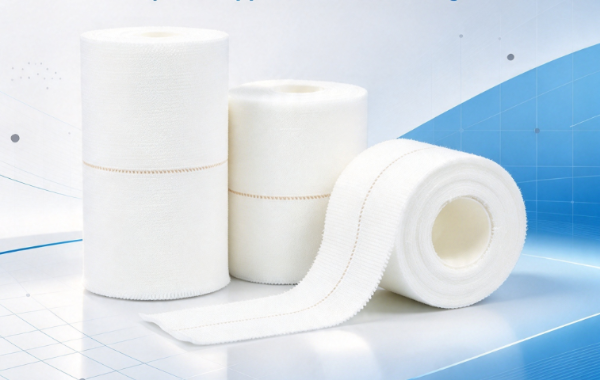
The need for dressing fixation appears in many healthcare situations. It may involve a wound dressing, absorbent pad, protective covering, or another type of medical dressing. The body area involved can affect how the bandage should be applied and whether its structure is appropriate for the task.
Understanding these differences can help healthcare providers, caregivers, product buyers, and manufacturers think more carefully about dressing fixation.
What Makes Elastic Fixing Bandages Suitable for Different Body Areas?
An Elastic Fixing Bandage is generally used to hold a dressing in place without relying only on adhesive contact with the skin. Its flexible structure allows it to wrap around a body area and maintain contact as the person moves.
This flexibility is useful because the human body is not a flat surface. Arms and legs have changing contours. Areas around joints move frequently. The chest and abdomen can change shape during normal movement and breathing. Hands and feet are involved in regular activity.
A fixing bandage needs to work with these differences rather than treating every body area in exactly the same way.
The material can stretch as it is positioned around the body. This gives the user some freedom when placing the bandage. The aim is not simply to wrap the area tightly. It is to create a stable covering that holds the dressing in an appropriate position.
Several characteristics may affect whether a Bandage is suitable for a particular body area:
| Consideration | Why It Matters |
|---|---|
| Body shape | The bandage needs to follow the area being covered |
| Movement | Flexible areas may require a fixing method that allows natural movement |
| Dressing position | The bandage should help keep the dressing where it is needed |
| Surface area | Larger or smaller areas may require different wrapping approaches |
| Skin condition | The surrounding skin should be considered during application |
| Daily activity | Movement and contact with clothing may affect dressing stability |
These factors do not mean that one bandage cannot be used across different areas. They show why application should be adapted to the location rather than treating every situation in the same way.
Can Elastic Fixing Bandages Be Used on the Arms and Legs?
Arms and legs are common areas where dressing fixation may be needed. They have relatively clear surfaces, but they are constantly involved in movement.
An Elastic Fixing Bandage can be wrapped around an appropriate area of an arm or leg to help keep a dressing in position. The elastic structure allows the bandage to follow the shape of the limb instead of remaining completely rigid.
The forearm, upper arm, lower leg, and thigh can have different shapes. The area around the elbow or knee presents another challenge because the joint changes position as the limb moves.
When used around a joint, the bandage should be arranged in a way that supports the dressing without unnecessarily restricting normal movement. The position of the dressing should remain the main consideration.
For less mobile areas of the limb, the application may be more straightforward. The bandage can be positioned around the dressing and adjusted to create a stable covering.
For moving areas, the wrapping method may need more attention.
The same principle applies to the legs. A dressing located on the lower leg may experience movement from walking, while a dressing closer to the knee may be affected by repeated bending.
A Bandage can provide flexibility in these situations, but its suitability still depends on the specific dressing, body area, and application method.
How Does an Elastic Fixing Bandage Work Around Joints?
Joints create one of the more obvious challenges in dressing fixation. The elbow and knee do not remain in one position. Their shape changes whenever the arm or leg bends.
A rigid covering may feel restrictive in such an area. A flexible fixing bandage offers another approach because it can move with the body to some degree.
The bandage can be positioned around the dressing while following the shape of the joint and nearby tissue. The goal is to keep the dressing stable without creating unnecessary pressure or interfering with ordinary movement.
Application around a joint requires attention to several points.
- Consider the natural movement of the joint.
The bandage should be placed with the expected movement of the area in mind. - Keep the dressing properly positioned.
The fixing material should support the dressing instead of shifting it during wrapping. - Avoid an unnecessarily tight application.
A secure dressing does not mean that the bandage needs to be wrapped with excessive force. - Check the finished position.
The bandage should remain stable while allowing the body area to function normally.
This makes flexibility an important part of the design. The bandage needs to provide enough support for fixation while remaining practical on a moving body area.
Different joint locations may require different wrapping approaches. The same product may be used in more than one area, but the way it is positioned should reflect the shape and movement of that area.
Are Elastic Fixing Bandages Suitable for Hands and Feet?
Hands and feet present different challenges from the upper arm or thigh. They have more complex shapes and are involved in frequent movement and contact with surrounding objects.
A dressing on the hand may be exposed to repeated movement during daily activities. Fingers move independently, while the wrist changes position during many common tasks. A fixing bandage therefore needs to provide support without making the dressing difficult to manage.
An Elastic Fixing Bandage may be useful for holding a dressing on suitable areas of the hand or wrist. Its flexible structure can follow the body's contours and provide a layer around the dressing.
The feet have their own considerations. Walking creates repeated movement and contact with footwear or other surfaces. A dressing in this area may therefore need a secure fixing method that remains practical during normal activity.
The application should take the location of the dressing into account. A bandage placed around a simple area of the foot may be easier to manage than one positioned around a highly mobile part.
Hands and feet also have many natural folds and changes in shape. Careful placement can help avoid unnecessary movement of the dressing.
For product manufacturers, these applications highlight why flexibility and ease of positioning matter. A fixing bandage intended for different body areas needs to provide users with enough freedom to adapt the wrapping method.
Can Elastic Fixing Bandages Be Used Around the Chest and Abdomen?
The chest and abdomen are different from the limbs because their shape changes during normal breathing and body movement.
A dressing may need to remain in place on these areas while the person moves, sits, stands, or breathes normally. A flexible fixing material may therefore offer practical value in situations where a rigid covering would not follow the body's movement as easily.
An Elastic Fixing Bandage can be positioned around an appropriate area to help secure a dressing. Its ability to stretch and conform to the body can make it easier to work with curved surfaces.
However, application in these areas requires particular care. The bandage should not be treated as a general-purpose wrap that can simply be tightened until the dressing feels secure.
The condition of the person, the location of the dressing, the type of dressing, and the intended use all influence how the bandage should be applied.
This is also an area where product instructions matter. Manufacturers should provide clear information about intended applications and appropriate use. Buyers and healthcare users should follow the relevant instructions rather than assuming that one application method works for every situation.
How Should an Elastic Fixing Bandage Be Adapted to Different Body Areas?
The basic function of an Elastic Fixing Bandage remains the same, but its application can change according to the body area.
A practical approach is to consider the location before wrapping the bandage. The user can look at the shape of the area, the position of the dressing, and how much movement is expected.
For a relatively straight part of the arm or leg, the wrapping process may be simple. Around a joint, the user may need to pay more attention to movement. Around the hand or foot, the shape of the area becomes more important.
The following comparison can help explain the difference:
| Body Area | Main Application Consideration |
|---|---|
| Upper arm | Follow the shape of the limb |
| Forearm | Keep the dressing stable during arm movement |
| Elbow | Allow for joint movement |
| Thigh | Maintain suitable contact around the dressing |
| Lower leg | Consider movement during walking |
| Knee | Account for repeated bending |
| Wrist | Allow practical hand and wrist movement |
| Hand | Work around a more complex body shape |
| Foot | Consider movement and daily activity |
| Chest | Allow for normal body movement |
| Abdomen | Follow changes in body shape during movement |
This does not mean that each area requires a completely different product. Instead, it shows why the same type of fixing bandage may need to be applied differently depending on where it is used.
The bandage should support the dressing rather than become the main focus of the application. A well-positioned fixing method should help the dressing remain where it is intended while fitting naturally around the body.
What Factors Affect the Choice of Elastic Fixing Bandage?
Different applications can place different demands on a fixing bandage. Buyers and healthcare organizations should consider the intended use instead of selecting a product based only on its general appearance.
The type of dressing is one consideration. A small dressing may require a different wrapping approach from a larger covering. The location of the dressing can change the amount of movement involved.
The body area matters as well. A bandage used around a stable section of the limb may have different application requirements from one used around the knee, wrist, or foot.
Skin condition should be considered too. The surrounding skin should be treated carefully, especially when the bandage is used as part of regular dressing care.
Ease of use can influence the practical value of the product. Healthcare workers and caregivers may need to apply or replace dressings regularly. A fixing bandage that is straightforward to position can make routine handling more manageable.
For B2B buyers, several questions may help during product evaluation:
- What body areas is the bandage intended to support?
- What types of dressings can it be used with?
- Is the material flexible enough for areas that move regularly?
- Is the bandage easy to position and adjust?
- Does the product have clear application instructions?
- Is the product designed for the intended healthcare setting?
- Can the supplier provide information about appropriate use?
- Does the manufacturer offer different product formats for different applications?
These questions help connect the product with its actual use rather than judging it only by general product descriptions.
How Can Manufacturers Develop Elastic Fixing Bandages for Different Body Areas?
Manufacturers need to consider the variety of body shapes and dressing situations that their products may encounter.
A fixing bandage intended for broad use should provide enough flexibility to work with different body areas while maintaining its basic fixing function. The material, structure, edge design, and handling characteristics can all influence how the product behaves during application.
Product development can also consider the needs of healthcare workers. A bandage that is easy to handle may be more practical during routine dressing changes. Clear product information can help users understand where and how the product is intended to be used.
Manufacturers may organize product development around several application needs:
- Body shape: The product should work with curved and changing surfaces.
- Movement: Applications around joints and active body areas require flexibility.
- Dressing fixation: The bandage should provide a practical way to keep the dressing positioned.
- Handling: Users should be able to position and adjust the product without unnecessary difficulty.
- Application range: Product information should clearly explain intended uses and limitations.
This approach can help manufacturers create products that fit real dressing situations rather than focusing only on the physical material.
For medical product buyers, understanding these factors can make supplier discussions more useful. Instead of asking only about the product itself, buyers can describe the body areas and dressing applications they need to support. This gives manufacturers a clearer basis for discussing suitable product options.