


 English
 中文简体
中文简体
 Español
 عربى
عربى
 Français
 Português
Cotton Adhesive Tape
Cotton Kinesiology Tape
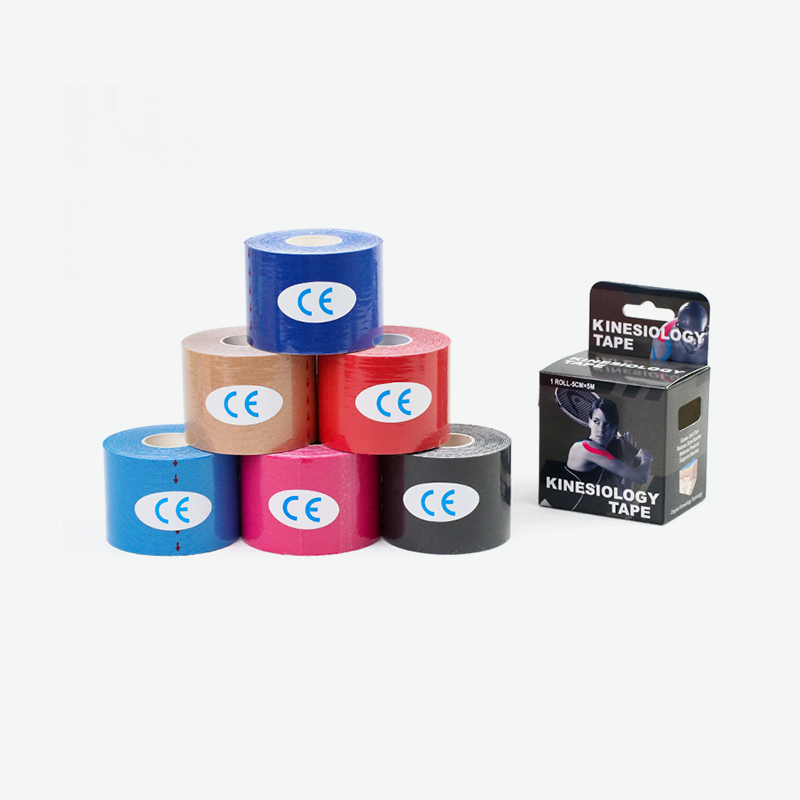
Kinesiology tape is typically made of a blend of cotton and spandex, which is highly elastic. Kinesio Tape plays a significant role in sports protection and rehabilitation, and is widely used with advantages.
Main applications:
1. Relieving pain: By reducing pressure on the painful area, it provides analgesic effects;
2. Supporting weak muscles: Providing assistance and support for tired or weak muscles;
3. Relaxing tense muscles: Suppressing overactive muscles, relieving spasms and tension;
4. Helping correct joint posture: Providing sensory feedback, improving abnormal joint alignment and movement patterns;
5. Preventing sports injuries: Applying it before exercise to provide additional protection for key areas.
About Us
Wenzhou Zhusi Medical Supplies Co., Ltd.
Wenzhou Zhusi Medical is a cotton kinesiology tape factory for customized tape and packaging. We specialize in custom cotton kinesiology tape in different sizes, providing professional care solutions for clients in the fields of sports, medical care, personal care, animal health, tattoos, and beauty. Through technology and innovation, we strive to enable everyone in the world to enjoy a healthy and fulfilling life.
Our Mission:
We strive to achieve both material and spiritual well-being for all employees, spread love and health, and promote the accessibility of healthcare products to everyday families.
Our Vision:
To become a renowned company recognized by customers, respected by society, and ensuring employee well-being.
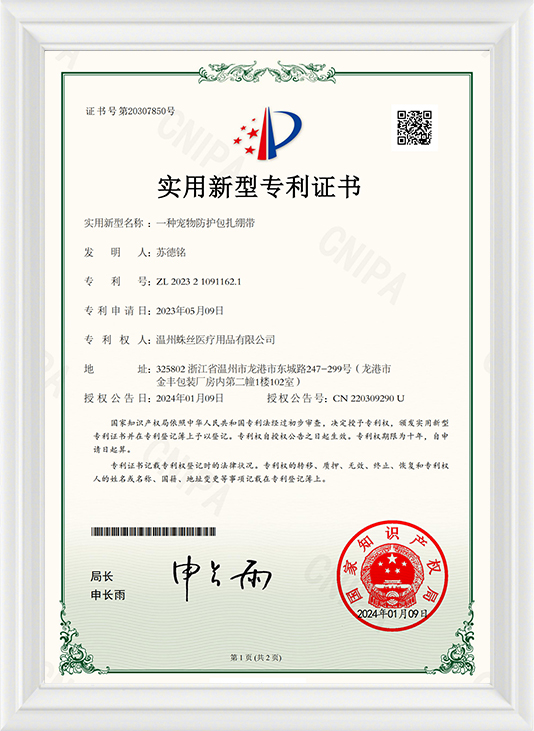
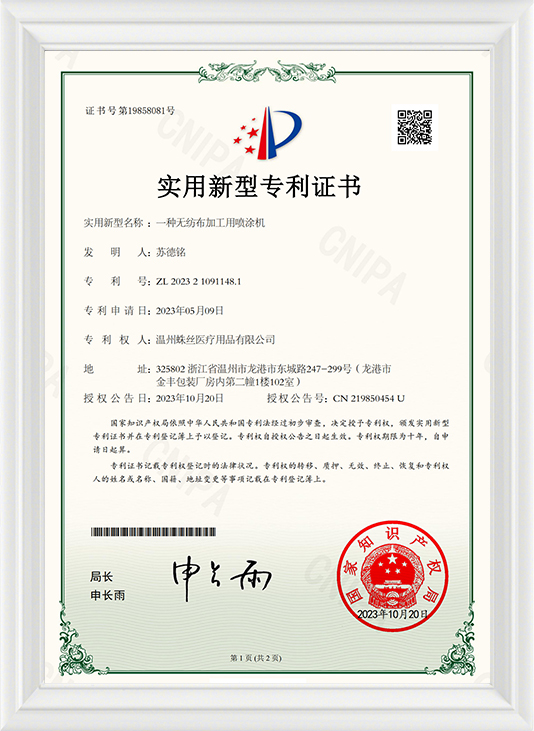
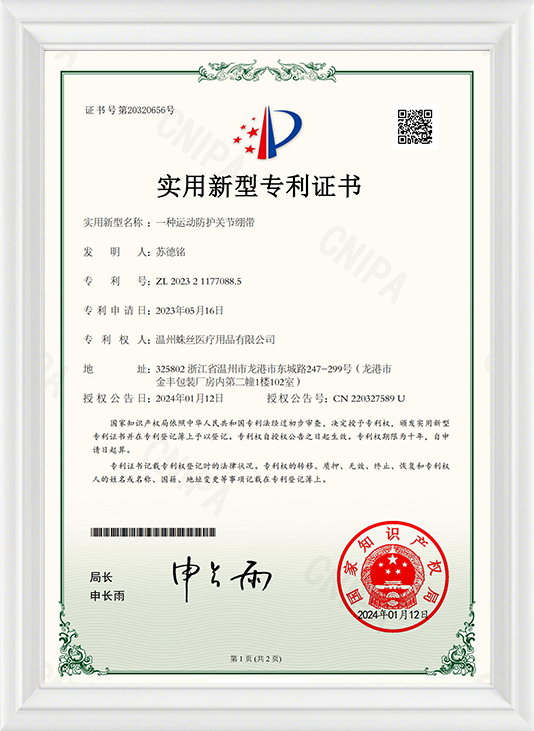
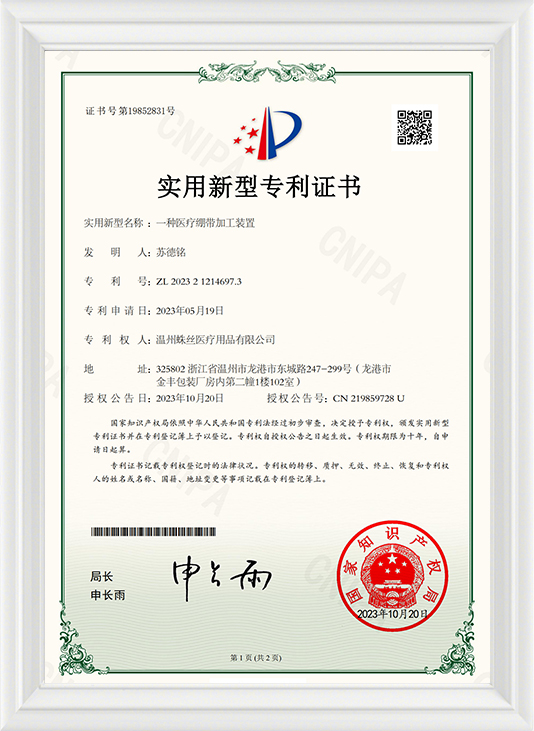
Certificate Of Honor
News
-
Sports taping is often treated as a simple wrapping task, but the material placed closest to the skin can influence how the outer tape feels...
READ MORE -
A bandage placed around a joint has to deal with constant changes in the shape of the skin. When an ankle bends, a wrist turns, or a knee fl...
READ MORE -
A cohesive bandage can look simple to use. It stretches, wraps around an area, and holds against itself without needing ordinary adhesive on...
READ MORE -
A bandage may look simple, but its performance depends on how it behaves after it has been wrapped around the body. It needs to remain in po...
READ MORE
Message Feedback
Cotton Kinesiology Tape: Materials, Construction, Uses and Product Considerations
Cotton kinesiology tape is an elastic fabric tape commonly seen in sports, rehabilitation and movement-related applications. It is designed to follow the contours of the body more closely than rigid athletic tape and is normally applied to intact skin in individual strips.
The word cotton describes the main textile character of the backing, but most products are not made entirely from cotton. Elastic yarns are usually incorporated into the fabric to create stretch and recovery. A complete tape also includes a pressure-sensitive adhesive and a release liner.
Products marketed as Cotton Elastic Therapeutic Tape, Cotton Muscle Tape or Hypoallergenic Kinesiology Tape may belong to the same general category. These names do not guarantee identical materials, stretch, adhesion or skin-contact performance. The construction and supporting product data provide a more accurate basis for comparison.
What Is Cotton Kinesiology Tape?
Cotton kinesiology tape is a stretchable, adhesive-backed textile intended for flexible application over selected body areas. Unlike rigid sports tape, it extends primarily along its length and moves more readily with the skin.
A typical product contains four main components:
- Cotton-rich fabric: Creates the outer textile surface and contributes to softness, tensile strength and appearance.
- Elastic yarns: Provide controlled longitudinal extension and recovery.
- Pressure-sensitive adhesive: Bonds to intact skin through application pressure.
- Release liner: Protects the adhesive before the tape is cut and applied.
Additional components may include dyes, printed graphics, primers, surface treatments or grid markings on the liner.
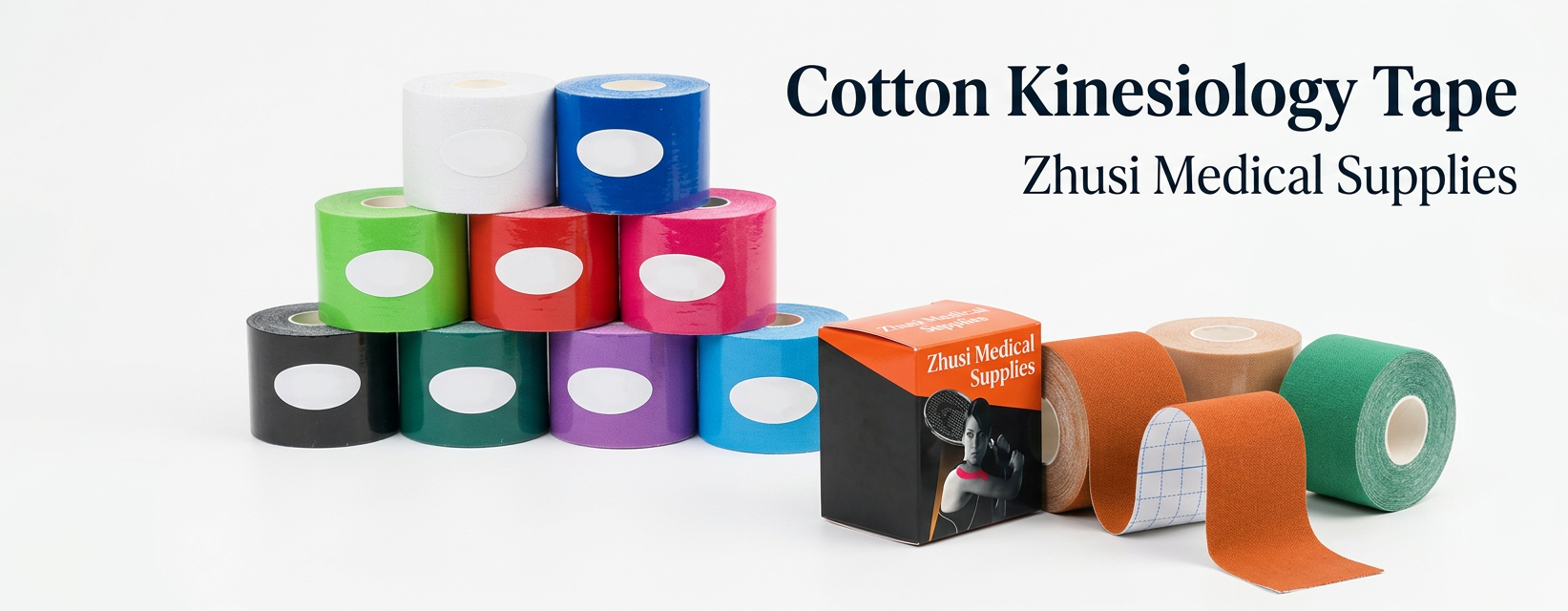
Cotton kinesiology tape is commonly supplied as:
- Continuous retail rolls
- Pre-cut strips
- I-shaped, Y-shaped or fan-shaped pieces
- Application-specific patches
- Wide rolls for slitting and further conversion
The product is different from a conventional elastic bandage. Kinesiology tape is normally placed in individual strips rather than wrapped repeatedly around a limb to create compression.
Is Cotton Kinesiology Tape Made from Pure Cotton?
Most cotton kinesiology tapes are not made from pure cotton. Cotton provides a familiar textile feel, but it does not create the level of elastic recovery normally expected from kinesiology tape.
The backing may contain:
- Cotton
- Spandex or elastane
- Polyester
- Rayon
- Nylon
- Other elastic or reinforcing fibers
Cotton may remain the dominant fiber or visible surface material while elastic yarns form part of the woven structure.
The exact fiber ratio can affect:
- Softness
- Stretch
- Recovery
- Moisture absorption
- Drying time
- Tensile strength
- Dimensional stability
- Printing performance
A higher cotton percentage does not automatically indicate better performance. The finished behavior depends on how the fibers are combined and how the fabric is woven.
What Is Hypoallergenic Kinesiology Tape?
The term Hypoallergenic Kinesiology Tape generally describes a product developed to reduce the likelihood of an allergic reaction. It does not mean that the tape is guaranteed to cause no reaction.
Cotton content alone cannot support a hypoallergenic claim. Skin response may also be influenced by:
- Adhesive ingredients
- Dyes and printing inks
- Processing residues
- Wear duration
- Perspiration
- Application tension
- Skin condition
- Removal technique
- Individual sensitivity
Acrylic adhesive is widely used in kinesiology tape, but acrylic construction does not automatically make a product hypoallergenic. Product-specific evaluation is still required.
Depending on the intended use and destination market, supporting information may include:
- Material-composition declarations
- Latex declarations
- Skin-contact assessments
- Biocompatibility information
- Sensitization or irritation testing
- Finished-product technical documentation
People with known adhesive, textile or dye sensitivities should review the information supplied with the specific product.
Main Types of Cotton Kinesiology Tape
Cotton kinesiology tape can be classified by backing structure, adhesive application and finished format.
| Product Type | Typical Construction | Main Characteristic | Common Format |
| Standard cotton kinesiology tape | Cotton-rich elastic fabric with acrylic adhesive | General elastic tape construction | Continuous roll |
| Pre-cut cotton tape | Elastic tape converted into prepared strips | Requires less cutting before application | Strips or application kits |
| Pattern-coated tape | Cotton-elastic fabric with wave, stripe or dot adhesive | Controlled adhesive distribution | Roll or strip |
| Printed cotton tape | Dyed or printed elastic backing | Visual or brand customization | Retail roll |
| Extra-wide cotton tape | Broad elastic fabric | Covers larger areas with fewer pieces | Wide roll |
| Custom-shaped tape | Die-cut elastic tape with release liner | Produced for a defined application format | Patch or pre-cut set |
| Wide-web tape material | Coated fabric supplied before final conversion | Used for slitting or die-cut production | Master roll |
Terms such as professional grade, extra strength or advanced support have limited technical meaning unless they are connected to measurable specifications.
Cotton Kinesiology Tape Materials and Composition
The fabric, adhesive and liner must perform as a coordinated system. Changes to one component can alter the behavior of the entire tape.
Cotton-Rich Fabric Backing
The backing is usually woven from cotton yarn together with elastic fibers. It provides the tape’s visible surface and much of its mechanical structure.
Important fabric properties include:
- Fiber composition
- Fabric weight
- Weave density
- Yarn direction
- Thickness
- Tensile strength
- Longitudinal elongation
- Transverse elongation
- Elastic recovery
- Surface texture
- Color fastness
A lightweight fabric may conform easily to curved areas but can be more difficult to process without distortion. A heavier backing may feel more substantial while creating additional stiffness or bulk.
Elastic Fibers
Elastic yarns allow the backing to extend and then return toward its original dimensions. Spandex and elastane are common examples.
Their performance is influenced by:
- Elastic-fiber percentage
- Yarn placement
- Fabric weave
- Processing tension
- Heat exposure
- Repeated extension
- Adhesive coating
- Storage conditions
High stretch is not the only important property. A tape also needs controlled recovery. Material that extends easily but does not recover consistently may remain deformed after application or movement.
Acrylic Pressure-Sensitive Adhesive
Most cotton kinesiology tapes use acrylic pressure-sensitive adhesive. The adhesive forms contact when pressure is applied during placement.
Relevant adhesive characteristics include:
- Initial tack
- Holding strength
- Coating weight
- Adhesive uniformity
- Resistance to edge lifting
- Liner release
- Moisture response
- Residue after removal
- Aging stability
- Compatibility with the elastic backing
The most aggressive adhesive is not necessarily the most appropriate. Excessive tack can make placement and removal difficult, while insufficient tack may lead to premature lifting.
Release Liner
Release paper or film protects the adhesive before use. It also helps the tape remain stable during slitting, printing and die-cutting.
A suitable liner should:
- Release cleanly
- Remain flat during storage
- Resist accidental tearing
- Protect the adhesive from contamination
- Support accurate cutting
- Remain aligned with the elastic fabric
Grid markings are often printed on paper liners. They can assist with measuring strips but do not show how much tension is being applied to the tape.
How Adhesive Coating Patterns Differ
Kinesiology tape adhesive is frequently applied in a visible wave pattern. Other coating designs are also possible.
Common patterns include:
- Wave coating
- Parallel stripes
- Dot coating
- Grid coating
- Segmented coating
- Full-surface coating
The coating pattern can influence:
- Adhesive contact area
- Fabric flexibility
- Moisture-vapor movement
- Liner release
- Edge behavior
- Visual appearance after liner removal
A wave-shaped adhesive pattern does not establish a therapeutic mechanism by itself. Any health-related claim must be evaluated separately from the appearance of the coating.
Coating consistency is also important. Missing areas, heavy deposits or irregular spacing may lead to uneven adhesion across a strip.
Stretch, Elongation and Recovery
Stretch figures are frequently used to describe kinesiology tape, but a percentage alone does not provide a complete picture.
Maximum Elongation
Maximum elongation refers to how far the material can extend under a defined test condition. It may be measured from the fabric alone or from the completed adhesive tape.
These two results are not necessarily identical.
Working Stretch
Working stretch is the practical extension range used during handling or application. It is usually lower than the maximum elongation of the material.
The tape should not be stretched to its limit simply because the backing can extend that far.
Elastic Recovery
Elastic recovery indicates how closely the material returns toward its original length after tension is removed.
Poor recovery may lead to:
- Permanent lengthening
- Loose or uneven strips
- Reduced consistency during movement
- Changes in adhesive contact
- Dimensional variation after converting
A meaningful product evaluation therefore considers elongation and recovery together.
Cotton vs Synthetic Kinesiology Tape
Cotton and synthetic kinesiology tapes can be designed for similar applications, but they may respond differently to moisture and movement.
| Feature | Cotton-Rich Tape | Synthetic Tape |
| Surface feel | Soft, matte and textile-like | Smooth or finely woven |
| Moisture absorption | Usually higher | Usually lower |
| Drying time | May be longer | Often shorter |
| Stretch consistency | Depends on the elastic-yarn structure | Can be engineered for controlled extension |
| Dimensional stability | May respond more to moisture | Often more stable after water exposure |
| Appearance | Natural fabric finish | Clean or lightly reflective finish |
| Printing Textile-style result | May support sharper or brighter graphics |
Neither construction is universally better. The preferred option depends on the intended environment, required surface feel, drying expectations and adhesive system.
Cotton Kinesiology Tape vs Rigid Athletic Tape
Although both products may use cotton-rich backings, their stretch characteristics and application methods are different.
| Feature | Cotton Kinesiology Tape | Rigid Athletic Tape |
| Stretch | Elastic, mainly in the length direction | Low or minimal |
| Movement response | Follows skin and body movement | Maintains a firmer structure |
| Typical adhesive | Acrylic | Often rubber-based or zinc oxide |
| Application format | Individual strips or shapes | Anchors, strips and structured wraps |
| Cutting | Usually cut with scissors | Often designed for hand tearing |
| Typical width | Commonly around 5 cm | Commonly 2.5–5 cm |
| Wear pattern | Depends on product instructions | Often associated with a specific activity period |
Kinesiology tape should not replace rigid tape in a strapping method that specifically requires low elongation.
Cotton Kinesiology Tape vs Elastic Adhesive Bandage
An elastic adhesive bandage is generally wider and is normally applied as an overlapping wrap. Cotton kinesiology tape is placed in separate strips.
| Feature | Cotton Kinesiology Tape | Elastic Adhesive Bandage |
| Format | Narrow adhesive strips | Wider adhesive bandage roll |
| Application | Linear or shaped placement | Circumferential wrapping |
| Compression | Not primarily intended as a compression wrap | Can create compression |
| Adhesive coating | Often wave or pattern coated | May use continuous or patterned coating |
| Stretch direction | Mainly longitudinal | Determined by the bandage weave |
| Common preparation | Cut into selected shapes | Unrolled around the application area |
Any product wrapped around a limb requires careful tension control. Excessive circumferential pressure can cause discomfort, numbness, tingling, swelling or color changes.
Common Sizes and Product Formats
Cotton kinesiology tape is produced in several standard and customized dimensions.
| Format | General Application | Key Consideration |
| 2.5 cm narrow tape | Fingers and smaller areas | Precise placement |
| 5 cm standard tape | General-purpose use | Common retail format |
| 7.5 cm wide tape | Broader areas | Fewer strips may be needed |
| 10 cm extra-wide tape | Large areas or further conversion | Requires careful contouring |
| Continuous roll | Custom strip lengths | Requires cutting |
| Pre-cut strip | Faster preparation | Fixed dimensions |
| Pre-cut shape | Repeatable application format | Limited adjustment |
| Master roll | Further slitting and die-cutting | Used in tape conversion |
Important dimensional details include:
- Finished width
- Width tolerance
- Roll length
- Length tolerance
- Total thickness
- Core diameter
- Liner type
- Strip dimensions
- Pieces per package
- Packaging configuration
Elastic material should be measured after it has relaxed. Measuring while the fabric is under tension can produce an inaccurate width or length result.
Common Cotton Kinesiology Tape Shapes
Different shapes can be produced by cutting a continuous strip. These names describe the physical format rather than a guaranteed effect.
| Shape | Construction | General Placement Style |
| I-strip | Single straight piece | Linear placement |
| Y-strip | One end remains joined while the other is split | Placement around a contour |
| X-strip | Connected center with divided ends | Crossing or broader placement |
| Fan strip | Multiple narrow tails attached to one anchor | Multi-tail coverage |
| Opening strip | Strip with a central opening or separated section | Placement around a selected point |
| Pre-cut patch | Factory-cut piece with rounded edges | Repeatable placement |
| Custom die-cut shape | Produced to a specified outline | Product-specific format |
Rounded corners are commonly used because sharp corners can catch more easily on clothing.
General Application Principles
Application instructions vary by product and taping method. The following points cover general handling rather than treatment of a particular condition.
Read the product instructions
Confirm the intended use, wear time and relevant warnings.
Inspect the application area
Cotton kinesiology tape is generally intended for intact skin. Avoid applying it to damaged or severely irritated areas.
Clean and dry the skin
Oil, lotion, perspiration and dirt can interfere with adhesive contact.
Measure and cut the strip
Prepare the required length and round the corners where appropriate.
Avoid unnecessary adhesive contact
Handle the tape through the liner or fabric to reduce contamination.
Place the first anchor carefully
The starting and finishing ends are commonly applied with little or no stretch, depending on the instructions.
Use controlled extension
Do not stretch the material to its maximum. Excessive tension may increase stress on the skin.
Smooth the fabric
Apply the strip without wrinkles, hard folds or excessive overlap.
Press the tape into position
Gentle rubbing helps a pressure-sensitive adhesive establish contact.
Monitor the skin
Remove the tape if burning, itching, blistering, numbness or increasing discomfort develops.
Kinesiology tape is generally applied in strips rather than tightly wrapped around an entire limb.
Water Resistance and Wear Time
Many cotton kinesiology tapes are designed to tolerate perspiration, showering or brief water contact. This does not automatically make them waterproof.
Water-related performance depends on:
- Cotton percentage
- Fabric density
- Adhesive formulation
- Adhesive coating weight
- Skin preparation
- Application pressure
- Edge placement
- Exposure time
- Water temperature
- Friction from clothing or towels
Cotton absorbs more moisture than many synthetic fibers. The fabric may therefore become heavier when wet and require more time to dry.
Wear duration varies among products. Longer wear should not be treated as inherently better. Tape should be removed when it becomes contaminated, heavily detached, uncomfortable or inconsistent with its instructions.
Safety and Skin Considerations
Cotton has a soft textile character, but skin response is determined by the entire product. Adhesive, dye, tension, heat, perspiration and wear time can all influence tolerance.
General precautions include:
- Do not place ordinary kinesiology tape directly over an open wound.
- Avoid infected, sunburned or severely irritated skin.
- Do not apply the tape with excessive stretch.
- Use caution when sensation or circulation is impaired.
- Stop use if redness, burning, itching, blistering or swelling occurs.
- Do not reuse tape intended for single use.
- Remove the tape slowly while supporting the skin.
- Seek professional assessment for persistent pain, swelling or reduced movement.
A small test strip may reveal an immediate reaction, but it cannot guarantee that delayed irritation will not occur.
Claims such as hypoallergenic, latex-free, waterproof, medical grade or suitable for sensitive skin need product-specific evidence.
Does Cotton Kinesiology Tape Prevent Injury or Relieve Pain?
Research on kinesiology tape varies according to the condition, taping method, study design and measured outcome. Some people report short-term changes in comfort or body awareness, while evidence for broad therapeutic claims remains mixed.
Cotton kinesiology tape should not be described as guaranteed to:
- Prevent sports injuries
- Cure pain
- Repair damaged tissue
- Accelerate healing
- Permanently correct posture
- Improve circulation in every user
- Increase sports performance
- Replace medical care or rehabilitation
Possible outcomes depend on:
- The individual
- The underlying condition
- Application technique
- Tape construction
- Placement and tension
- Wear duration
- Activity level
- Skin tolerance
- Other care or training measures
Any medical or therapeutic claim must align with the intended use, available evidence and applicable regulations.
Custom Cotton Kinesiology Tape Options
Cotton kinesiology tape can be developed for sports brands, rehabilitation suppliers, wellness product lines and private-label programs.
Common options include:
- Cotton-rich or blended fabric
- Different fabric weights
- Customized elongation and recovery
- Acrylic adhesive formulations
- Wave, stripe or other coating patterns
- Standard or custom widths
- Different roll lengths
- Solid colors and skin tones
- Printed logos or repeating artwork
- Branded release liners
- Pre-cut strips
- I-, Y-, X- or fan-shaped pieces
- Custom cores
- Individual pouches
- Printed retail boxes
- Multipacks
- Professional bulk packaging
A complete product specification normally covers:
- Intended use
- Target market
- Fiber composition
- Fabric weight and thickness
- Elongation and recovery
- Adhesive requirements
- Coating pattern
- Width and roll length
- Continuous or pre-cut format
- Color reference
- Printing requirements
- Release-liner design
- Packaging format
- Required testing and documentation
- Reference product, where applicable
Descriptions such as extra stretchy, gentle adhesive or super waterproof should be converted into measurable properties and defined test conditions.
Zhusi manufactures and converts elastic fabric tape for sports-care, rehabilitation and private-label product lines. Available configurations include cotton-rich fabrics, acrylic adhesive systems, continuous rolls, pre-cut strips, custom colors, printed designs and branded packaging.

“This website is for users outside of China.”
Copyright © 2025 Wenzhou Zhusi Medical Supplies Co., Ltd. All Reserved. Approval No:浙温械备20250002 & 浙温械备 20190061 号 & 浙温药监械生产备20190011号
Breathable Cotton Kinesiology Tape
