

 English
 中文简体
中文简体
 Español
 عربى
عربى
 Français
 Português
Industry News
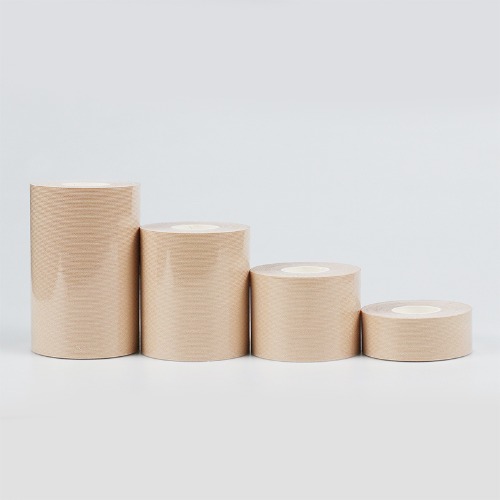
Kinesiology tape is often used on parts of the body that rarely stay still. A knee bends, a shoulder turns, an ankle moves from side to side, and skin stretches with every change in position. The tape has to follow those movements while staying comfortable and securely attached.
That sounds straightforward, but several details affect how the product behaves once it leaves the package. The backing fabric, stretch, adhesive, edge finish, moisture exposure, and storage condition all have a part to play. A change in one area can also affect another. For example, a flexible fabric may handle movement well, but its adhesive still needs to maintain contact when the skin becomes damp.
This is why Premium Kinesiology Tape is better assessed through its actual construction and use conditions rather than appearance alone. Looking closely at how the material stretches, how the adhesive behaves, and how the edges hold up during movement gives a more practical view of its suitability for active use.
How Does Fabric Quality Affect Premium Kinesiology Tape Performance
The fabric forms the main body of the tape. It needs to bend and stretch with the skin without feeling unnecessarily rigid. At the same time, it should remain easy to handle when a strip is cut, positioned, or adjusted during application.
Softness is only part of the picture. A fabric can feel soft against the skin and still lack the structure needed for consistent handling. On the other hand, a material with too much firmness may feel restrictive when applied around an area that moves frequently.
The construction of the fabric affects these differences. A consistent weave can help the tape stretch in a more predictable manner, while uneven material may create noticeable differences from one section to another. This can become more apparent when a strip is placed around a curved area.
There are several simple things to look at when examining the backing:
- Does it bend easily without becoming misshapen?
- Does it stretch evenly across the strip?
- Does it return toward its original shape after being pulled?
- Does the surface remain comfortable during movement?
- Are the edges clean and even after cutting?
These details are easy to overlook because they are not always obvious from the roll itself. Once the tape is applied, however, the behavior of the fabric becomes much easier to notice.
| Fabric feature | What it may influence |
|---|---|
| Flexibility | How easily the strip follows body movement |
| Surface feel | Comfort during extended contact |
| Stretch consistency | Ease of controlled application |
| Shape recovery | Behavior after stretching |
| Edge condition | Resistance to early lifting |
A useful material assessment therefore starts with how the fabric behaves in the hand. Its appearance matters, but flexibility, stretch, recovery, and handling usually tell more about how it will behave during use.
Why Does Elasticity Matter in Premium Kinesiology Tape
Elasticity becomes noticeable as soon as the tape is pulled during application. Once it is placed on the skin, the material continues to respond as the body moves. The two situations are connected, but they are not identical.
A strip may be stretched while being applied across the skin and then move through repeated bending afterward. If the fabric stretches too easily, maintaining a consistent application may be difficult. If it resists movement too much, the tape may feel less adaptable when the body changes position.
Recovery matters as well. After the material has been extended, it needs to return toward its original form without excessive distortion. Poor recovery can change the shape of the strip and alter how it sits against the skin.
This is particularly noticeable around joints. A taped area may move through several positions within a short period, causing the fabric to extend, relax, and bend repeatedly. The tape does not need to remain completely static. It needs to respond in a controlled manner while maintaining its connection with the skin.
For that reason, elasticity should be looked at as a combination of stretch, recovery, flexibility, and handling. Focusing on only one of these characteristics gives an incomplete picture.
How Does Adhesive Quality Affect Tape Stability During Movement
The adhesive is what keeps the fabric in contact with the skin, but its performance starts before movement begins. Skin condition, application pressure, moisture, and the way the strip is handled can all influence the contact.
Clean, dry skin generally provides a more suitable surface than skin covered with lotion, oil, or sweat. Even a well-made adhesive can have difficulty maintaining contact when another substance sits between the adhesive layer and the skin.
The first few minutes after application are also different from the period that follows. Once the person begins walking, exercising, stretching, or changing position, the tape is exposed to repeated movement. The adhesive needs to remain in contact while the backing moves with the skin.
There is also an interaction between the adhesive and fabric. If the fabric bends and stretches smoothly, the adhesive has a different job than it would with a stiff backing. An unevenly moving fabric can place additional stress on particular sections of the adhesive layer.
This makes adhesive evaluation more useful when it goes beyond initial stickiness. The more relevant question is how the contact behaves after the tape has been worn through ordinary movement.
Can Premium Kinesiology Tape Maintain Adhesion With Sweat
Sweat changes the conditions at the skin surface. During physical activity, perspiration can gradually make the skin damp, particularly in areas that experience more heat or movement.
As moisture increases, the adhesive has to maintain contact with a less stable surface. Small areas of lifting may begin around the edges, especially where the tape also encounters friction from clothing or repeated bending.
Skin preparation can make a noticeable difference. The application area should be clean and dry, and products such as creams or oils can interfere with adhesion. If the skin is already damp when the tape is applied, establishing firm contact may also be more difficult.
The type of activity matters too. A person doing repetitive movement may create a different environment from someone whose activity involves shorter periods of motion. Sweat, movement, friction, and skin tension work together rather than separately.
When assessing a tape for active use, it is therefore useful to look at what happens after perspiration begins. Does the adhesive remain attached across the strip? Do the corners start to lift? Does the backing continue to follow the skin instead of separating from it?
Those practical observations can reveal more than an initial adhesion check performed on dry skin.
How Does Water Exposure Affect Kinesiology Tape Adhesion
Water creates another set of conditions. Sweat develops on the skin during activity, whereas direct water exposure may occur during showering, washing, or other daily situations.
The outer fabric comes into contact with water first, but the longer-term concern is what happens at the adhesive interface. If water reaches areas where the tape has already begun to lift, the separation can become easier to notice.
Drying can introduce another source of stress. Rubbing the taped area with a towel can pull at corners and edges. Clothing may create additional friction while the surface is still damp.
This is why water exposure should not be treated as a simple question of whether tape is "water resistant." The conditions surrounding the exposure matter.
| Situation | Practical point to observe |
|---|---|
| Perspiration | Whether contact remains stable as skin becomes damp |
| Showering | Whether the tape stays attached after direct water contact |
| Damp surface | Whether the fabric continues to sit comfortably |
| Drying | Whether rubbing affects the edges |
| Repeated moisture | Whether adhesion changes over continued use |
A product used in an active setting may encounter several of these conditions during the same period. Looking at them separately makes it easier to identify where adhesion begins to change.
Why Do Kinesiology Tape Edges Peel Before the Center
When tape starts to come loose, the problem often becomes visible at a corner or along the outer edge before the center separates. The edge has more exposure to friction and can catch against clothing or other surfaces.
Body movement is another factor. On areas that bend repeatedly, the skin underneath the tape changes shape. The center of the strip may remain firmly positioned while a corner experiences repeated lifting and compression.
Application can contribute as well. If an edge is touched frequently, placed over damp skin, or not pressed down properly, the adhesive contact may be weaker from the beginning. Once a small section lifts, everyday movement can make the problem more noticeable.
The cut itself deserves attention. A rough or uneven edge can provide a small point for friction to act on. A clean edge tends to sit more naturally against the skin and clothing.
Edge peeling is therefore rarely caused by one factor alone. Adhesive behavior matters, but so do fabric flexibility, skin preparation, movement, friction, and the condition of the cut edge.
How Does Manufacturing Consistency Affect Premium Kinesiology Tape
A roll may perform well during an individual test, but repeated purchasing raises another question: will the next production batch behave in a similar way?
Consistency matters across the fabric, adhesive, dimensions, and cutting process. If the backing changes noticeably from one batch to another, users may feel a difference in stretch or handling. Uneven adhesive application can create areas with different levels of contact. Inconsistent cutting may produce edges that behave differently during application.
These differences do not always appear immediately. A roll can look uniform while small variations become noticeable only when it is stretched or applied.
For production and purchasing teams, routine checks can focus on straightforward characteristics:
- Backing feel and appearance
- Stretch and recovery
- Adhesive coverage
- Strip dimensions
- Edge condition
- Roll winding
- Packaging condition
Storage also deserves attention. Adhesive products can be affected by their surrounding environment, and poor storage can change the condition of the product before it reaches the end user.
Checking several samples rather than relying on one roll gives a more useful indication of production consistency. It also makes it easier to identify whether an observed difference comes from the material itself or from handling and storage.
What Should Buyers Check Before Choosing Premium Kinesiology Tape
The choice of kinesiology tape becomes clearer when the intended use is defined first. A product used during regular physical activity may need different characteristics from one intended for occasional, low-movement applications.
The backing is a sensible place to start. It should be easy to handle, flexible enough for the intended application, and reasonably consistent when stretched. Adhesive behavior comes next. Rather than judging the product only by how strongly it sticks when first applied, buyers can pay attention to how the contact changes after movement and moisture.
Environmental conditions should be part of the evaluation as well. If the intended use involves perspiration, direct water contact, or frequent bending, samples should be examined under comparable conditions. This avoids making a decision based solely on appearance or initial handling.
A practical purchasing check can include the following:
| Area to check | Questions to consider |
|---|---|
| Backing fabric | Does it feel flexible and consistent? |
| Elasticity | Does it stretch and recover in a controlled manner? |
| Adhesive | Does contact remain stable after application? |
| Sweat exposure | Does moisture affect the edges or surface contact? |
| Water exposure | Does the tape remain attached after getting wet? |
| Edge finish | Are the cuts clean and even? |
| Production consistency | Do samples show similar behavior? |
| Packaging | Has the product remained protected during storage? |
Sample comparison is particularly useful when several products appear similar on paper. Applying them under the same general conditions can make differences in handling and adhesion easier to notice.
Premium Kinesiology Tape can be assessed through the relationship between its fabric, elasticity, adhesive, edge condition, and response to everyday moisture and movement. Manufacturing consistency then adds another layer, especially when the product is purchased repeatedly. Looking at these factors together provides a more grounded way to judge whether a particular tape is suited to the conditions in which it will be used.