

 English
 中文简体
中文简体
 Español
 عربى
عربى
 Français
 Português
Industry News
Home / News / Industry News / How Does a First Aid Bandage Factory Ensure Reliable Bandage Production
A first aid bandage looks straightforward when it is sitting in a package. There is a backing, an adhesive area, a pad in the middle, and a protective wrapper around the finished piece. On a production floor, however, these parts have to come together in the right order and stay in the right position while the material is being moved, cut, assembled, and packed.
That is where production consistency becomes important. A small movement in the backing can affect pad placement. A change in adhesive application can alter the way the finished bandage stays on the skin. Cutting problems may become more obvious once individual pieces are separated. Packaging brings another set of requirements because the finished product needs to remain properly enclosed until use.
The work is therefore less about one single machine or one isolated production step. It is a chain of connected operations. Each stage has its own checks, but the condition created at one stage often becomes the starting point for the next one.
For a First Aid Bandage Factory, this connection between stages is particularly relevant when different sizes, shapes, backing materials, or bandage constructions are handled on the same production floor. The production setup has to suit the material rather than treating every product in exactly the same way.
Before a finished bandage can be cut into individual pieces, its materials have to move through the production line in a controlled path. Backing material is often handled from a roll, while other layers or components are brought into position as the product moves forward.
Keeping the material straight sounds simple, but several things can influence its movement. The material may have different flexibility from one type to another. A roll may not feed in exactly the same way throughout the process. Changes in tension or feeding speed can also cause the material to move away from its intended path.
Once that happens, later operations have less room to work with. A pad can move away from the center area. The adhesive may no longer sit where the design requires it. Cutting may then separate the product at an awkward position.
A production line can use guides and controlled feeding arrangements to keep the material moving along its intended route. Operators also have a role here. A material roll that is not positioned properly at the beginning can create trouble several stages later.
| Production stage | Main point to check | What can happen when alignment changes |
|---|---|---|
| Material feeding | Direction and movement | Later components may shift |
| Backing handling | Stable material path | Product shape can change |
| Component placement | Position on the backing | Pad or adhesive area may move |
| Cutting | Relationship with the product layout | Individual pieces may be uneven |
Material handling is easy to take for granted because there may be little visible difference between two pieces of backing. Once the material starts moving through a production line, though, that small difference can become noticeable.
The pad occupies a specific area of a bandage rather than being placed randomly on the backing. Its position affects the surrounding adhesive area and the final shape of the product.
During production, the backing keeps moving while the pad is introduced onto it. The two need to remain properly aligned. If the backing drifts or the pad feeding position changes, the finished product may show an off-center pad or an uneven surrounding area.
This is one reason pad placement is worth checking before the product reaches the cutting stage. Once the material has already been cut into individual pieces, correcting a positioning problem becomes much harder.
Different bandage shapes can also change the placement requirements. A narrow strip does not leave the same amount of surrounding space as a wider design. A shaped bandage may have a different relationship between the pad and its outer edge.
For a First Aid Bandage Factory, pad alignment is therefore connected to both material handling and product design. It is not simply a matter of placing a pad somewhere near the middle.
Production staff can check whether the pad remains within its intended area as the material moves. If a gradual shift appears, the cause may be related to feeding, component placement, or the material itself. Looking at the point where the change begins is often more useful than only checking the final pieces.
Adhesive is another part that needs attention during production. A bandage has to stay attached during normal use, but the adhesive also has to work with the backing material and the intended product construction.
The adhesive is applied over a defined area of the backing. The coating needs to remain within that area rather than spreading into places where it is not intended. An uneven coating can also create differences between sections of the finished material.
There are several things that can be checked during production:
Testing adhesive performance is not simply a question of whether something feels sticky. The backing, adhesive, pad arrangement, storage conditions, and product shape can all affect the finished result.
The relationship between the adhesive and backing deserves particular attention. A formulation that works with one backing may not behave in exactly the same way with another. Material changes can therefore require production checks rather than being treated as a minor substitution.
The application process also needs to remain stable as production continues. If the coating changes during the run, the cause may involve the adhesive material, feeding conditions, or the application equipment.
For a First Aid Bandage Factory, checking adhesive performance at the production stage gives the team a chance to identify such changes before the products reach packaging.
At some point, a continuous sheet or roll of assembled material has to become individual bandages. Cutting gives the product its final outline and separates one piece from the next.
The cutting pattern depends on the product design. A simple rectangular bandage has a different cutting arrangement from a rounded or specially shaped piece. The position of the pad and adhesive area also needs to match the cutting path.
This is where earlier alignment work becomes visible. If the backing has moved, the pad may no longer sit where expected when the cut is made. If the cutting position changes, the finished edge can move closer to one side of the pad.
Cutting quality is also affected by the condition of the material and equipment. Different backing materials do not always respond in the same way when they are cut. A flexible material may behave differently from a firmer film, for example.
The finished pieces can be checked for shape, edge condition, and general alignment. When an irregularity appears, looking back at the material path can sometimes reveal more than simply adjusting the cutting stage.
In practice, the cutting operation ties several earlier steps together. A clean cut cannot fully correct poor material positioning or misplaced components. The quality of the finished piece depends partly on what happened before the material reached the cutter.
Waterproof bandages require a different balance between the backing, adhesive, pad, and surrounding construction. The backing has to provide the intended resistance to water while remaining suitable for the product's shape and movement during use.
The choice of material affects production as well. Some backing materials are flexible and thin, while others behave differently when they pass through feeding and cutting equipment. Adhesive selection has to be considered alongside the backing rather than separately.
The edge area deserves attention too. The relationship between the backing and adhesive around the pad can affect how the finished bandage handles moisture. Poor positioning or an unsuitable combination of materials can create problems even when each individual component appears acceptable on its own.
| Component | Production consideration |
|---|---|
| Backing | Flexibility and resistance to moisture |
| Adhesive | Contact with the backing and intended skin area |
| Pad | Position within the covered section |
| Product edges | Relationship between backing and adhesive |
| Packaging | Protection before opening |
Waterproof construction therefore involves more than choosing a material that does not readily absorb water. The components still have to be assembled, cut, and packed in a way that suits the finished design.
This is also why production methods can differ between ordinary adhesive bandages and waterproof versions. The change in construction may require adjustments to material handling and the way individual pieces are formed.
Hydrocolloid bandages have a different construction from conventional adhesive bandages, so they cannot simply be treated as another backing-and-pad combination.
The material needs to be handled carefully during forming and cutting. Its layers need to remain properly positioned, while the protective surface needs to stay in place until the product is ready for application.
The cutting process can be particularly sensitive to material characteristics. A material with a different thickness or flexibility may respond differently as it passes through the equipment. The production team therefore needs to work with the actual construction rather than assuming that settings used for another bandage will produce the same result.
Protective layers also add another point to watch. If the layer shifts during production, the finished piece may not have the intended alignment. A problem that appears to be a packaging issue can sometimes begin much earlier during material handling.
For a First Aid Bandage Factory, producing hydrocolloid products alongside conventional bandages means keeping the differences between the materials in view. The same general production route may be present, but the handling requirements are not necessarily identical.
That distinction also helps explain why product design and manufacturing cannot always be separated. Changing the material changes how it behaves on the production line, and that can influence cutting, handling, and packaging.
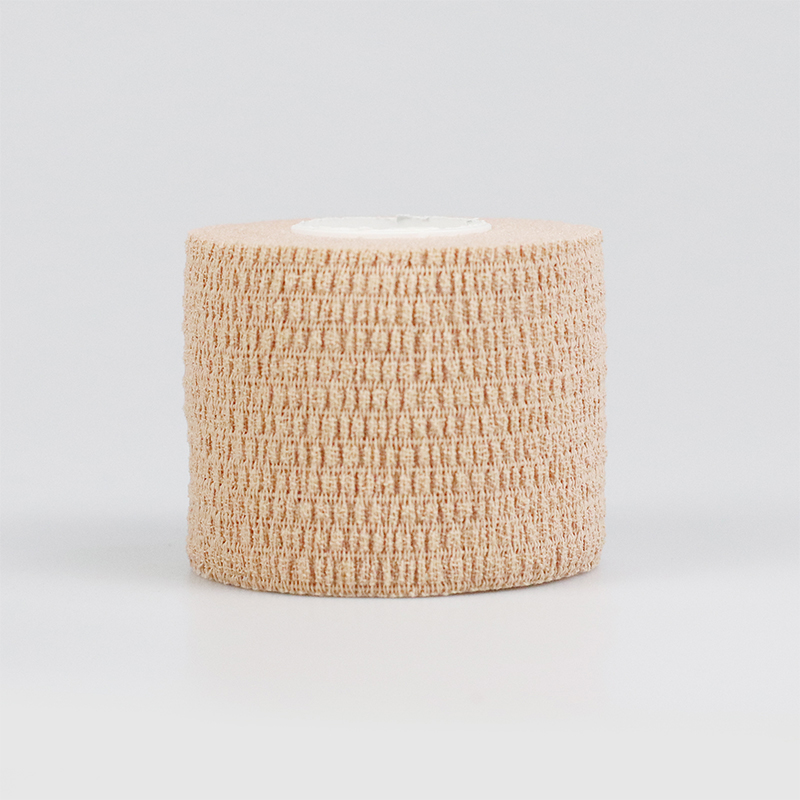
Once the individual bandage has been formed, it needs to be placed into its package. Individual wrapping keeps each piece separated and provides a barrier between the product and the surrounding environment before use.
The package has to match the size and shape of the bandage. Placement matters because a piece that sits incorrectly inside the wrapper can interfere with the sealing area. The wrapper also needs to remain intact after sealing and during ordinary handling.
Sealing checks can include the condition of the sealed area, alignment between the packaging layers, and visible signs of damage. If the package is not properly closed, the issue is not simply cosmetic because the package is part of the product's protection before use.
The shape of the bandage can influence packing as well. A simple flat strip may move through packaging equipment differently from a shaped product or a thicker construction.
This is why packaging should not be treated as an operation that begins only after all manufacturing concerns have disappeared. The condition of the finished bandage affects how smoothly it enters the packaging stage.
In a First Aid Bandage Factory, packaging problems can sometimes point back to earlier stages. Uneven edges, excess material, or an unusual product position may make a piece harder to place and seal correctly.
Defects can appear at almost any stage, but the visible problem does not always reveal its original cause.
An off-center pad, for example, may be connected with material movement rather than the pad itself. An uneven edge can be related to cutting, but it may also begin with the way the backing was positioned before cutting. A package that does not seal properly may be affected by the shape or placement of the bandage inside it.
| Possible issue | Area worth checking |
|---|---|
| Material moves from its intended path | Feeding and material handling |
| Pad sits away from its intended position | Component placement |
| Adhesive area appears uneven | Adhesive application |
| Finished edge is irregular | Cutting and material condition |
| Waterproof construction is inconsistent | Material combination and assembly |
| Protective layer is displaced | Material handling |
| Package does not seal properly | Product placement and sealing |
Looking at defects this way can make troubleshooting more practical. Instead of changing several production conditions at once, the team can look at where the problem first appeared.
Production checks can also happen at different points rather than being left until every bandage has been packed. Early inspection provides an opportunity to catch a shift in material position or pad placement while the material is still accessible.
The same approach applies to adhesive and cutting. A visible problem at the end of the line may have started several operations earlier. Following the sequence of events leading to the defect can provide a clearer indication of what needs attention.
Reliable production is ultimately built from these small controls. Material positioning affects pad placement. Pad placement and adhesive areas affect cutting. Product construction influences packaging. Packaging then protects the finished bandage until it is opened. Keeping these relationships in view allows a First Aid Bandage Factory to manage production as a connected process rather than a series of unrelated tasks.
Within this manufacturing field, companies such as Wenzhou Zhusi Medical Supplies Co., Ltd. can be considered in the broader context of bandage production, where material handling, product construction, processing, packaging, and quality checks all form part of the manufacturing workflow.
How Can a Cohesive Compression Bandage Provide Reliable Support
How Does Kinesiology Tape with Oem Logo Support Custom Brands

“This website is for users outside of China.”
Copyright © 2025 Wenzhou Zhusi Medical Supplies Co., Ltd. All Reserved. Approval No:浙温械备20250002 & 浙温械备 20190061 号 & 浙温药监械生产备20190011号 & 浙械广审(视)第271202-00627号
China Medical Supplies Manufacturer