

 English
 中文简体
中文简体
 Español
 عربى
عربى
 Français
 Português
Industry News
A bandage may look simple, but its performance depends on how it behaves after it has been wrapped around the body. It needs to remain in position, follow normal movement, and provide the intended level of support. These points become more noticeable around the wrist, ankle, knee, elbow, and other areas that change shape during movement.
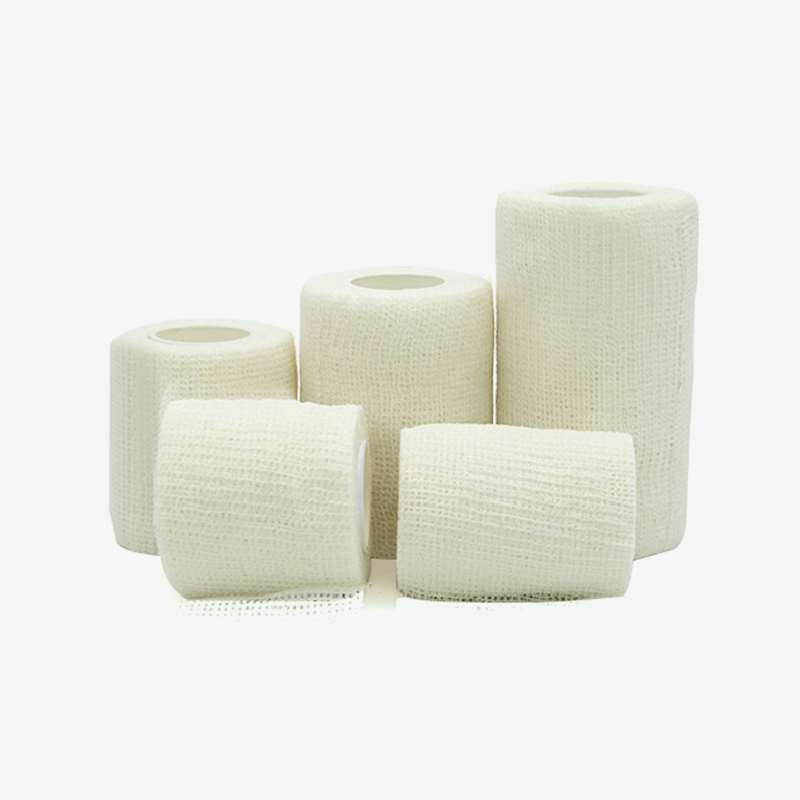
A Cohesive Compression Bandage takes a different approach from a conventional adhesive bandage. Instead of attaching directly to the skin, it holds against itself as successive layers are wrapped around the area. This makes it useful for securing gauze and dressings while also providing flexible support.
The material itself is only part of the picture. Stretch, overlap, wrapping direction, body shape, and surface conditions can all affect the finished result. A loose application may shift during movement, while excessive tension can make the covering uncomfortable. Looking at these factors together gives a clearer picture of how this type of bandage works in practical settings.
What Makes a Cohesive Compression Bandage Stay in Place
The main difference can be seen in the way the material holds itself together. As the wrap passes around the body, one section comes into contact with another. The layers create their own hold rather than relying on an adhesive surface attached directly to the skin.
This feature is useful when gauze or another dressing needs to remain where it has been placed. The dressing sits underneath, while the outer material helps keep it from shifting during ordinary activity. Around a joint, this can also be convenient because the wrap can move with the body rather than forming a rigid fastening.
Self-adherence does not mean that the material will stay in position under every condition. The starting point needs to be reasonably stable, and the following turns need enough contact with the material beneath them. If the layers barely meet, the covering may gradually loosen.
The shape of the body matters too. A straight section is relatively easy to wrap, while a wrist or ankle has curves and areas that become wider or narrower. The direction of each turn needs to follow these changes rather than forcing the material into one fixed path.
Surface conditions can make a difference as well. Sweat, moisture, body hair, and movement may affect handling. Keeping the area reasonably clean and dry can make application easier and help the layers sit together properly.
How Does Stretching Affect Compression and Support
Stretch is one of the easiest parts of wrapping to overlook. Pulling the material changes the tension around the covered area, so the amount of stretch used during application has a direct effect on how the finished wrap feels.
Pulling harder does not necessarily produce a better result. A section that has been stretched considerably may feel tighter than another section that was applied with less tension. Uneven tension can become particularly noticeable around a curved area or a moving joint.
A steadier approach is usually easier to control. The material can be guided around the body while maintaining a relatively consistent level of tension instead of repeatedly pulling and releasing it. The appropriate handling method depends on the construction and intended use of the individual product, so its instructions should be followed.
Elasticity also affects movement after application. When the covered area bends, the material needs to accommodate the change in shape. If it has suitable flexibility, it can follow the movement more naturally. If it is less flexible, positioning becomes more important.
| Feature | Effect during use |
|---|---|
| Stretch | Changes the tension created during wrapping |
| Elasticity | Helps the material follow body movement |
| Thickness | Affects layering and the feel of the finished wrap |
| Width | Influences coverage and ease of handling |
| Cohesion | Helps adjoining layers remain together |
Compression should therefore be considered together with the way the material is applied. The same roll can feel different depending on how it is stretched and positioned.
How Should a Cohesive Compression Bandage Be Applied
Application does not need to be complicated, but the starting point and wrapping direction can affect the result. If a dressing is being secured, it should be positioned before the outer material is placed around the area.
The wrap can then be guided around the body in a controlled manner. It is generally easier to work one section at a time than to pull a long length away from the body and then bring it back into position. Long, uncontrolled pulls can make the tension harder to judge.
A basic approach involves:
- Starting from a stable section near the area being covered
- Guiding the material around the body without excessive pulling
- Keeping the layers reasonably smooth
- Maintaining consistent contact between adjacent turns
- Adjusting the direction around curves and joints
- Pressing the final section against the underlying layer
Wrinkles deserve attention during application. A folded section creates a thicker area underneath the next layer and may become uncomfortable when pressure is applied.
Joints require a little more care because their shape changes with movement. A wrap that appears secure while the wrist or ankle is still may shift once the joint starts moving. Following the natural contour can help reduce this problem.
The application method should always take the specific product instructions into account. Different materials can have different handling characteristics, so a general technique should not replace the guidance supplied with the product.
How Does Overlap Affect Cohesive Bandage Performance
Overlap determines how the individual turns work together. When there are noticeable gaps between layers, parts of the area may not receive continuous coverage. When too much material is placed over a small section, unnecessary bulk can build up.
The body itself makes this more complicated than simply following an identical pattern around the entire area. A relatively straight section may allow regular turns, while a curved section can require small changes in direction.
Overlap also interacts with tension. A heavily layered section under greater tension will feel different from a section with lighter overlap and less tension. Neither factor should be considered on its own when looking at how the finished covering will behave.
The aim is to create a reasonably even covering that follows the shape of the body. This is particularly relevant around ankles, wrists, elbows, and knees, where the circumference changes along a short distance.
For dressing fixation, consistent overlap can help keep the material beneath covered. For light support, the relationship between overlap and tension can also influence how the wrap feels during movement.
Where Can a Cohesive Compression Bandage Provide Useful Support
One practical use is securing gauze or another dressing. Once the dressing has been placed, the outer wrap can help keep it in position without requiring adhesive tape to be attached directly to the surrounding skin.
The wrist and ankle are common examples of areas where flexibility can be useful. Both areas move frequently, and their shape changes during ordinary activity. A flexible covering can follow these changes more easily than a rigid fastening material.
The same principle applies around the elbow and knee. These areas bend repeatedly, so a wrap needs to remain reasonably secure without interfering unnecessarily with movement.
Physical activity creates another setting where dressing fixation or light support may be needed. A wrap can help keep a dressing or covering in place while the body moves, although the intended purpose should remain clear. A general wrap is not automatically appropriate for every type of injury or compression requirement.
Different applications call for different considerations:
- Dressing fixation: keeping gauze or a dressing from moving
- Joint support: allowing movement while maintaining a flexible covering
- Light compression: applying controlled tension around an area
- Irregular areas: following curves without excessive folding
- Active use: maintaining contact as the body moves
The application area and intended purpose should be considered together rather than treating the same wrapping method as suitable for every situation.
What Can Cause a Cohesive Compression Bandage to Slip
A wrap that begins to move does not necessarily indicate a problem with the material itself. The way it was applied can have a considerable effect.
Uneven tension is one possible cause. If one section is loose while another is pulled firmly, the looser area may shift when the body starts moving. Insufficient overlap can create a similar issue by reducing contact between adjoining layers.
The edge of the wrap can also become a weak point. If the final section has little contact with the layer beneath it, it may begin to lift during movement. This can happen more easily around a curved joint.
Moisture is another consideration. Sweat or water can make the material harder to handle during application. Body hair and frequent movement may also affect how easily the layers remain together.
Simply tightening the entire covering is not always the right response. If the original issue was uneven tension, poor positioning, or inadequate overlap, adding more tension may make the wrap less comfortable without solving the underlying problem.
A better approach is to look at where the movement begins. Checking the edges, overlap, tension, and direction of the turns can help identify what went wrong.
If compression is followed by unusual pain, numbness, coldness, or a noticeable change in skin color, increasing the tension should be avoided. Medical guidance may be appropriate, particularly when an injury or circulation concern is involved.
How Do Material and Elasticity Affect Bandage Performance
Two cohesive wraps can appear similar while behaving differently in use. The difference often comes from their material construction. Fiber composition, elasticity, thickness, and surface characteristics can all influence how the material feels and handles.
Elasticity is especially noticeable around a joint. A flexible material can follow changes in shape as the joint bends. A less flexible construction may need more careful positioning to prevent folds or movement.
Thickness becomes more apparent as layers accumulate. A material that feels light as a single layer may create more bulk after several turns. This can matter around smaller joints or areas where the covering needs to remain flexible.
Width has a similar practical role. A wider format can cover a larger section with fewer turns, while a narrower format may be easier to guide around smaller or irregular areas.
Material composition may also matter for users with specific requirements. Latex-free options, for example, may be considered where latex needs to be avoided. Checking the actual product specification is preferable to assuming that all cohesive wraps use the same materials.
| Material characteristic | Practical consideration |
|---|---|
| Fiber composition | Can affect feel, flexibility, and handling |
| Elasticity | Influences how the wrap follows movement |
| Thickness | Affects layering and overall bulk |
| Width | Changes coverage and ease of wrapping |
| Latex content | May matter for specific material requirements |
These characteristics work together. A change in elasticity may alter how the material behaves around a joint, while thickness can influence how comfortable several layers feel. Looking at the complete construction is therefore more useful than judging one feature in isolation.
How Can You Choose the Right Cohesive Compression Bandage
Selection starts with the intended use. A wrap used mainly to hold gauze in position may have different requirements from one intended to provide light support around a moving joint.
The application area is another useful starting point. Consider its size, shape, and how frequently it moves. Width and length can then be considered in relation to that area rather than selected separately.
Elasticity becomes more relevant around joints and curved surfaces. A material that follows changing contours can be easier to handle in these locations. For flatter areas, coverage and ease of application may receive greater attention.
Material requirements should also be checked. Where latex needs to be avoided, the product specification should clearly indicate whether the material is latex-free. Other construction details can be considered according to the intended setting.
A practical selection process can focus on:
- Intended use
- Application area
- Required width
- Required length
- Elasticity
- Material composition
- Desired level of support
- Handling requirements
Packaging may also matter for different supply situations. A small quantity may suit occasional use, while other settings may require a different package format. The choice should reflect how the material will actually be used rather than focusing on a single feature.
A Cohesive Compression Bandage combines self-adherence, flexibility, and controlled wrapping in one type of covering. Its performance comes from the relationship between the material and the way it is applied. Considering the application area, tension, overlap, material construction, and intended use provides a practical basis for choosing and handling the right wrap.