

 English
 中文简体
中文简体
 Español
 عربى
عربى
 Français
 Português
Industry News
A cohesive bandage can look simple to use. It stretches, wraps around an area, and holds against itself without needing ordinary adhesive on the skin. Yet the wrapping process still requires some attention. Pulling too firmly, adding unnecessary layers, or changing the tension halfway through can make a comfortable wrap feel restrictive.
The difficulty is that a wrap can seem secure while actually being tighter than intended. The opposite can also happen. A loose wrap may shift during movement, leaving the covered area uneven or requiring repeated adjustment. The aim is therefore not simply to make the bandage feel firm. It is to create even coverage while keeping the material comfortable and stable.
Co Flex Bandage Wrap is often used in situations where a flexible covering needs to remain in position. The way it is applied matters as much as the material itself. Small changes in tension, overlap, direction, and width can change how the finished wrap feels.
What Happens When Co Flex Bandage Wrap Is Overwrapped
Overwrapping does not necessarily mean that the material has been pulled extremely hard. It can also happen when too many layers are placed over the same area or when each pass is made with slightly more tension than the previous one.
As layers build up, the covered area can become thicker and feel increasingly firm. A wrap that felt comfortable at the beginning may therefore feel different near the end. This is one reason the wrapping process should be considered from start to finish rather than treating each turn as a separate action.
Several habits can contribute to excessive wrapping:
- Pulling the material tightly before every turn
- Repeatedly covering the same small section
- Adding extra layers simply to make the wrap feel more secure
- Changing the direction of the wrap without considering the existing coverage
- Continuing to tighten after the material is already holding in place
A better approach is to look at the whole covered area. The material should provide consistent coverage rather than creating a noticeably thicker or tighter section in one location.
It is also useful to avoid treating firmness as the main sign of successful wrapping. A wrap that feels very tight is not necessarily more stable. Excessive pressure can make movement uncomfortable and may create a reason to remove and reapply the bandage.
How Much Tension Should Co Flex Bandage Wrap Have
Tension is one of the easiest parts of wrapping to overlook. When a flexible bandage is stretched, its behavior changes. Pulling it farther before placing it around an area can make the finished wrap feel firmer than expected.
For that reason, the material does not need to be stretched aggressively during application. A controlled pull is easier to manage than repeated strong stretching.
A useful way to approach the process is to keep the hand movement consistent. Begin with a comfortable level of tension and try to maintain a similar feel as the wrap moves around the area. If the material suddenly becomes much tighter, pause rather than continuing automatically.
| Wrapping approach | Likely result |
|---|---|
| Gentle, even tension | More consistent coverage |
| Strong pulling on every turn | Greater risk of excessive tightness |
| Tension that changes repeatedly | Uneven pressure across the wrapped area |
| Little or no tension | Greater chance of movement or loosening |
The material should generally be guided around the area rather than pulled as though it were a rigid strap. If the wrap needs considerable force to remain in position, the problem may be related to the wrapping direction, overlap, or selected width rather than a need for more tension.
How Much Should Co Flex Bandage Wrap Overlap
Overlap determines how much of the previous layer remains covered by the next pass. It is an important part of creating an even wrap, but more overlap is not automatically useful.
Too little overlap can leave narrow gaps or create inconsistent coverage. Excessive overlap can produce unnecessary layers in a small area. The result may be a wrap that feels bulky in one section and relatively light in another.
The easiest way to keep the coverage even is to watch the edge of the previous layer while making the next turn. Instead of repeatedly returning to one small point, move around the area in a steady pattern.
Overlap can also change when the shape of the body area changes. A straight section is easier to cover evenly than a joint or another area where the surface changes direction. In those locations, slowing down can help prevent folds and sudden increases in material thickness.
A practical wrapping sequence is:
- Position the starting end securely.
- Guide the material around the area without pulling sharply.
- Keep the edge of each new pass aligned with the previous layer.
- Check the coverage before adding another turn.
- Stop when the area is adequately covered rather than adding layers for appearance.
The goal is an even surface, not a thick one.
How Can You Tell if Co Flex Bandage Wrap Is Too Tight
The finished wrap should be checked rather than judged only by how secure it looks. A person wearing the wrap may notice discomfort, pressure, tingling, numbness, unusual coldness, or changes in the appearance of the area. These signs should not simply be ignored.
A wrap can also become uncomfortable after movement. An area may initially feel fine but change as the person walks, bends a joint, or uses the covered limb. This makes it useful to pay attention to how the wrap feels during normal movement instead of checking it only immediately after application.
If the wrap feels excessively tight, the appropriate response is not to add another layer in an attempt to hold it more firmly. It should be loosened or removed and reapplied with more controlled tension. If concerning symptoms continue, professional medical advice should be sought.
There is also a difference between normal firmness and excessive pressure. A flexible bandage can feel snug while still allowing comfortable movement. The key concern is whether the pressure remains reasonable and whether the person can use the covered area without unusual discomfort.
Why Does Co Flex Bandage Wrap Slip During Use
Slipping is the opposite problem. When a wrap moves from its original position, it may expose part of the covered area or bunch up in another location.
Several factors can contribute to this. The material may have been applied too loosely, the overlap may be inconsistent, or the wrapped area may move frequently. Moisture and friction can also affect how the material behaves during use.
Trying to solve every slipping problem by increasing tension is not always appropriate. A tighter wrap may stay in position for a while, but it can also become uncomfortable.
Instead, check the application itself.
- Is the starting end positioned securely?
- Are the layers covering one another consistently?
- Are there loose edges?
- Is the material bunching around a joint?
- Is the selected width suitable for the area?
A cohesive wrap works by holding against itself, so careful placement matters. Co Flex Bandage Wrap does not need to be treated like ordinary adhesive tape. The objective is to create a stable arrangement of overlapping material rather than relying on strong pulling force.
Which Co Flex Bandage Wrap Width Fits Small Areas
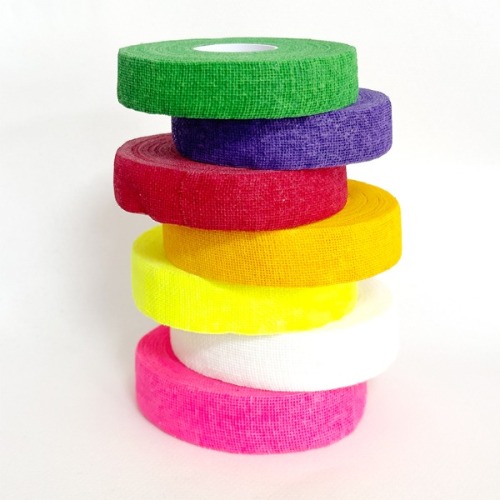
Width affects how easy it is to control the wrap. A narrow material can be easier to position around a small area, while a wider material may cover a larger surface with fewer passes.
Small areas can be awkward when the material is too wide for the shape being covered. The edges may fold, overlap unevenly, or extend beyond the intended area. On the other hand, using a very narrow strip over a larger area can require repeated turns and create unnecessary layers.
| Area being covered | Width consideration | Main concern |
|---|---|---|
| Small, narrow area | Easier to control with a narrower wrap | Avoid excessive layering |
| Joint or curved area | A manageable width can follow the shape more easily | Watch for folds |
| Broader area | A wider wrap may cover the surface more efficiently | Maintain even overlap |
| Area with frequent movement | Choose a width that is easy to position consistently | Prevent bunching |
Width should therefore be considered together with the shape of the area and the amount of movement involved. There is no need to choose a width simply because it creates a thicker-looking finished wrap.
The same principle applies when selecting Co Flex Bandage Wrap for different applications: the material should be manageable enough to place evenly without requiring excessive adjustment.
Can Co Flex Bandage Wrap Secure a Dressing Without Tape
One common reason for using a cohesive wrap is to keep a dressing or covering in position. Because the material adheres to itself rather than relying on ordinary adhesive against the skin, it can serve as an outer securing layer in appropriate applications.
The wrap should not be treated as a replacement for every type of wound covering. The underlying dressing still needs to be suitable for the situation, and the wrap should not be applied in a way that creates unnecessary pressure.
When securing a dressing, the main concerns are coverage and stability. The wrap should hold the dressing in its intended position without becoming excessively tight. Its edges should remain reasonably smooth, and unnecessary layers should be avoided.
This also explains why tension and overlap matter so much. If the wrap is too loose, the dressing may move. If it is too tight, the covering may become uncomfortable. If the overlap is uneven, the finished result can feel thicker in some areas than others.
For wound care or an injury that requires professional assessment, the wrapping method should follow the instructions provided by a healthcare professional. A cohesive bandage is a supporting material, not a substitute for appropriate medical care.
How Should Co Flex Bandage Wrap Be Removed After Use
Removal is sometimes treated as an afterthought, but the way a cohesive wrap is taken off can affect comfort. Since the material holds against itself, it should not be handled as though it were conventional adhesive tape stuck directly to the skin.
Start by locating an edge of the outer layer and separate the material gradually. Avoid pulling abruptly against the covered area. If the wrap has become tightly compressed, take additional care rather than trying to remove it in one forceful movement.
A pair of scissors may be appropriate in some situations, but care is needed to avoid contacting the skin or any underlying dressing. If there is significant swelling, pain, or another concern beneath the wrap, removal should be approached cautiously and professional guidance may be appropriate.
Used cohesive material should also be treated as used material rather than automatically being saved for another application. Its condition and ability to hold securely can change after removal.
The overall wrapping process is therefore a matter of balance. Controlled tension helps avoid excessive pressure, consistent overlap keeps coverage even, and a suitable width makes the material easier to manage. Checking the finished wrap and responding to discomfort are equally important. A flexible bandage is useful when it is applied thoughtfully rather than simply pulled tighter.