

 English
 中文简体
中文简体
 Español
 عربى
عربى
 Français
 Português
Industry News
Home / News / Industry News / Why do modern First Aid Bandage Factories focus on material design and user comfort
In many production settings for wound care products, material selection is no longer treated as a single technical step. It is more often connected with how the product behaves during daily handling, especially when it stays on skin for a period of time. A First Aid Bandage Factory usually looks at this from a practical angle rather than only a specification point of view.
What operators and product teams often notice is that small differences in surface feel or flexibility can change how users respond to the product. Some materials sit well on flat skin, but behave differently once movement is involved. This kind of variation is why comfort and material behavior are discussed together in design decisions.
Material selection in wound care production is usually based on how the product will be used in real situations. Instead of relying on a single structure, different layers are combined to serve different functions.
In practice, you may see several common material directions:
| Material direction | Main behavior in use | Typical application context |
|---|---|---|
| Fiber layer | Gentle contact with skin | Short duration coverage |
| Barrier layer | Limits outside moisture | Everyday protection |
| Absorbent section | Handles small fluid release | Minor wound care |
| Flexible backing | Adapts to movement | Joints or active areas |
In a First Aid Bandage Factory, these are not treated as fixed combinations. Adjustments are often made depending on product purpose and user conditions.
Adhesive design is usually one of the more sensitive parts of bandage production. It directly affects both how the product stays in place and how it feels when removed.
In real manufacturing practice, a First Aid Bandage Factory tends to adjust adhesive behavior based on several practical concerns:
There is often a trade off involved. Stronger adhesion improves stability, but may reduce comfort during removal. Softer adhesion improves comfort, but may shift under friction. Because of this, layered adhesive designs are sometimes used rather than a single uniform coating.
This balance is not fixed and can shift depending on product positioning and usage environment.
In wound care manufacturing, cleanliness is not only related to how a product looks at the end of production. It is more closely tied to how materials behave during processing and how stable they remain before packaging. In many production lines, this is treated as a continuous condition rather than a single step to complete.
Inside a First Aid Bandage Factory, different stages of production are usually arranged with separation in mind. Raw material handling, forming processes, and final packaging are not kept in the same open space. This kind of layout reduces unnecessary contact between exposed materials and surrounding particles, especially during transfer between steps.
Air movement is also managed in a controlled way so that particles are less likely to shift between areas. At the same time, operators tend to avoid direct contact with materials unless it is required for specific handling steps. Equipment surfaces that come into regular contact with products are cleaned on a repeated basis, and protective clothing is used in zones where materials are exposed. These practices are not treated as special actions but as part of normal operation flow, helping the production environment stay relatively stable for adhesive and absorbent materials.
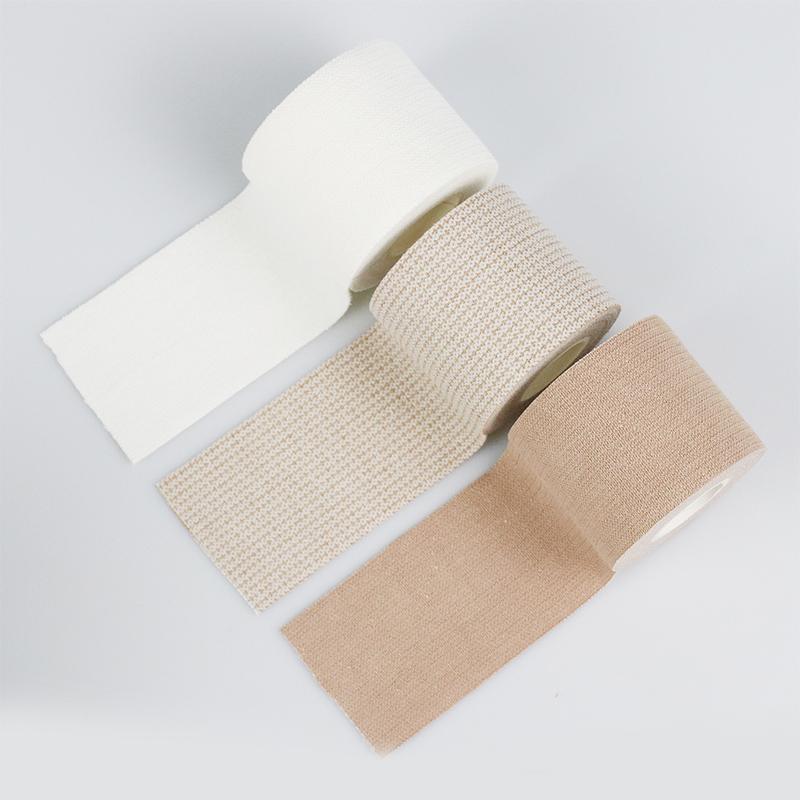
Quality control in bandage production is generally carried out at different points during manufacturing instead of being left to a final check. This approach helps reduce variations that might appear if inspection only happens at the end of the process. In a First Aid Bandage Factory, attention is usually given to both the physical appearance of the product and how it behaves under basic use conditions.
Before release, products are often observed for consistency in coating distribution, shape accuracy after cutting, and the condition of sealed packaging. Surface conditions are also checked to make sure there are no visible irregularities that could affect user handling. In addition to these visual checks, a portion of samples may go through simple simulated use conditions, such as bending or light exposure to moisture, to observe whether adhesion or structure changes during stress.
In practical production routines, these steps are not isolated events but part of a continuous flow of checks that help keep product behavior stable across different batches without relying on a single inspection stage at the end.
Bandages behave differently once the surface stops being flat. On joints, skin keeps moving. Stretching, folding, slight twisting. Not constant, but repeated.
In a First Aid Bandage Factory, this is usually noticed during movement-based checks rather than static inspection.
What tends to appear in practice:
Adhesive strength is part of the picture, but not the only factor. Backing material also reacts under stress. Some films keep shape, others deform slightly after repeated flexing. This difference becomes visible during cycle tests.
Antibacterial layers are not usually added as a separate block. They are placed within existing structures, or closer to the contact zone.
In many production setups, a First Aid Bandage Factory adjusts this integration carefully, since surface feel can change easily when functional materials are introduced.
Common integration approaches:
Each method behaves slightly differently after application. Some keep the effect close to the wound area, while others spread it across layers.
Material stability is often monitored more closely than visual appearance. If a layer shifts or degrades during storage or use, the overall function can change without obvious early signs.
Single use strips are usually sealed individually. That part is standard in most lines.
Beyond that, format changes depending on handling needs.
| Packaging type | What it does | Where it is used |
|---|---|---|
| Single sealed pouch | Keeps each strip isolated | General daily use |
| Peel-open pack | Fast access, simple opening | Short application cases |
| Multi layer wrap | Extra barrier from outside air | Longer storage cycles |
| Compact stacked set | Easy to carry multiple pieces | Travel or portable kits |
In a First Aid Bandage Factory, packaging choice often follows how fast the user needs access. Not just storage protection. Sometimes both conflict.
Seal strength and opening feel are tuned together. If one is too strong or too weak, handling becomes inconsistent.
Customization is usually small adjustments, not full redesigns. Thickness, adhesive feel, backing softness. These are the common points.
In a First Aid Bandage Factory, requests usually start from usage differences. Some users prefer lighter adhesion. Others want longer hold during movement. The same structure behaves differently depending on these expectations.
Changes are tested in short runs first. Not everything moves into stable production immediately. Some ideas work only in limited formats.
Material suppliers sometimes get involved early. For example, during alignment with partners such as Wenzhou Zhusi Medical Supplies Co., Ltd., adjustments to coating or layering are discussed before scaling. This avoids mismatches later in processing.
What Does a Sport Tape Manufacturer Focus On in Product Design and Quality
What Should You Know Before Choosing an Eab Bandage Factory In China

“This website is for users outside of China.”
Copyright © 2025 Wenzhou Zhusi Medical Supplies Co., Ltd. All Reserved. Approval No:浙温械备20250002 & 浙温械备 20190061 号 & 浙温药监械生产备20190011号 & 浙械广审(视)第271202-00627号
China Medical Supplies Manufacturer