

 English
 中文简体
 Español
 عربى
 Français
 Português
Industry News
Small cuts, scrapes, and blisters happen anywhere. A paper cut at the office. A scraped knee on the playground. A blister after a long walk. In each case, a Heavy Elastic Adhesive Bandage covers the spot and keeps everyday contact away from it.
Custom adhesive bandages are built around these ordinary needs, with room to change the look, shape, packaging, and intended use. You'll find them in healthcare settings, workplaces, schools, homes, shops, travel kits, and outdoor gear. They do more than cover wounds. Depending on design and distribution, they also support hygiene routines, product identification, and brand presentation.
Demand for personalized healthcare products keeps growing, so more users are reaching for them. Where they fit depends on the type of injury, the environment, the user, and how the product is supplied.
How Are Custom Adhesive Bandages Used in Healthcare Facilities?
Healthcare facilities are the most familiar home for adhesive bandages. Clinics, outpatient centers, nursing facilities, and medical offices treat minor skin injuries every day. A small scratch, a light abrasion, or a procedure that leaves a superficial area all call for coverage.
Custom bandages adapt to different healthcare settings. Some facilities want plain, neutral designs for routine care. Others choose individually packaged bandages with clear labeling or distinctive visuals to keep supplies organized.
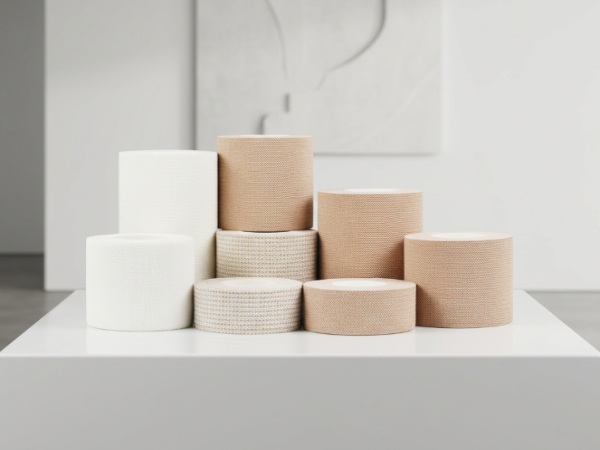
Patient groups matter too. Children often respond to colorful patterns. Adults tend to prefer discreet designs that blend with skin or clothing. A facility can weigh these preferences when stocking its cabinets.
Usability stays at the center. The bandage should open easily, go on easily, and come off easily when the time comes. It should fit the injured area without causing discomfort. Packaging should let staff identify the product and grab it without breaking their workflow.
Custom designs don't replace proper wound assessment or medical treatment. They cover minor injuries. Serious wounds need professional attention.
Where Can Custom Adhesive Bandages Be Used in Workplaces?
Workplaces mix tasks, tools, materials, and safety rules. Minor injuries turn up in office work, food preparation, warehouses, manufacturing, and maintenance.
In an office, paper, packaging, or stationery causes small cuts. In a workshop or production area, routine tasks lead to minor scratches. In kitchens and service environments, staff need suitable first aid supplies as part of their hygiene and safety practice.
Custom bandages fit into workplace first aid kits, employee care stations, and designated supply areas. The packaging can carry workplace identification, safety graphics, or instructions that make the products easy to spot.
Each environment has its own priorities. An office wants compact storage and quick access. A warehouse needs supplies spread across several work areas. A food service business has to pick wound coverings that suit its operating conditions.
Custom bandages also work in employee welcome kits and wellness supplies. A familiar design helps people recognize where basic care products are kept, especially in shared areas.
Suitability still matters. Not every bandage works for every job. Moisture, frequent handwashing, food handling, and chemical exposure call for products chosen according to workplace rules and product instructions.
Why Are Custom Adhesive Bandages Popular in Schools and Childcare Settings?
Children get minor injuries during play, sports, classes, and outdoor learning. A scraped elbow or small cut interrupts the activity, even when the injury is slight. Accessible first aid supplies let teachers and caregivers respond fast.
Custom bandages make school first aid feel familiar. Bright colors, animal illustrations, cartoon patterns, and friendly shapes appeal to younger kids. Some children get uneasy at the sight of an injury, and an engaging bandage makes covering it less scary.
Schools keep them in nurse offices, classroom kits, playground stations, and activity areas. Childcare centers stock them for everyday scrapes and scratches.
The design can reflect the school's identity or suit a certain age group. Simple educational patterns, friendly illustrations, or recognizable colors all work. These small touches make ordinary first aid supplies more approachable without changing what they do.
With younger children, caregivers should check bandage size, ease of application, and skin compatibility. They should also watch for small components or packaging that could create extra risks. The product must suit the age group and be used under adult supervision where necessary.
How Are Custom Adhesive Bandages Used at Home?
Home is where most minor injuries happen. Cooking, cleaning, gardening, repairs, and daily routines all lead to small cuts and abrasions. The household first aid box is the usual place to keep bandages.
Families can choose custom bandages to match their preferences or organize them around household needs. Some like simple designs that suit adults and kids alike. Others pick different styles for different family members, which makes supplies easy to recognize and gets children used to basic first aid.
A bandage also gives temporary protection during ordinary activities. Someone with a minor finger cut may cover it while finishing chores. It cuts direct contact with dirt and surfaces, as long as the injury suits this kind of care.
Packaging convenience matters at home. Individually wrapped bandages slip into drawers, medicine cabinets, handbags, and small pouches. Custom packaging also separates wound care products from other household items.
Store bandages somewhere clean and dry, and check the packaging before use. Change the covering when it gets dirty, wet, or loose. A minor injury that shows signs of infection, or needs more extensive care, shouldn't be handled with a bandage alone.
Can Custom Adhesive Bandages Be Used in Retail and Hospitality Businesses?
Shops, hotels, restaurants, cafes, and customer service businesses deal with people all day. Employees get minor injuries. Customers occasionally need a basic first aid item.
In hospitality, a small first aid supply helps staff in housekeeping, kitchens, maintenance, reception, and other service roles. Hotels also keep basics on hand for guests who hurt themselves during a stay.
Custom bandages let businesses match everyday supplies to their setting. A hotel might choose clean, understated packaging. A retail store might match its visual identity. A restaurant might care more about accessibility and suitability for staff.
A consistent look also helps. Supplies placed in staff rooms, service counters, reception areas, or care stations are easier for employees to find when the packaging is recognizable.
Keep the role practical, not just decorative. A custom appearance doesn't prove a product meets a business's hygiene or workplace requirements. Choose products according to intended use and applicable regulations.
Businesses that hand out small care kits to guests or customers can add custom bandages next to other basics. They add a personal touch and serve a plain purpose.
Where Do Custom Adhesive Bandages Fit Into Sports and Outdoor Activities?
Sports and outdoor activities bring their own minor skin injuries. Running, cycling, hiking, camping, team sports, and casual exercise involve friction, accidental contact, and small abrasions. Participants carry basic first aid because a medical facility may be far away.
Custom bandages go into sports bags, gym kits, hiking packs, cycling accessories, and outdoor pouches. Compact packaging makes them easy to carry.
Preferences differ by activity. A runner wants a small bandage for a scrape. A hiker wants individually wrapped supplies that stay protected inside a backpack. A recreational event might hand out a small first aid kit with the participant materials.
Shape and placement affect how well a bandage works. Fingers, knees, heels, and elbows move constantly and rub against clothing and equipment. A bandage designed for a specific location fits better than a general shape.
Outdoors, packaging protection counts. Supplies face moisture, dust, sunlight, and shifting storage conditions. Custom packaging can be designed for portability and storage, but the bandage itself still has to suit the conditions.
Sports clubs, outdoor retailers, fitness studios, and event organizers also use custom bandages in participant care kits. They can carry a club identity or event artwork and stay useful after the event ends.
Are Custom Adhesive Bandages Suitable for Travel and Promotional Kits?
Travel means long walks, unfamiliar places, and disrupted routines. Small cuts, blisters, and abrasions show up during sightseeing, commuting, excursions, or luggage handling.
Travel first aid kits usually include adhesive bandages because they're easy to carry and handle minor injuries. Custom versions go into kits from tour operators, airlines, hotels, travel retailers, and businesses assembling welcome packages.
A custom bandage also works in promotional kits. Businesses add practical items to customer gifts, event packages, employee kits, and product bundles. Unlike purely decorative giveaways, wound care products do real work when a need comes up.
Customization can cover the bandage surface, wrapper, outer box, package artwork, or product assortment. A travel company might use destination-inspired graphics. A business might print its logo and colors on the packaging. A charity event might pick a design tied to its campaign.
That turns customization into part of the product experience instead of a bolted-on marketing element. Printed information must stay clear and appropriate, though. Packaging shouldn't get in the way of instructions, identification, or essential safe-use information.
What Should Businesses Consider When Choosing Custom Adhesive Bandage for Different Applications?
Start with the intended application. A school product has different design priorities from one in a factory first aid station or a travel kit.
Several factors shape the choice:
| Application | Common considerations |
|---|---|
| Healthcare facilities | Easy access, clear packaging, practical sizes, suitable wound coverage |
| Workplaces | Supply organization, workplace suitability, convenient storage |
| Schools and childcare | Child-friendly designs, age suitability, ease of use |
| Home use | General-purpose options, convenient storage, family preferences |
| Hospitality and retail | Accessible supplies, discreet presentation, staff needs |
| Sports and outdoor activities | Portability, placement, movement, environmental conditions |
| Travel kits | Compact packaging, individual wrapping, storage convenience |
| Promotional kits | Artwork, packaging identity, practical product selection |
Customization goes beyond printing a design. Businesses should think about bandage shape, material, adhesive characteristics, absorbent pad placement, wrapper design, packaging format, and the range of products in an assortment.
Skin types and application conditions affect suitability. Some users have sensitive skin or react to certain adhesives. Others need a bandage that fits a particular body area. Product descriptions and instructions should tell users what the bandage is for and how to use it.
Packaging deserves attention too. Individual wrappers keep products clean before use. Outer packaging makes them easier to store, distribute, and identify. For bulk orders, the packaging format affects how supplies are organized across locations.
Design for the actual users. Children's products benefit from friendly illustrations. Professional environments call for a more restrained look. Travel and outdoor kits put compactness first. Retail products need packaging that states its purpose clearly.
Review the manufacturing and sourcing process before ordering. Artwork approval, product selection, packaging requirements, distribution channels, and applicable regulations all shape the final design. Clear communication between buyer and manufacturer keeps the product focused on its intended use, not just its appearance. That matters most when bandages go to multiple locations or into kits with other first aid products.
FAQs
Where are custom adhesive bandages most commonly used?
Healthcare facilities, workplaces, schools, homes, hotels, restaurants, sports settings, outdoor activities, and travel first aid kits. The setting depends on the user's needs and the type of minor injury.
Why do businesses choose custom adhesive bandages?
They meet specific first aid needs, customize packaging, improve product identification, and put practical care items into employee kits, customer packages, and promotional materials.
Can custom adhesive bandages be designed for children?
Yes. Designs include colorful patterns, playful illustrations, and child-friendly themes. The bandage must also suit the child's age, skin, and intended use.
Are custom adhesive bandages suitable for workplace first aid kits?
Yes, when the product fits the environment and the type of minor injury. Consider workplace requirements, hygiene practices, and product instructions.
What can be customized on an adhesive bandage?
Bandage shape, printed design, wrapper, individual packaging, outer box, and product assortment. Available options depend on the manufacturer and product type.
Can custom adhesive bandages be used for promotional purposes?
Yes. They go into promotional kits, event packages, employee gifts, travel kits, and customer care packages. Their practical use suits some business distribution programs.
Are custom adhesive bandages suitable for outdoor activities?
Yes. They fit into hiking packs, camping kits, sports bags, and other portable first aid supplies. Choose products and packaging that handle the expected storage and environmental conditions.
What should buyers consider before ordering custom adhesive bandages?
Think about the intended users, application environment, bandage size and shape, material, adhesive suitability, packaging, artwork, product instructions, and applicable regulations. Clear requirements keep the final product aligned with its purpose.