

 English
 中文简体
中文简体
 Español
 عربى
عربى
 Français
 Português
Industry News
Home / News / Industry News / What Does a Sport Tape Manufacturer Focus On in Product Design and Quality
Sport tape is often judged by how it feels in use, yet the real story starts much earlier, inside the material choices and layer structure. A Sport Tape Manufacturer has to keep several things in step at once: the way the fabric sits on skin, the way the adhesive holds during movement, and the way the tape reacts when heat or sweat changes the surface condition.
When these parts are handled well, the tape feels quiet in use. It does its job without drawing attention to itself. When they are not matched well, the tape may feel stiff, slip too early, or become difficult to remove cleanly. That is why the design process usually begins with the fabric, then moves through adhesion, stretch, and airflow rather than treating them as separate features.
In practice, the product is not shaped by one detail alone. It is shaped by how the whole strip behaves when it is worn, pulled, pressed, and removed.
The base material does a lot of the quiet work. A Sport Tape Manufacturer usually starts with a fabric that can hold its shape while still giving the skin enough room to move. Some fabrics feel closer and firmer. Others feel softer and more relaxed on contact. That difference changes the way the tape is noticed during wear.
A tape that feels smooth at the edge may also sit more neatly during repeated movement. A fabric with a tighter structure may keep its shape longer, while a lighter structure may feel easier on the skin. Neither path is automatically better. The right choice depends on how the tape is meant to behave.
| Material part | What it does in use | What the user may notice |
|---|---|---|
| Fabric base | Gives the tape shape and body | The feel on skin and how it sits during wear |
| Elastic layer | Adds movement response | How easily the strip moves with the body |
| Surface coating | Helps the tape stay balanced | Whether the tape feels steady or slightly loose |
The three parts work together. If the fabric is too heavy, the tape may feel less comfortable over time. If it is too light, the strip may lose its character during movement. The same is true for the elastic layer. Too much response can make the tape feel uncontrolled, while too little can make it feel flat. A Sport Tape Manufacturer usually spends a great deal of attention here, because small changes in structure can be felt quickly once the tape is on skin.
The adhesive layer decides a large part of the daily experience. It is the part that meets skin directly, and it has to stay steady without becoming harsh. A Sport Tape Manufacturer has to think not only about hold, but about how the adhesive changes through the day.
At the start, the tape may feel calm and secure. After movement, body heat, and surface moisture, that same layer can behave differently. A well-matched adhesive keeps its grip without creating a rough pull when removed later. A less balanced one may feel fine at first and then become irritating or uneven.
A few points usually matter here:
The removal stage matters as much as the wearing stage. Users may remember the tape not only for how it held, but for how it left the skin behind. If residue stays behind or the pull feels abrupt, the product experience drops quickly. For that reason, adhesive choice is never only a technical decision. It is also part of the comfort profile.
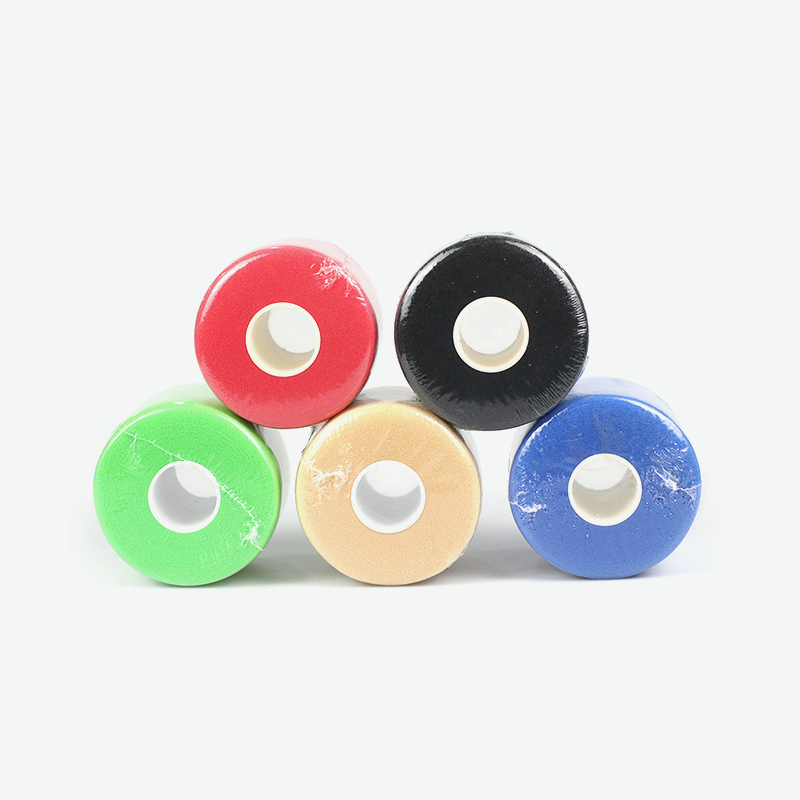
Stretch is one of the features that people feel immediately, even if they do not describe it in technical terms. The strip either moves with the body or resists it. A Sport Tape Manufacturer has to shape that response through the way the material is cut, layered, and arranged.
The direction of the fibers matters. So does the way the strip recovers after being pulled. If the tape stretches evenly, it tends to feel more predictable during use. If the stretch is uneven, the tape may feel different across the same body area depending on how it is applied.
The main design choices often include:
Movement support is not the same as restriction. A tape that allows natural motion can feel more usable because it does not fight the body. At the same time, it still needs enough structure to stay in place and provide a sense of support. That balance is subtle. Too much give can make the tape feel uncertain. Too little can make it feel rigid and tiring.
Breathable structure is easy to overlook when a tape is dry and new, yet it becomes more obvious during activity. A Sport Tape Manufacturer usually has to build in enough airflow so the tape can handle warmth and moisture without turning heavy or sticky in the wrong way.
When the body moves for a long stretch of time, the surface under the tape changes. Heat rises, skin becomes damp, and the contact feel shifts. If the structure is too closed, the tape may hold moisture close to the skin. If it is more open, the tape may feel lighter and less trapped.
The effect is practical rather than decorative. Better airflow can help the tape feel less crowded on the skin. It can also help the adhesive behave more steadily, since moisture does not build up in the same way. That matters during training, outdoor use, or any setting where the body keeps moving.
Breathability is not about making the fabric thin. It is about shaping the structure so air and moisture have space to move without weakening the strip. In real use, that often makes the tape easier to live with for longer periods.
Durability is not only about whether the tape stays on the skin. It is also about how it behaves while the body is moving, sweating, and repeating the same motions over time. A Sport Tape Manufacturer usually checks this by placing the tape in conditions that feel closer to real use rather than static lab placement.
The tape may be applied on flexible surfaces that mimic skin movement. Then it is exposed to moisture and repeated stretching. What matters is not a single moment of failure, but how the material changes step by step.
In practice, attention is often given to:
Sometimes the change is subtle. The tape may still stay in place, but feel slightly different in grip or surface tension. Those small shifts are often what determine whether the product feels consistent in real use or not.
These two types of tape often look similar at a distance, but they behave differently once applied. The difference is mainly in how they interact with movement.
Kinesiology style tape is usually designed to move with the body. It bends and stretches in a way that follows muscle motion rather than limiting it. Traditional support tape tends to feel more fixed. It gives structure, but does not respond as freely to motion.
| Type | Movement response | Typical feel during wear |
|---|---|---|
| Elastic movement tape | Moves with body motion | Light and flexible contact |
| Support style tape | Limits movement range | Firm and steady hold |
A Sport Tape Manufacturer has to decide early which direction the product is meant to serve. If the goal is movement support during activity, flexibility becomes more important. If the goal is restriction or stabilization, firmness becomes more relevant.
In real use, the difference is often noticed during bending, twisting, or repeated joint movement rather than at the moment of application.
Customization is less about appearance and more about behavior. Different users expect different levels of flexibility, hold, and surface feel, and brands often adjust these variables during production.
A Sport Tape Manufacturer may adjust the internal structure, adhesive balance, or fabric density depending on how the tape is intended to be used. Some versions feel more relaxed on skin. Others feel more controlled and steady.
Customization usually appears in several areas:
These changes are not always visible, but they are noticeable during wear. A slight adjustment in structure can change how the tape behaves across different body areas.
In many cases, customization is about matching use conditions rather than creating entirely different products. The same base material can feel different depending on how it is tuned during production.
Even after production is complete, the material continues to respond to its surroundings. Storage and transport conditions can slowly influence how the tape behaves when it is later used.
Temperature shifts, pressure during stacking, and long periods of storage can all affect how the adhesive layer sits on the fabric. A Sport Tape Manufacturer often considers these factors because they can change the feel of the product before it even reaches the user.
What may change over time includes:
These changes are usually gradual. They may not be obvious at first glance, but they can be felt during application, especially when comparing freshly produced material with material that has been stored for a longer period.
For that reason, handling conditions are treated as part of the product lifecycle, not just logistics.
How Do Cohesive Tape Uses Work in Sports Injury and Daily Support
Why do modern First Aid Bandage Factories focus on material design and user comfort

“This website is for users outside of China.”
Copyright © 2025 Wenzhou Zhusi Medical Supplies Co., Ltd. All Reserved. Approval No:浙温械备20250002 & 浙温械备 20190061 号 & 浙温药监械生产备20190011号 & 浙械广审(视)第271202-00627号
China Medical Supplies Manufacturer