

 English
 中文简体
中文简体
 Español
 عربى
عربى
 Français
 Português
Industry News
Cohesive bandage products are often assumed to behave in a simple way during use, yet the actual performance is shaped long before the product is applied. From how fibers are arranged to how adhesive layers interact with the surface, small variations during production can change the feel and response of the final roll. A Cohesive Bandage Manufacturer works within these variables, adjusting different parts of the process so the material behaves in a stable and predictable way once it reaches real use conditions.
What matters most is not a single stage, but how each stage connects. A slight change in raw material behavior or tension during processing can influence comfort, adhesion balance, and stretch response later on.
How Does a Cohesive Bandage Manufacturer Ensure Consistent Quality
Consistency tends to come from repetition control rather than a single inspection point. In practice, a Cohesive Bandage Manufacturer keeps attention on how material behaves while it moves through different production stages, instead of only checking the final roll.
At the early stage, fibers are usually aligned so they do not cluster unevenly. If alignment shifts even slightly, the surface texture may feel different from one batch to another. This is not always visible at first glance, but it becomes noticeable during wrapping.
Coating behavior is another sensitive area. Adhesive distribution needs to stay balanced so that one section does not feel noticeably tighter or looser than another. Operators usually observe surface response rather than relying only on fixed settings, because material conditions can vary during processing.
| Stage | What tends to shift | Why it matters |
|---|---|---|
| Fiber preparation | Alignment stability | Affects surface uniformity |
| Coating application | Adhesive spread | Influences grip balance |
| Winding process | Tension variation | Changes roll behavior |
Even small differences in tension during winding can affect how the bandage unrolls later, which is why this stage is often checked repeatedly rather than once.
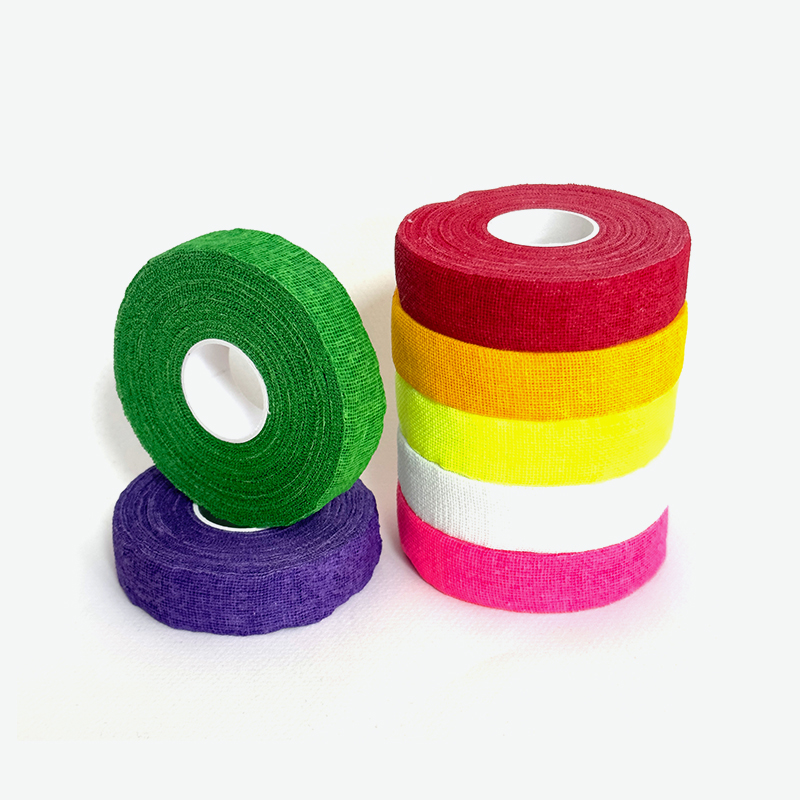
Which Material Choices in Cohesive Bandage Manufacturer Processes Affect Comfort and Breathability
Material selection is less about choosing a single "right" fabric and more about balancing several behaviors at the same time. A Cohesive Bandage Manufacturer typically works with blended structures because each fiber type contributes something different.
Cotton layers tend to create a softer touch against the skin, while synthetic fibers usually support stretch stability. When these are combined, the result is a surface that can adjust to movement without feeling too rigid.
Breathability is influenced by how tightly the fibers are arranged. If the structure is too compact, airflow becomes limited. If it is too loose, the bandage may lose stability during wrapping. So the arrangement sits somewhere in between, depending on the intended use.
Adhesive choice also plays into comfort. Some formulations create a lighter surface grip that allows repositioning without strong resistance, while others maintain a firmer hold for situations where movement needs to be limited.
How Does a Cohesive Bandage Manufacturer Develop Latex Free Bandage Options for Sensitive Use
Latex free development is usually driven by material substitution rather than adding new layers. In many cases, the structure stays similar, but the bonding system changes. A Cohesive Bandage Manufacturer adjusts the adhesive behavior so the surface still holds together without relying on latex components.
This shift is not always straightforward because removing one element often changes how elasticity feels during application. To compensate, other parts of the structure are adjusted so the bandage does not feel too stiff or too loose.
Some of the main focus points include:
- How the surface reacts when stretched and released
- Whether the material maintains cohesion after repeated handling
- Whether the wrap can stay in place without strong skin interaction
The goal is usually to keep the behavior familiar while reducing sensitivity-related concerns.
Why Do Cohesive Bandage Manufacturer Production Methods Influence Elastic Recovery and Stability
Elastic recovery is closely tied to how the material is formed rather than just what it is made of. During production, fiber tension and weaving direction shape how the bandage reacts after being stretched.
If the internal structure is too relaxed, the bandage may not return cleanly after use. If it is too tightly controlled, flexibility becomes limited and the material feels harder to adjust. Most production work sits between these two points, depending on how the product is intended to behave.
Stability also comes from how evenly force is distributed across the surface. When tension is balanced, the bandage tends to respond more predictably during wrapping. If not, certain areas may stretch differently, which affects how smooth the application feels.
Over time, repeated handling can also influence structure behavior, which is why production settings are usually adjusted to account for real use conditions rather than only initial testing results.
What Quality Control Steps Are Used by a Cohesive Bandage Manufacturer to Maintain Batch Consistency
Quality control in cohesive bandage production is usually not a single checkpoint, but a chain of observations that runs alongside manufacturing. The focus is on whether each batch behaves in a similar way when it comes to surface grip, stretch response, and overall handling feel.
In practical production environments, inspection tends to follow material movement rather than interrupting it. This allows small variations to be detected earlier, especially when coating behavior or fiber alignment begins to shift slightly.
A Cohesive Bandage Manufacturer often relies on repeated comparison between in-process samples and reference behavior patterns. These comparisons are not only visual but also tactile and mechanical, depending on the stage being checked.
| Inspection Area | What is checked in practice | Why it matters during use |
|---|---|---|
| Coating layer | Whether adhesive is evenly spread | Affects grip balance when wrapped |
| Stretch behavior | How material responds when pulled | Influences control during application |
| Winding structure | Tightness and alignment of rolls | Impacts ease of unrolling |
| Surface contact | How material reacts on touch | Determines handling comfort |
Instead of isolating a single defect point, attention is placed on how these elements interact. A small deviation in one area may affect overall handling, even if other parts remain stable.
Where Are Cohesive Bandage Manufacturer Products Commonly Used in Emergency and Sports Settings
Usage environments for cohesive bandage products vary widely, but the physical conditions they face tend to share one feature: frequent movement. This means the material is often exposed to shifting tension, pressure changes, and repeated adjustment.
In sports-related settings, the bandage is usually applied where light support or surface stabilization is needed during motion. The material must adapt to movement without slipping or losing its wrap structure too quickly.
In basic care situations, the focus shifts slightly. Here, the bandage is more about maintaining a stable hold while allowing enough flexibility for normal activity. It is often used where rigid fixation is not required, but simple support is still needed.
Common application patterns include:
- Temporary wrapping during physical activity
- Light support for minor strain areas
- Simple fixation in first-aid situations
- Protective covering during short-term recovery periods
Across these scenarios, behavior changes are noticeable depending on how tightly the bandage is applied and how much movement occurs afterward. This is where production consistency becomes relevant in real use conditions.
How Can a Cohesive Bandage Manufacturer Support OEM Packaging and Brand Customization Needs
Packaging adaptation is usually handled alongside product planning rather than after production begins. A Cohesive Bandage Manufacturer typically works with different packaging structures depending on how the product will be distributed and stored.
Some formats prioritize compact arrangement, where multiple rolls are grouped together for easier handling. Others focus on individual packaging, especially when products are intended for direct retail environments. The structural difference does not change the material itself, but it changes how users first interact with the product.
Customization usually stays within functional boundaries to avoid affecting usability. This includes adjustments in labeling placement, instruction layout, and outer packaging format.
| Customization area | Typical adjustment | Practical reason |
|---|---|---|
| Packaging form | Single or grouped units | Storage and distribution flow |
| Label position | Front or side layout | Easier reading during handling |
| Outer structure | Box or bag style | Different market display needs |
| Instruction layout | Simplified arrangement | Quick understanding during use |
These changes are generally made to align with different distribution expectations rather than altering product behavior. In some coordination cases, packaging requirements may be aligned through discussions involving Wenzhou Zhusi Medical Supplies Co., Ltd., especially when structural consistency across batches is considered during preparation stages.