

 English
 中文简体
中文简体
 Español
 عربى
عربى
 Français
 Português
Industry News
Home / News / Industry News / How to Choose Self Adhesive Bandage For Medical for Different Injury Situations
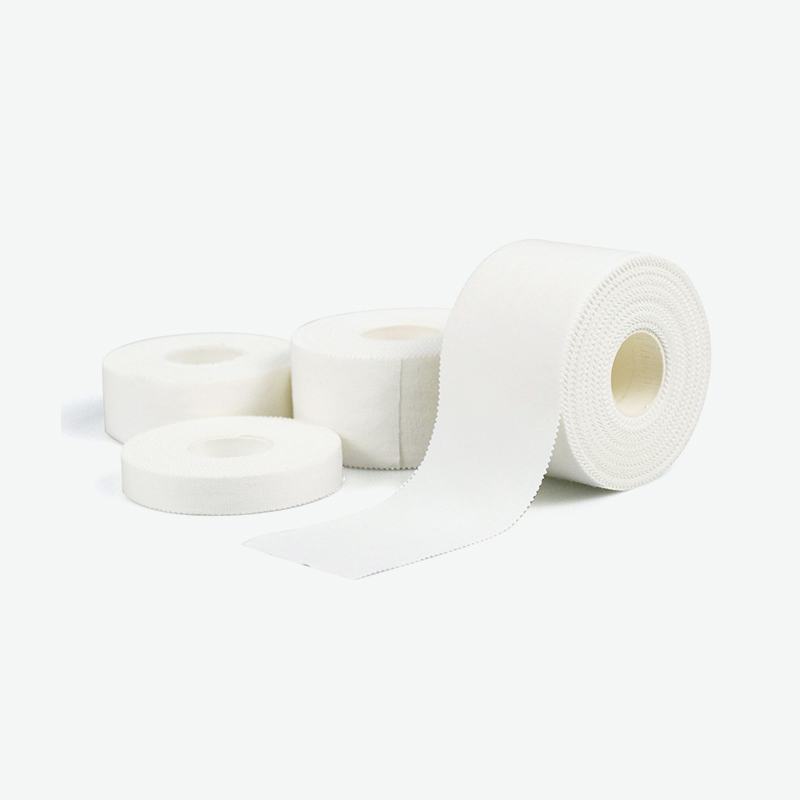
Self adhesive bandage for medical use is one of those simple items that people often overlook until they actually need it. It is small, flexible, and easy to store, but in real situations, it plays a quiet role in supporting basic care needs across homes, schools, workplaces, and outdoor environments.
Unlike traditional wrap materials, this type of bandage does not rely on clips or external fasteners. Instead, it sticks to itself, which makes it easier to handle in quick or slightly messy situations where time and simplicity matter.
Before looking at different situations, it helps to understand what this type of bandage is generally used for.
In everyday life, it is often associated with small support needs rather than complex medical treatment. It is commonly used to:
The key idea is simplicity. It is not about replacing medical care, but about supporting basic handling in everyday situations.
Not all situations feel the same. A minor incident at home is different from something that happens during sports or at work.
Even if the bandage looks the same, the way people use it changes depending on context.
For example:
Because of this, choosing is not just about the product itself, but about how it fits into daily behavior.
At home, situations are usually small and manageable. Nothing too complex, but enough to require attention.
Common home scenarios include:
In these cases, people usually prefer something easy to apply without needing help from others.
At home, the focus is often on comfort and simplicity rather than technical performance.
Schools are active spaces with constant movement. Students participate in classes, sports, and group activities throughout the day.
Because of this, small incidents can appear during normal routines. Nothing unusual, just part of a busy learning environment.
In schools, this type of bandage is often used for:
What matters most in this environment is speed and ease of use. Teachers or staff may need to apply it quickly while still managing other responsibilities.
Workplaces vary widely, from offices to industrial settings. But they share one thing: people are focused on tasks.
In such environments, small situations can happen during routine work. The goal is not to interrupt workflow too much.
Typical workplace usage includes:
In these situations, ease of handling becomes more important than anything complicated.
During physical activity, the body is in motion, so anything applied needs to stay in place while still allowing flexibility.
This is why self adhesive materials are often chosen for sports-related use. They do not rely on additional clips or tools, which makes them easier to manage during movement.
Common use cases include:
Here, the focus is stability during motion rather than long-term application.
When people are outdoors or traveling, they do not always have access to organized environments. That changes how they think about simplicity.
In these cases, quick handling matters most.
Outdoor use often includes:
People usually prefer something that does not require tools or extra steps, especially when they are away from familiar settings.
Choosing a suitable option is not just about appearance. It is more about matching the situation.
Here are some practical considerations:
Different users may prioritize different aspects depending on their daily routine.
Simple Comparison for Usage Contexts
| Situation | Main Need | User Focus | Usage Style |
|---|---|---|---|
| Home | Comfort and ease | Household users | Occasional use |
| School | Quick response | Teachers and staff | Fast application |
| Workplace | Stability during tasks | Employees | Functional use |
| Sports | Flexibility in motion | Active users | Movement-based use |
| Travel | Portability | General users | On-the-go handling |
Even though the product is simple, some misunderstandings still happen during selection.
A few examples include:
These mistakes usually lead to less practical use later on.
In real life, users are not thinking about technical details. They are thinking about convenience.
Most people care about:
This makes simplicity a key part of usability.
One of the reasons this type of bandage is widely used is flexibility.
Flexibility here does not mean technical performance. It means how easily it fits into different situations.
A flexible option allows users to:
This makes it more practical for everyday life.
Storage is often overlooked, but it affects usability more than expected.
In real environments, people prefer items that:
If storage is complicated, usage becomes less frequent.
In homes, schools, and workplaces, this type of bandage is usually part of a broader basic care setup.
It does not work alone. It works alongside other simple tools that support everyday needs.
Its role is usually:
It fills a small but useful gap in everyday environments.
From a production point of view, consistency and usability are often more important than anything else.
Manufacturers need to consider:
These factors shape how the product is designed and presented.
Even though it is a simple product, its use remains consistent across many environments.
The reason is not complexity, but practicality.
It fits into:
Because it adapts easily, it remains relevant in different contexts.
Choosing self adhesive bandage for medical situations is not about finding something complicated. It is about matching simple needs with real-life situations.
Different environments require different thinking, but the core idea stays the same. People want something that is easy to use, quick to apply, and suitable for the moment they are in.
What Should You Know Before Choosing an Eab Bandage Factory In China
How Do Custom Adhesive Bandages Improve Everyday Injury Protection

“This website is for users outside of China.”
Copyright © 2025 Wenzhou Zhusi Medical Supplies Co., Ltd. All Reserved. Approval No:浙温械备20250002 & 浙温械备 20190061 号 & 浙温药监械生产备20190011号 & 浙械广审(视)第271202-00627号
China Medical Supplies Manufacturer