

 English
 中文简体
 Español
 عربى
 Français
 Português
Industry News
Patterned kinesiology tape pairs textile materials with printed designs. The appearance catches a buyer's eye, but the fabric underneath plays a major role in how the finished tape looks, feels, stretches and stays in place. A design that works well on one fabric turns out differently on another.
Fabric selection affects more than visual quality. It also shapes comfort against the skin, moisture handling, flexibility, printing consistency and the way the tape responds during movement. For manufacturers, choosing a textile means balancing these needs. Appearance alone isn't enough.
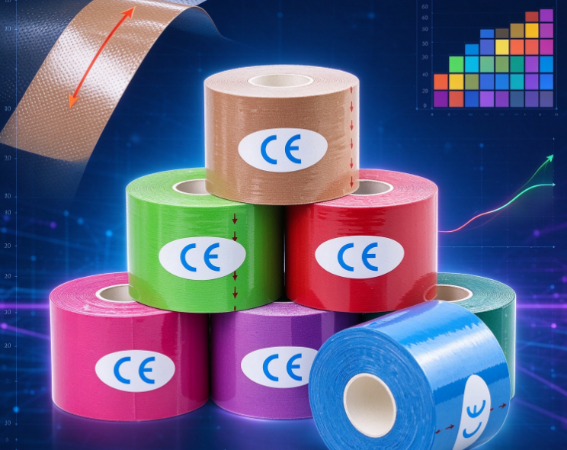
Buyers need to understand the link between fabric and printing too.Kinesiology tape is often stretched in use, so the textile and the printed surface have to work together. The fabric's texture, elasticity and surface condition all affect the finished design.
Understanding these factors helps manufacturers develop products for different applications. It also helps buyers ask sharper questions when they compare patterned kinesiology tape options.
Why Does Fabric Choice Matter for Patterned Kinesiology Tape?
Fabric forms the main textile layer of kinesiology tape. It gives the tape the structure to stretch and follow body movement. The adhesive layer handles attachment to the skin, and the printed surface gives the product its visual character. These parts work together, so a change in fabric influences the performance of the whole product.
A fabric that stretches smoothly supports a more consistent pattern during movement. A textile with an uneven surface causes small variations in how ink or other printing materials settle. If the fabric changes shape unevenly, the printed design looks distorted when the tape is stretched.
The material affects feel as well. Some fabrics have a soft, smooth surface. Others show a more visible weave or textured finish. These differences change how the product feels against the skin and how the printed pattern looks under different lighting.
Fabric choice also touches production. Some textiles feed easily through printing equipment, while others shift, curl or stretch during handling. That movement makes it harder to keep a repeating pattern aligned across the roll.
For manufacturers, the selection process starts with the intended product use. A tape built for active movement needs different fabric characteristics from one developed around a particular look or wearing experience. The printing method, adhesive system and expected use conditions all need weighing alongside the textile.
Which Fabric Characteristics Influence Stretch and Flexibility?
Elasticity is a central feature of kinesiology tape. The fabric has to extend when pulled and respond to movement during use. Elasticity isn't just about how far a material stretches, though. The direction, consistency and recovery of that stretch matter too.
Some fabrics stretch more readily in one direction than another. That affects how the tape is cut, printed and applied. If a design ignores the fabric's stretch direction, its shapes look longer, wider or less regular when the tape is extended.
Recovery is another factor. After stretching, the textile returns toward its original shape. How it responds depends on the fibers, fabric construction and finishing process. Uneven recovery changes the look of the printed design and influences how the tape behaves through repeated movement.
The fabric's weight and thickness also influence flexibility. A heavier textile feels different from a lighter one and doesn't follow body contours in the same way. A lighter fabric isn't automatically the better pick, though. The choice depends on the intended use, the desired feel and how the complete tape performs.
| Fabric Characteristic | Possible Effect on Patterned Tape | What Manufacturers Should Consider |
|---|---|---|
| Stretch direction | Changes the shape of printed graphics during extension | Align the pattern with the fabric's stretch behavior |
| Elastic recovery | Influences how the pattern looks after the fabric relaxes | Check repeated stretching and recovery |
| Surface texture | Affects print detail and visual consistency | Match the printing process to the textile surface |
| Fabric thickness | Influences flexibility and the feel of the finished tape | Assess the complete product rather than fabric alone |
| Fabric stability | Affects feeding and alignment during production | Check whether the material shifts or curls during printing |
Evaluate these characteristics together. A fabric offers useful stretch yet poses challenges in printing. Another gives a smooth surface for detailed graphics but feels different in motion. Testing exists to reveal these trade-offs before the design moves into regular production.
How Does Fabric Texture Affect Printing Quality?
The fabric surface directly shapes how a pattern appears. Printed graphics depend on the interaction between the textile and the printing material. If the surface is uneven or has a pronounced weave, fine lines and small design elements look less defined than they would on a smoother material.
A smooth fabric offers a more even printing surface, which helps produce clear shapes and consistent color areas. The printing process still has to suit the textile. Smoothness alone doesn't guarantee a uniform result, because the fabric's absorbency, stretch and finish also affect how the print forms.
Textured fabrics bring different considerations. Their visible weave becomes part of the overall design and gives a distinctive look. The raised and recessed areas also change how printed material settles. Very fine graphics need adjusting to stay clear across the texture.
Fabric preparation matters as well. Dust, loose fibers, surface treatments or uneven finishing interfere with printing. The result is inconsistent color, blurred edges or patches where the pattern looks uneven. Checking the fabric before printing catches these problems early.
Pattern design should reflect the material. Treating it as a neutral background is a mistake. Large shapes, repeating motifs and simple graphic elements behave differently from intricate illustrations or narrow lines. During sample development, manufacturers assess how fabric texture and design interact, then make changes before larger production runs.
Viewing conditions count too. A pattern looks different when the tape is flat, rolled or stretched. Inspecting the printed textile in each state shows how the design will appear during storage, handling and use.
How Do Different Fabric Types Affect Patterned Kinesiology Tape?
Kinesiology tape comes in different textile constructions. Cotton and synthetic fibers are common choices, and some products use blends to combine selected characteristics. The right option depends on the fabric structure, adhesive system, printing method and intended application.
Cotton fabrics are often linked with a familiar textile feel and offer a surface that suits certain printing methods. Their behavior depends on the weave, yarn structure, finishing and any blended fibers. Don't assume cotton has the same stretch or moisture behavior across all products.
Synthetic fibers such as polyester or nylon offer different combinations of flexibility, strength and surface stability. Their properties vary with how the fibers are formed and woven or knitted. Some synthetic textiles support detailed patterns well, while others need specific surface preparation or printing methods.
Blended fabrics combine different fibers in one textile. That helps manufacturers balance properties a single fiber can't deliver. Blends need careful evaluation, though, because the fibers respond differently to stretching, moisture, heat or printing materials.
The table below gives a general comparison. Actual results depend on the complete fabric construction and production process.
| Fabric Type | Potential Characteristics | Points to Evaluate |
|---|---|---|
| Cotton-based fabric | Familiar textile feel and a surface that may suit selected printing processes | Stretch behavior, moisture response, and print consistency |
| Polyester-based fabric | Can provide dimensional stability and support a range of textile constructions | Surface treatment, flexibility, and compatibility with printing materials |
| Nylon-based fabric | Can offer flexibility and strength in suitable constructions | Recovery, surface feel, and pattern behavior under stretch |
| Blended fabric | Can combine characteristics from different fibers | Consistency between fiber types and the behavior of the finished textile |
These categories are starting points, not fixed performance descriptions. Two fabrics made from the same fiber behave differently because of construction and finishing. Buyers should ask about the actual textile in a product and not rely on fiber names alone.
Manufacturers also need to consider how the fabric interacts with the adhesive. The textile works as part of the finished tape. Picking it purely for printing properties misses the point. A good selection accounts for appearance, flexibility, attachment and the intended wearing conditions.
Can Fabric Selection Affect Comfort and Moisture Handling?
Comfort matters for products worn directly on the skin. Fabric texture, flexibility, thickness and moisture behavior all shape the wearing experience. For patterned kinesiology tape, these factors deserve attention alongside the look of the printed design.
The fabric's surface affects how the tape feels during application and movement. A soft textile feels different from one with a more pronounced weave. The user's experience also depends on the adhesive, application method, skin condition and the area where the tape is worn. Fabric alone doesn't set overall comfort.
Moisture handling is another factor. During physical activity, perspiration collects around the taped area. Some textile constructions let moisture spread across the fabric surface, while others behave differently depending on their fibers and structure. How moisture moves through the tape influences how it feels in wear.
Air movement through the textile can matter as well. Fabric construction affects the spaces between fibers and the way air passes through. A more open structure may also change the print surface or the way the textile stretches. Manufacturers weigh these features together. Picking a fabric on one property alone is risky.
Assess the printed layer as part of the complete product. Depending on the printing method and surface coverage, printed areas feel different from unprinted ones. That matters most when a design includes large solid shapes or extensive coverage. Sample testing shows whether the finished surface stays suitable for the intended use.
Skin compatibility needs separate attention. The textile, printing materials, adhesive and finishing agents all affect the product's suitability for skin contact. Buyers should request relevant material information and product documentation, especially for repeated use. No fabric type alone guarantees that a finished product suits every user.
How Does Fabric Selection Influence Color and Pattern Durability?
A patterned design has to stay visually consistent through handling and use. Fabric selection influences this because different textiles interact with printing materials in different ways. Color appearance, edge definition and resistance to fading or transfer depend on the fabric, ink, printing process and finishing conditions.
The textile surface affects how the print forms. If the printing material spreads unevenly, the design shows blurred edges or patchy coverage. If the fabric shifts during production, repeating patterns slip out of alignment. Matching the printing method to the selected material and controlling fabric movement during processing often reduces these issues.
Stretching adds another challenge. A pattern printed on elastic fabric changes shape when the tape is extended. Some distortion is a natural result of the textile stretching. What matters is whether the pattern behaves as expected and whether the print stays attached to the fabric.
Check color durability under conditions that match the intended application. Handling, friction, moisture, cleaning instructions and storage all influence how the printed surface looks. Testing should mirror real use. How the tape looks right after production isn't enough.
Manufacturers can evaluate several aspects during product inspection:
- Color consistency: Check whether the same color appears uniform across the fabric and throughout the roll.
- Pattern alignment: Look for shifts in repeating graphics, uneven spacing or changes in the position of printed elements.
- Edge definition: Inspect whether outlines stay clear and whether unwanted spreading is visible.
- Print attachment: Check for peeling, cracking or transfer under appropriate handling and stretch conditions.
- Appearance after stretching: Compare the pattern before and after extension to see how the fabric changes the design.
These checks separate printing problems from fabric-related issues. Inconsistent pattern alignment, for example, often traces back to fabric movement during production, while uneven color relates to the surface or the printing process. Finding the cause tells manufacturers what to adjust.
Don't judge color and pattern durability by appearance alone. The finished tape must also keep the intended textile behavior. A printing approach that changes the fabric's flexibility or creates an unsuitable surface fails the product's needs, even when the design looks crisp laid flat.
What Should Manufacturers Check During Fabric and Pattern Development?
Fabric selection belongs in product development from the start. Choosing a pattern before confirming the textile creates extra work if the fabric later proves unsuitable for the printing method or intended use.
Manufacturers begin by reviewing the main requirements of the finished tape. These include stretch behavior, surface feel, print detail, moisture handling and compatibility with the adhesive. Once the requirements are clear, candidate fabrics get compared through sample production and inspection.
Test the pattern on the actual fabric. A digital design alone isn't enough. A graphic that looks balanced on screen appears different after printing because of the textile's texture, color or stretch. Sample rolls reveal these differences before the design is approved.
Production consistency matters too. Fabric from different batches shows variations in color, texture, thickness or stretch behavior. Those changes affect both the printing process and the finished appearance. Incoming material checks let manufacturers catch differences before the fabric enters production.
A practical development process includes these checks:
- Fabric appearance: Look for uneven texture, visible defects, loose fibers or unwanted color variation.
- Stretch behavior: Observe how the textile extends and returns toward its original shape.
- Printing compatibility: Confirm that the chosen process produces the intended pattern on the selected fabric.
- Adhesive compatibility: Assess whether the textile and adhesive work together as intended in the finished product.
- Finished tape inspection: Review appearance, flexibility, adhesion and other requirements relevant to the application.
Manufacturers should also keep clear records of approved materials and design samples. These references help production teams stay consistent when an order repeats or a material change is proposed.
Changing the fabric after a pattern is approved affects the final appearance and feel. Review and test any proposed substitution. Don't treat it as an identical replacement.
What Should Buyers Ask About Fabric When Ordering Patterned Kinesiology Tape ?
Buyers need enough material information to judge whether a product suits their market and application. A printed sample looks appealing, but the fabric also has to meet practical requirements for flexibility, comfort, appearance and use.
Start by explaining how the tape will be used and what matters most in the finished product. A buyer who values detailed graphics has different requirements from one who focuses on fabric feel or a particular textile composition. Sharing these priorities gives the manufacturer a clearer basis for recommending a suitable material.
Useful questions include:
- What fibers and fabric construction are used in the tape?
- How does the fabric behave when stretched and released?
- Which printing method suits the requested pattern?
- Can the printed design be checked on a physical sample before production?
- How are fabric consistency, color appearance and pattern alignment inspected?
- What information is available about the adhesive and other materials that touch the skin?
- Are there specific storage and handling instructions for the finished product?
Buyers should also confirm that a custom pattern will be printed on the same fabric intended for the production order. Reviewing the actual textile avoids gaps between the approved sample and the delivered product.
When comparing suppliers, look at material documentation, sample quality, production communication and the clarity of inspection procedures. These details paint a fuller picture than pattern appearance alone.
Fabric selection is closely tied to the finished tape's design and practical use. When buyers and manufacturers discuss textile properties, printing requirements and inspection expectations before production, they make better-informed decisions about patterned kinesiology tape.